






From the workshop to your staircase: our stair nosings explained
Stair nosings are rarely the first thing on a specification list, but when they're left too late, the room for manoeuvre narrows. The result can be a nosing that's close... but not quite right. A colour that's similar. A profile that almost works. A finish that doesn't quite match.
It's a small detail that draws the eye precisely because it's slightly off. Thinking about nosings at the same time as the floor, rather than after it, is the simplest way to avoid it.
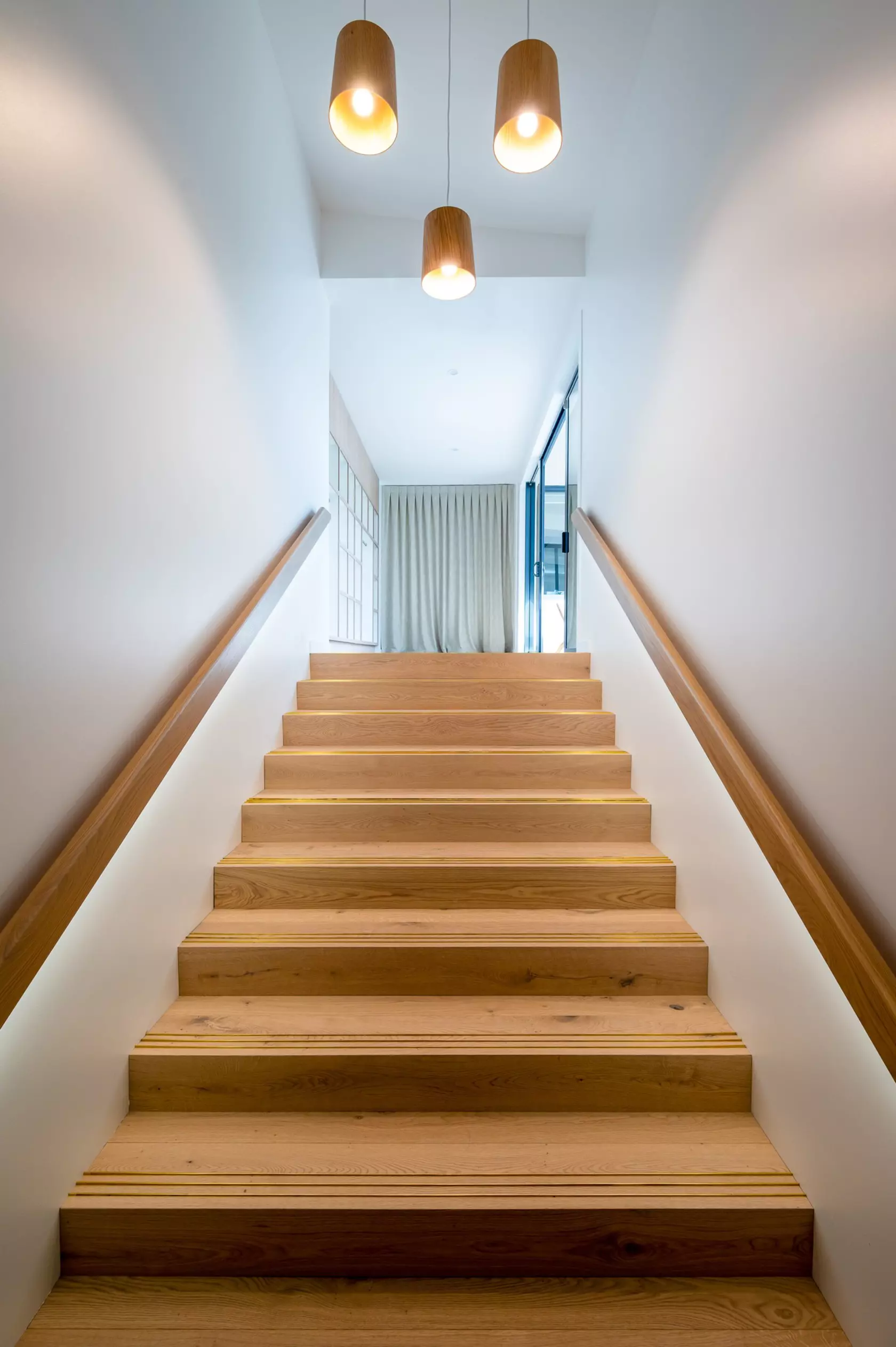

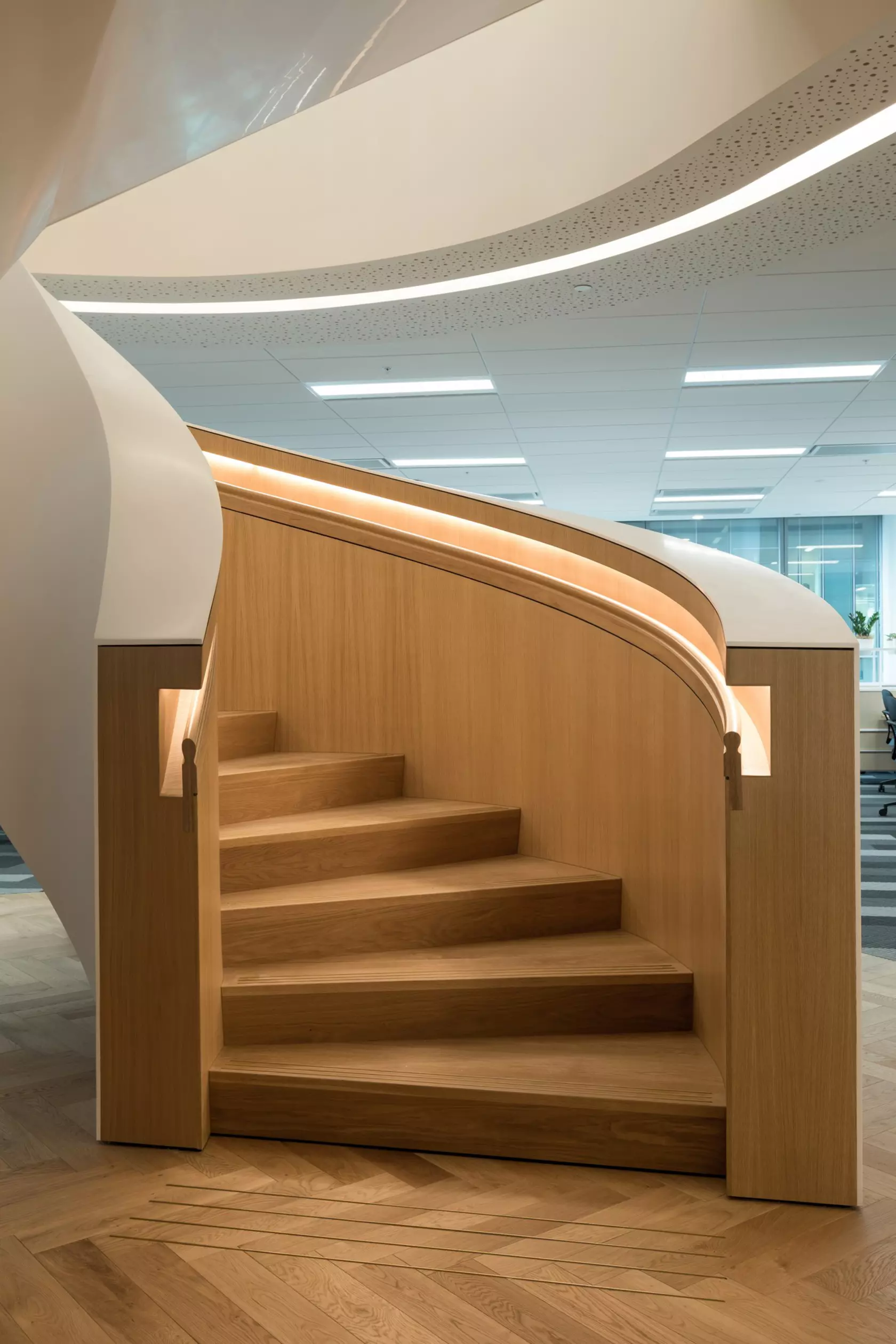
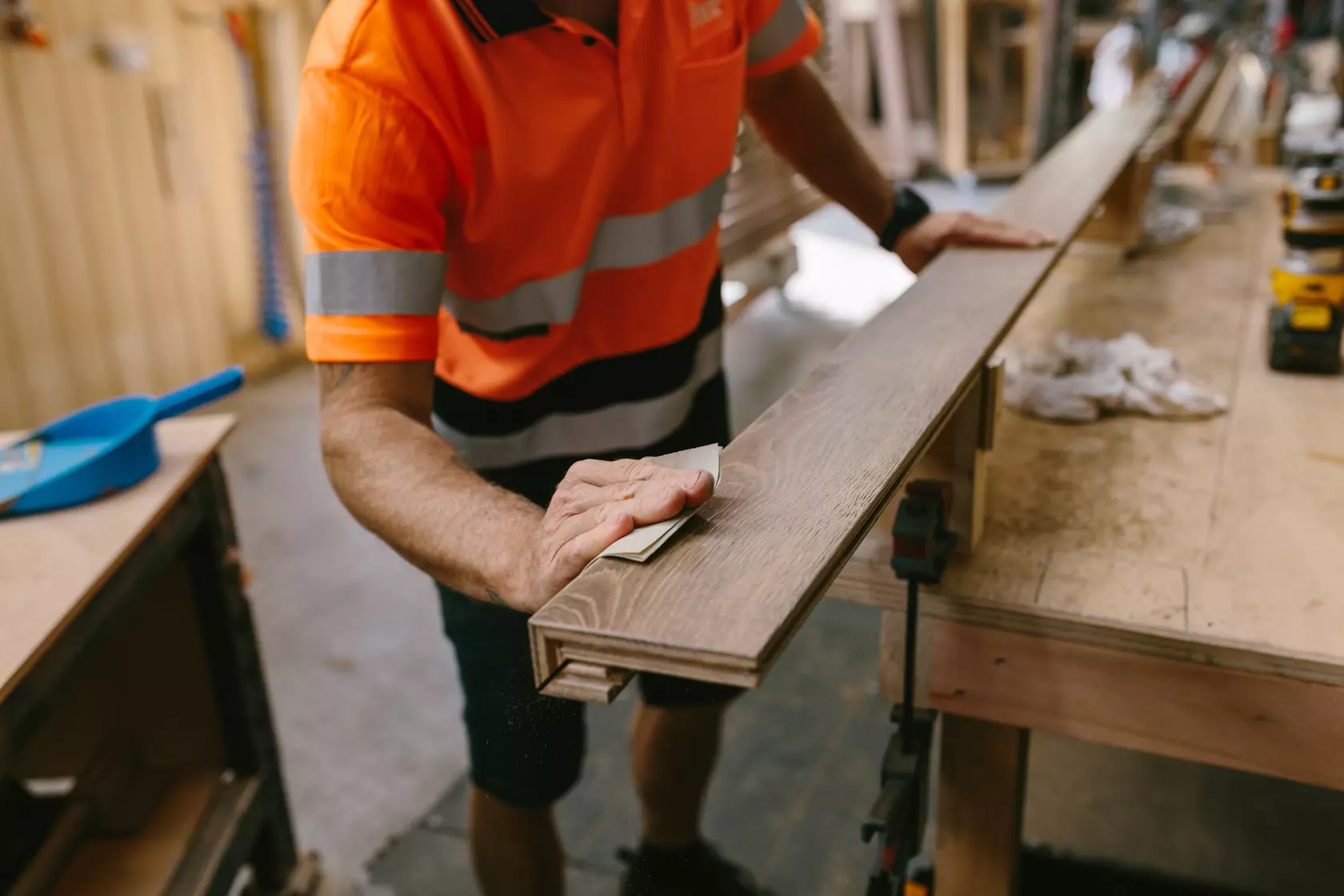
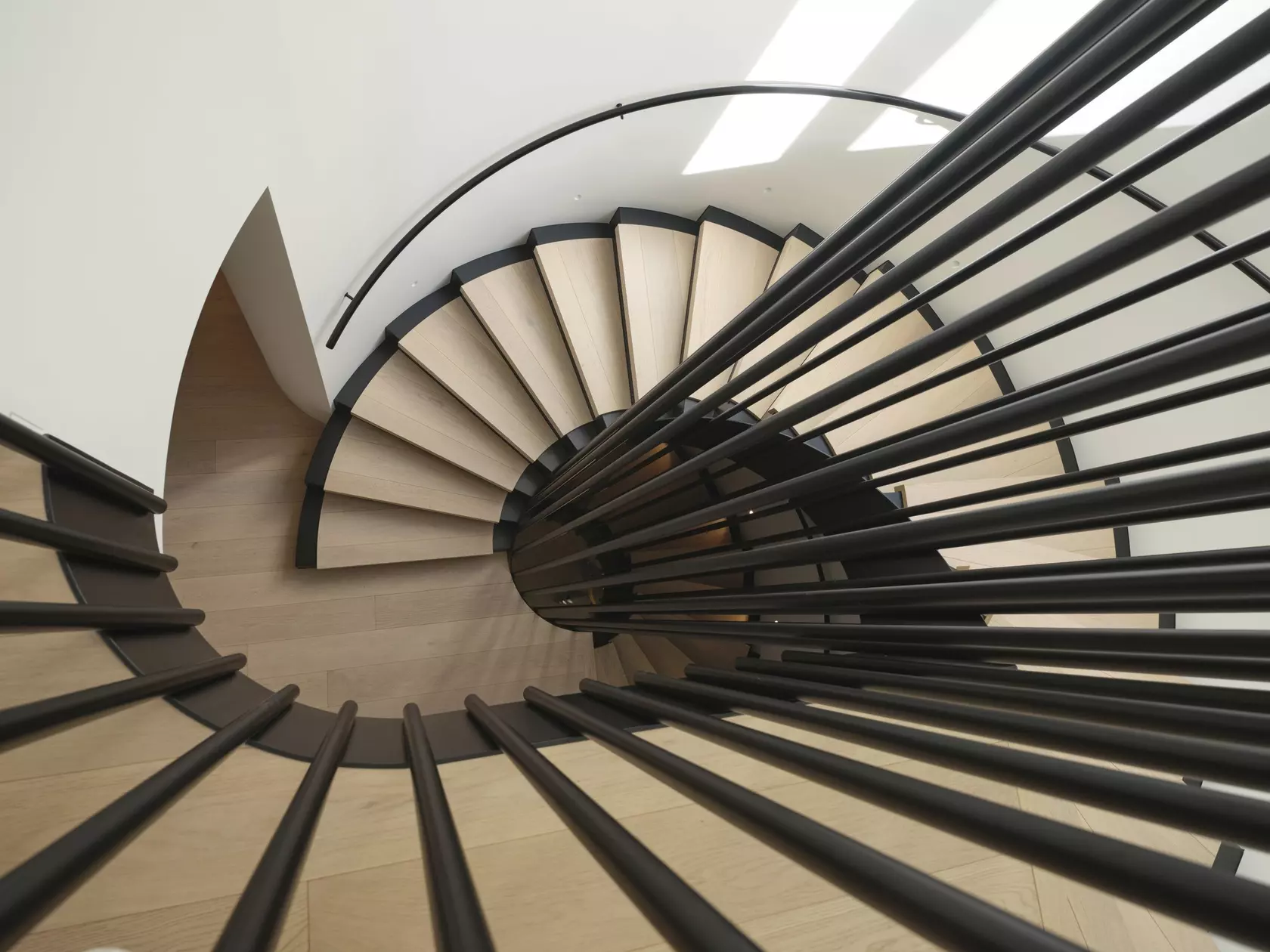
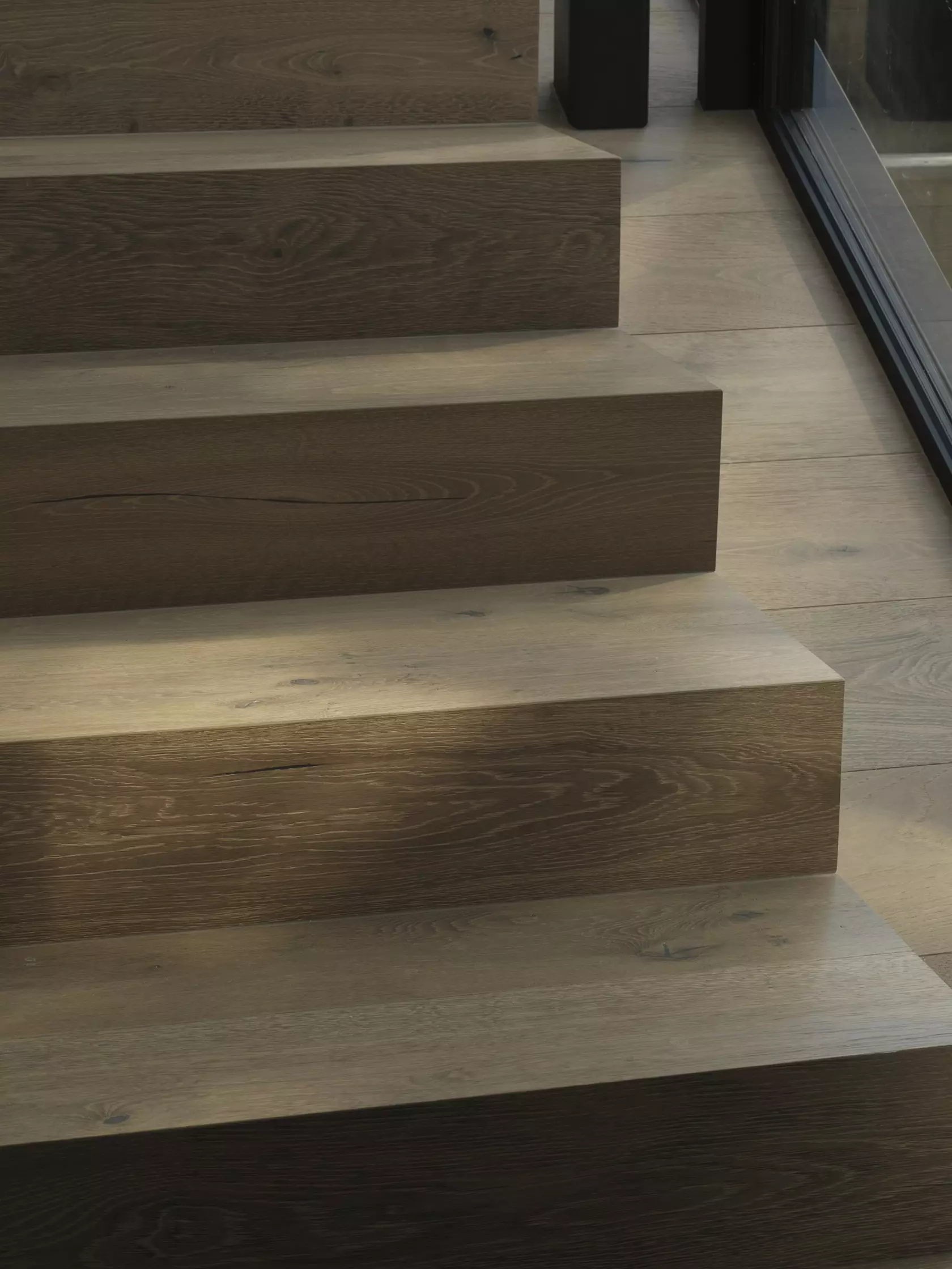
Forté stair nosings are manufactured in-house, by hand, using prefinished planks of the same flooring being installed. That's the foundation of a good match – not a separate product approximated to the floor, but the floor itself, shaped into the nosing.
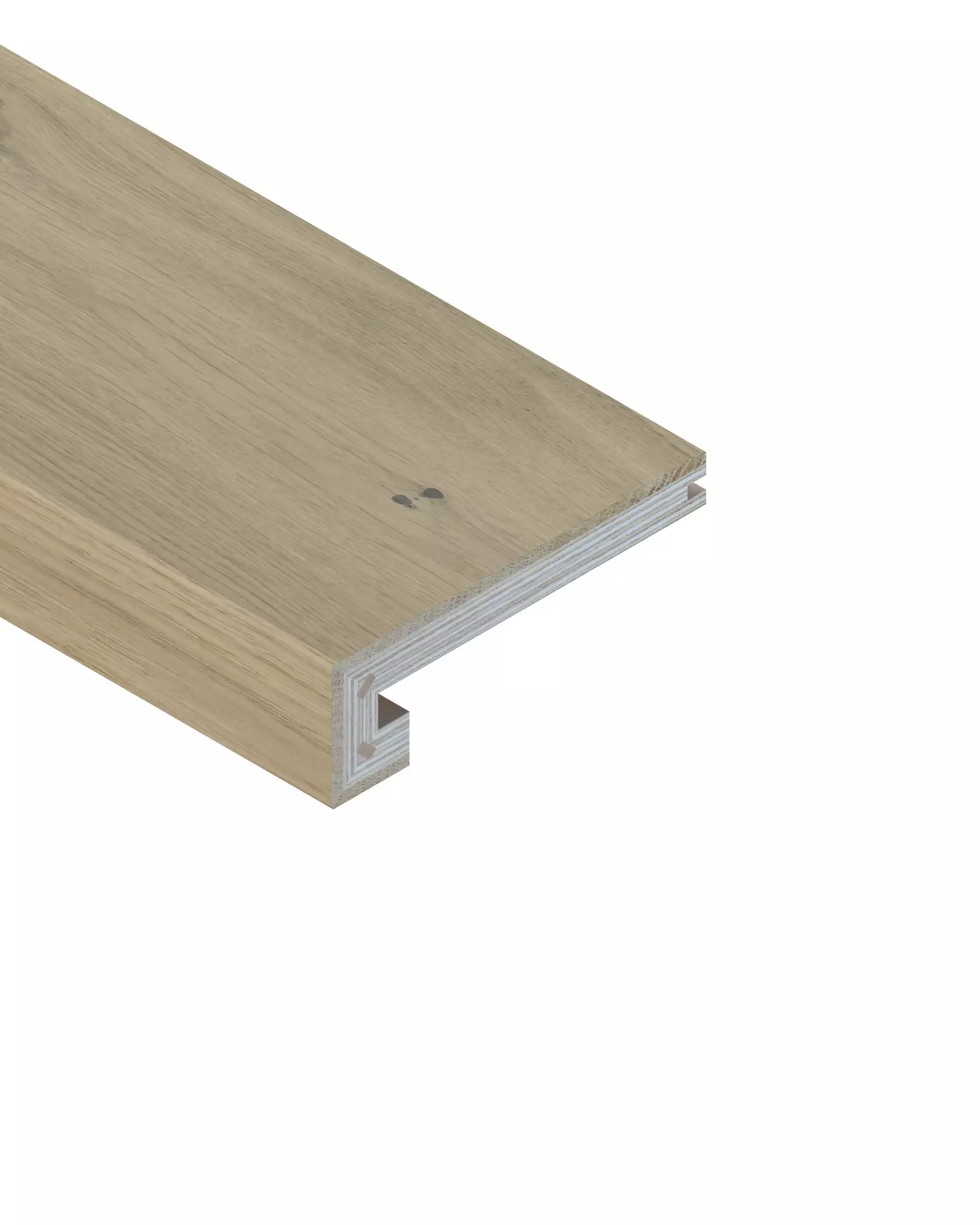
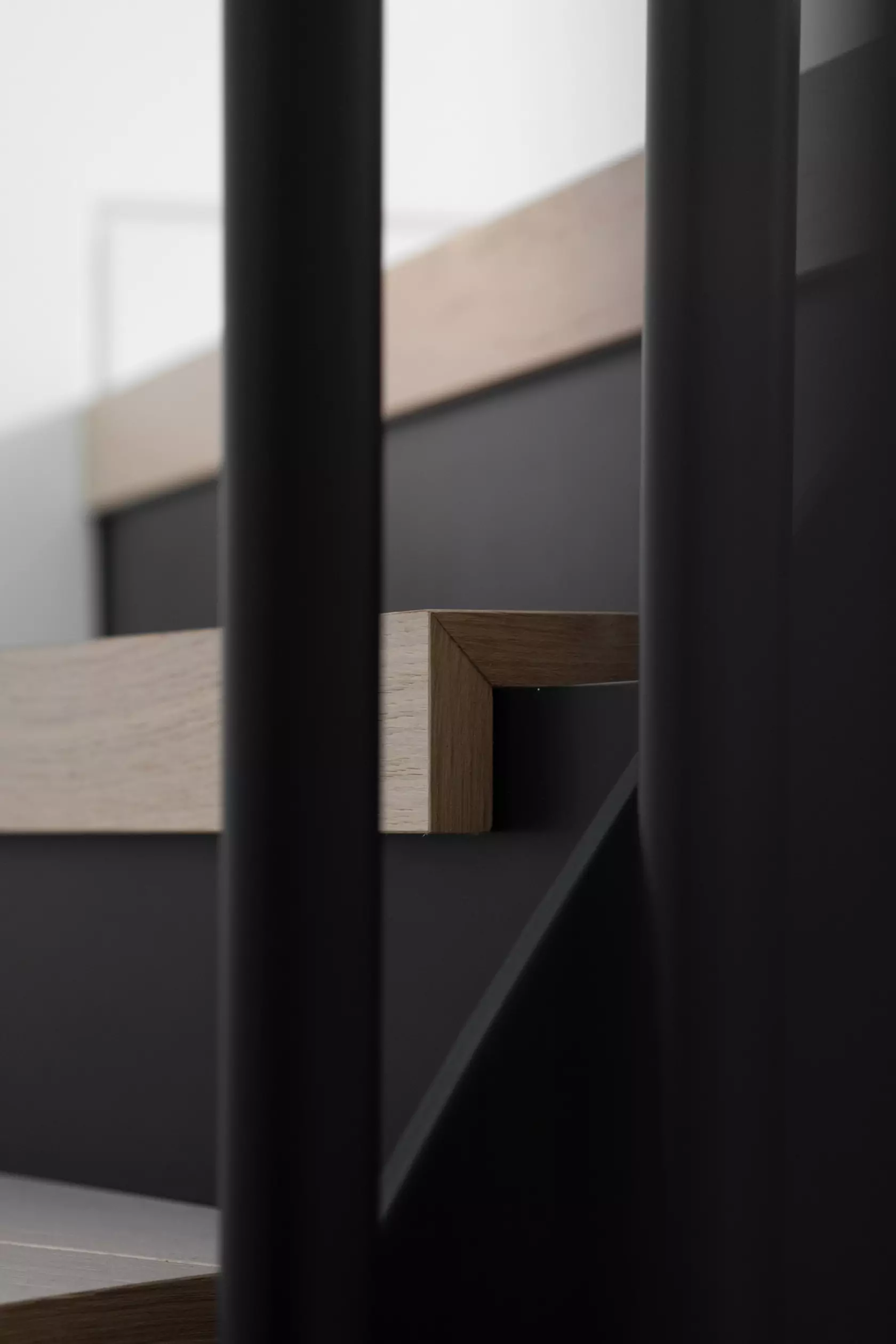
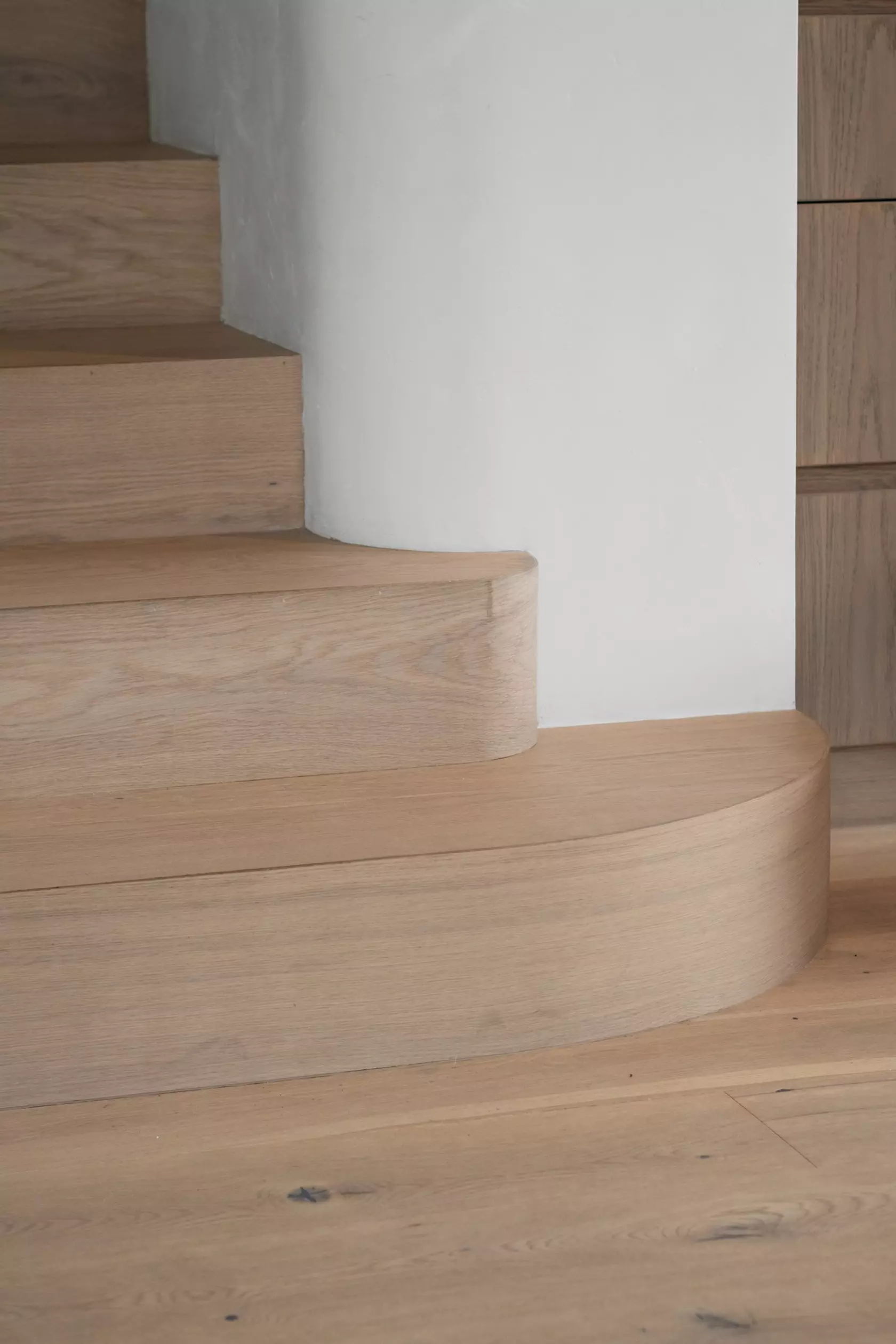
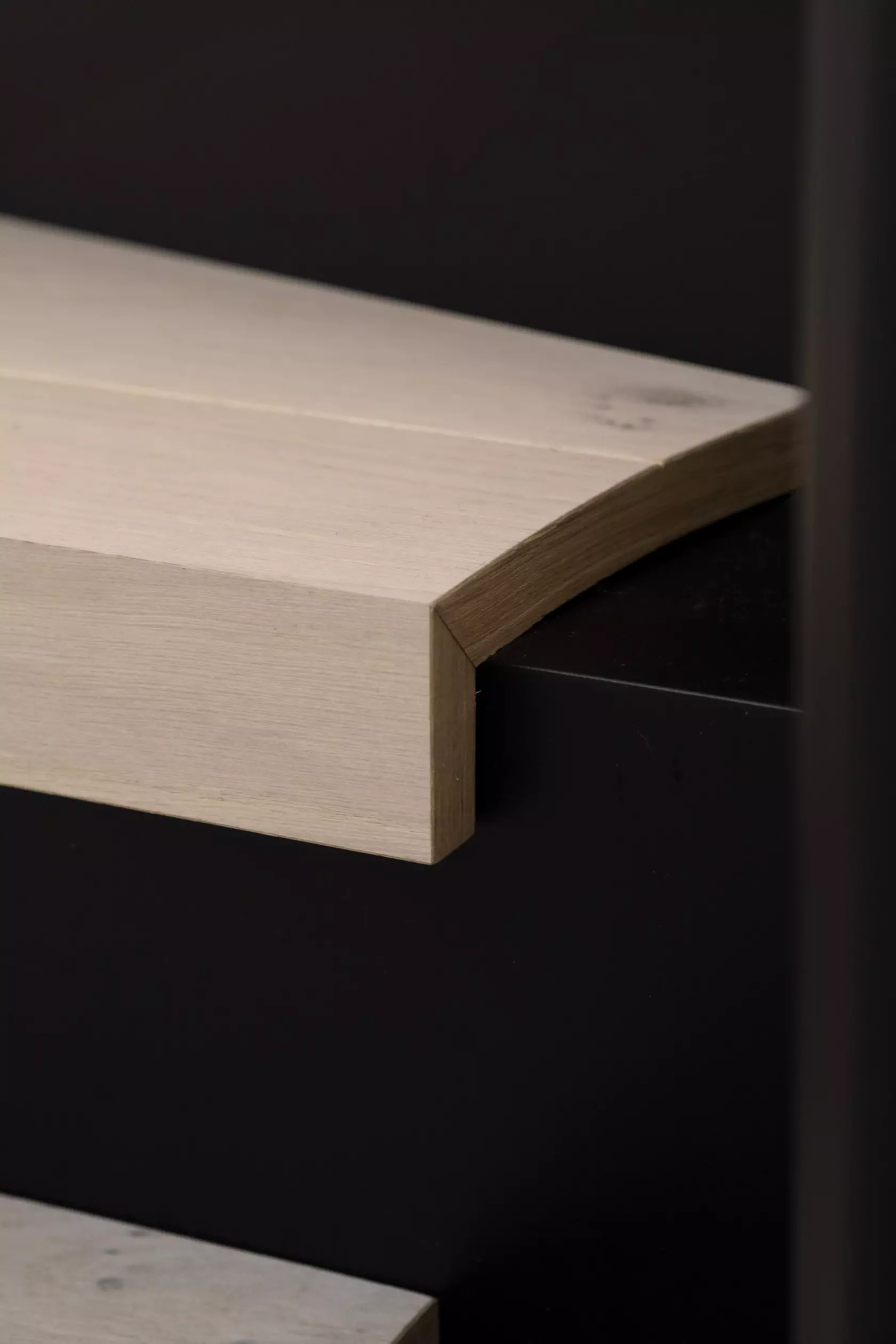
Each nosing is constructed by mitring planks together. During production, a round is sanded onto the mitred edge and touched up with stain and lacquer, this achieves a clean finish and limits the edge from being damaged in use. The result, when done well, looks like the nosing has been bent into shape rather than cut and assembled.
Grain direction is matched so it continues around the profile. Colour is finished by hand until it's seamless. The clamp tables used in production apply consistent, even pressure along the full length of the mitre while the glue sets – the difference between a glue-line that holds and one that eventually opens up.
Since bringing production in-house, Forté has overcome the quality issues common in offshore-manufactured nosings: insufficient glue, edges not rounded enough to handle daily wear, profiles that didn't hold. The process solves these problems. Every nosing gets the attention it needs.
The three designs. and when to use each
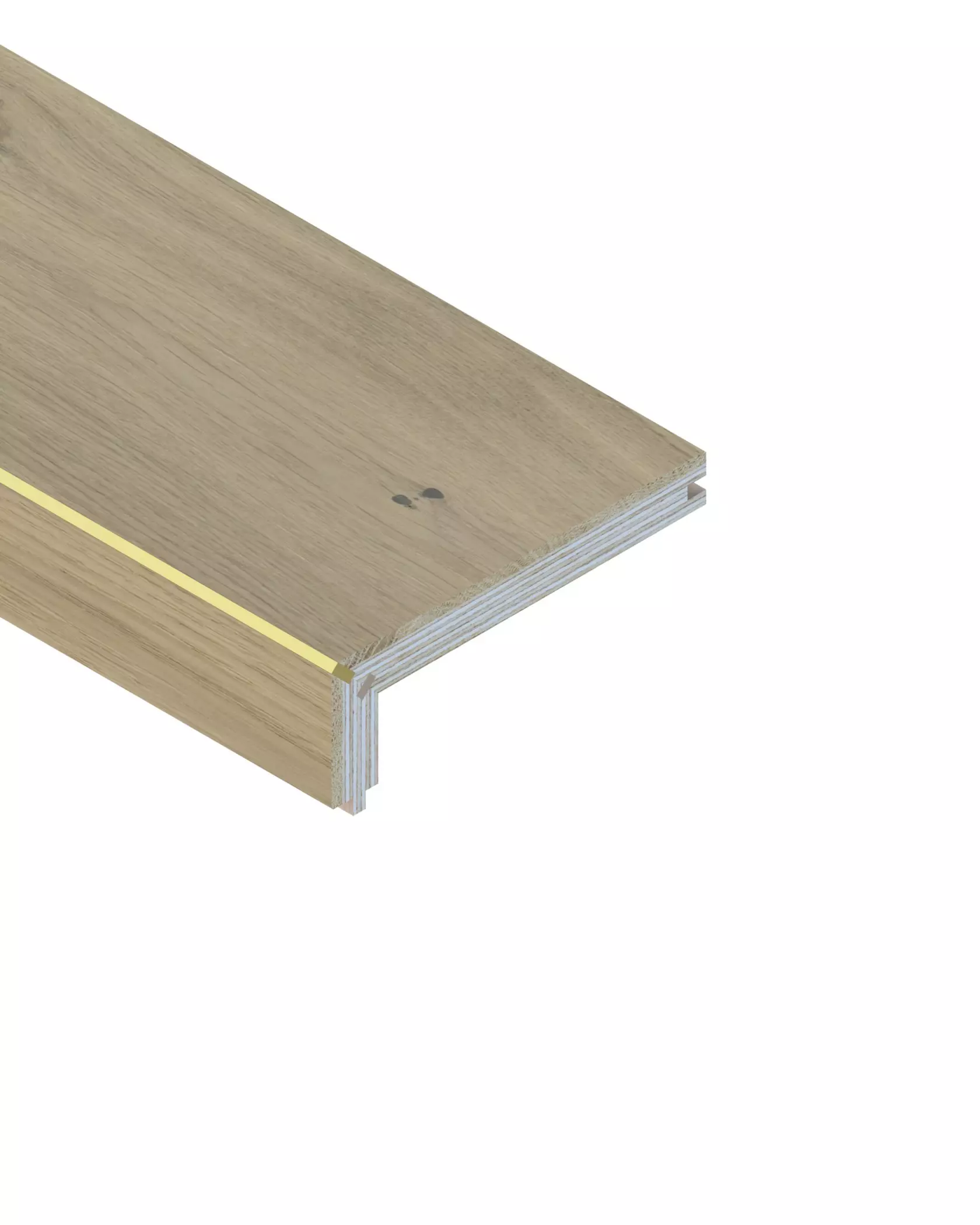
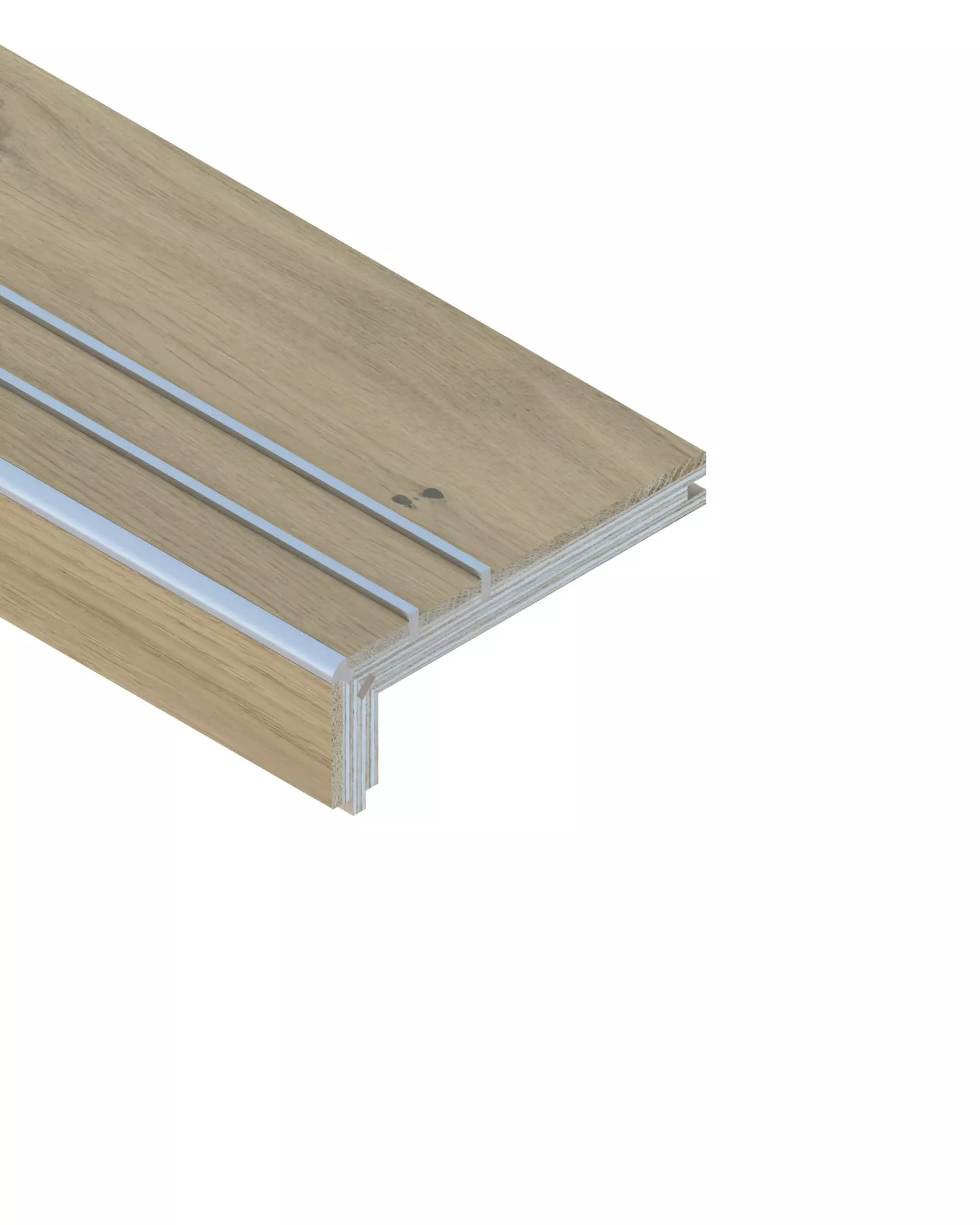
Forté manufactures three nosing designs, each suited to a different application. Specifying the right one early avoids costly changes later.
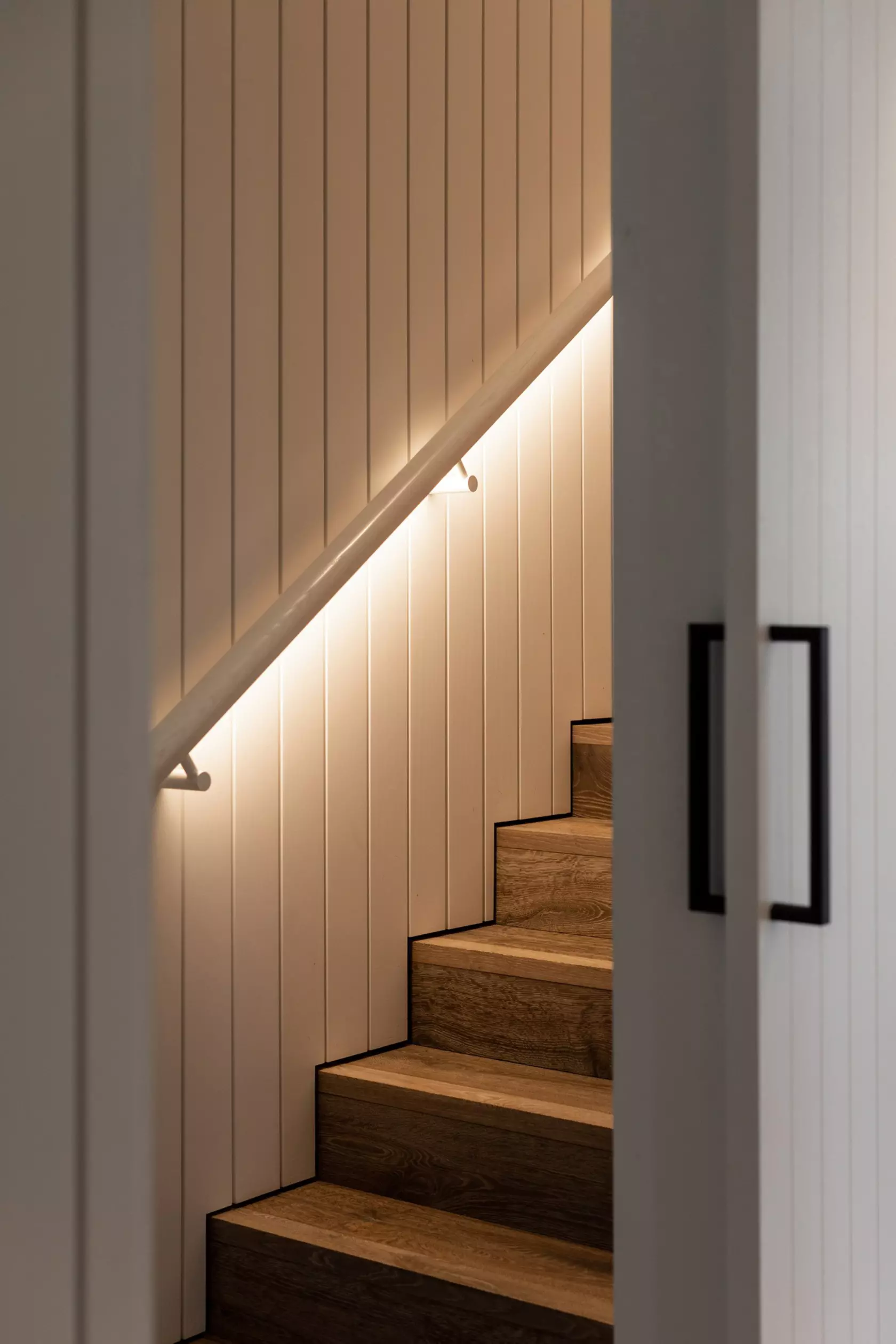
Standard The most commonly specified nosing. Suited to the majority of residential stair applications – clean profile, consistent finish, made from the same flooring planks as the installed floor.
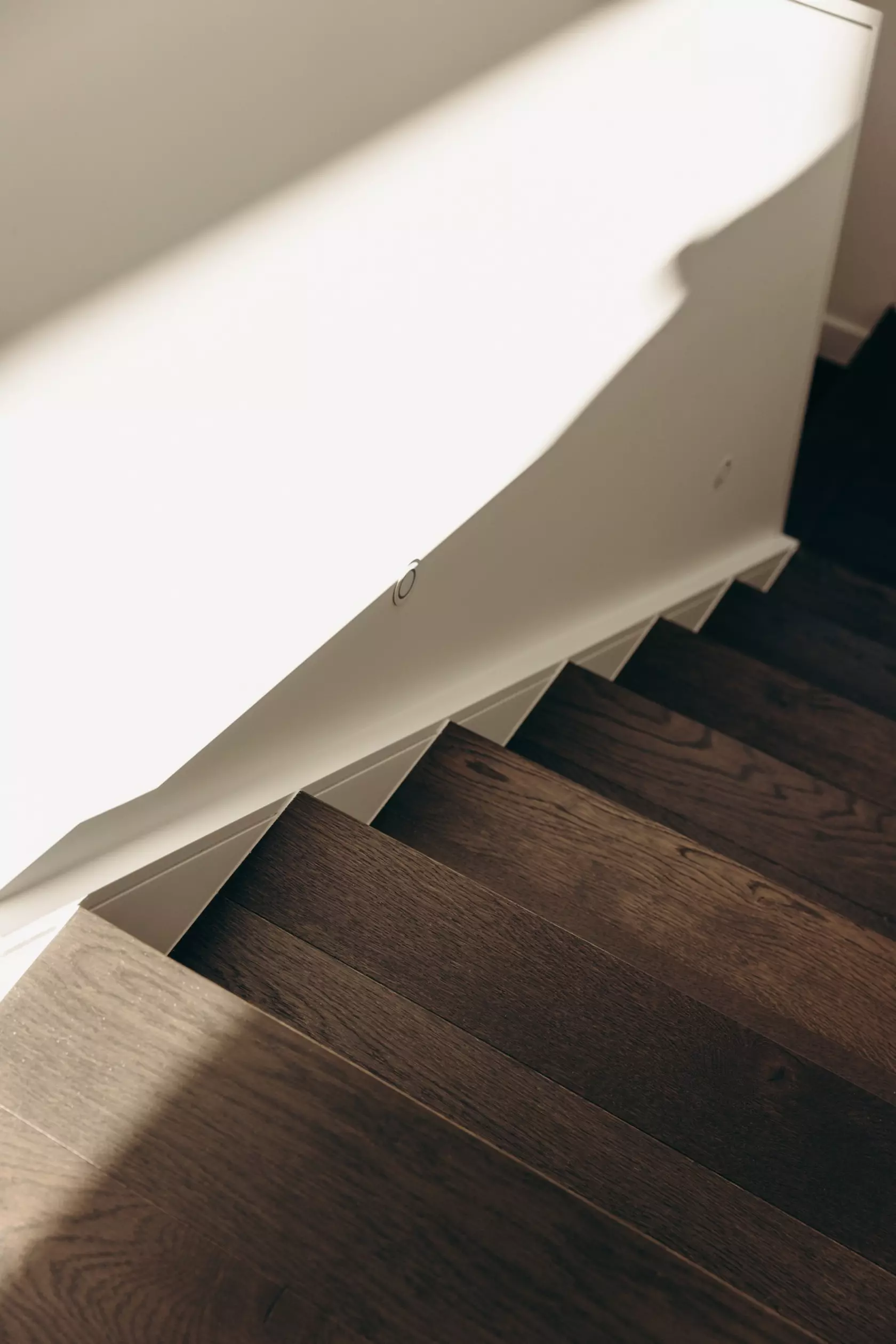
Premium A more refined finish for projects where the stair is a design feature in its own right. The result showcases the timber grain and colour in a way the Standard profile doesn't. Worth specifying when the stair is visible from key living areas or when the client has invested in a premium floor.
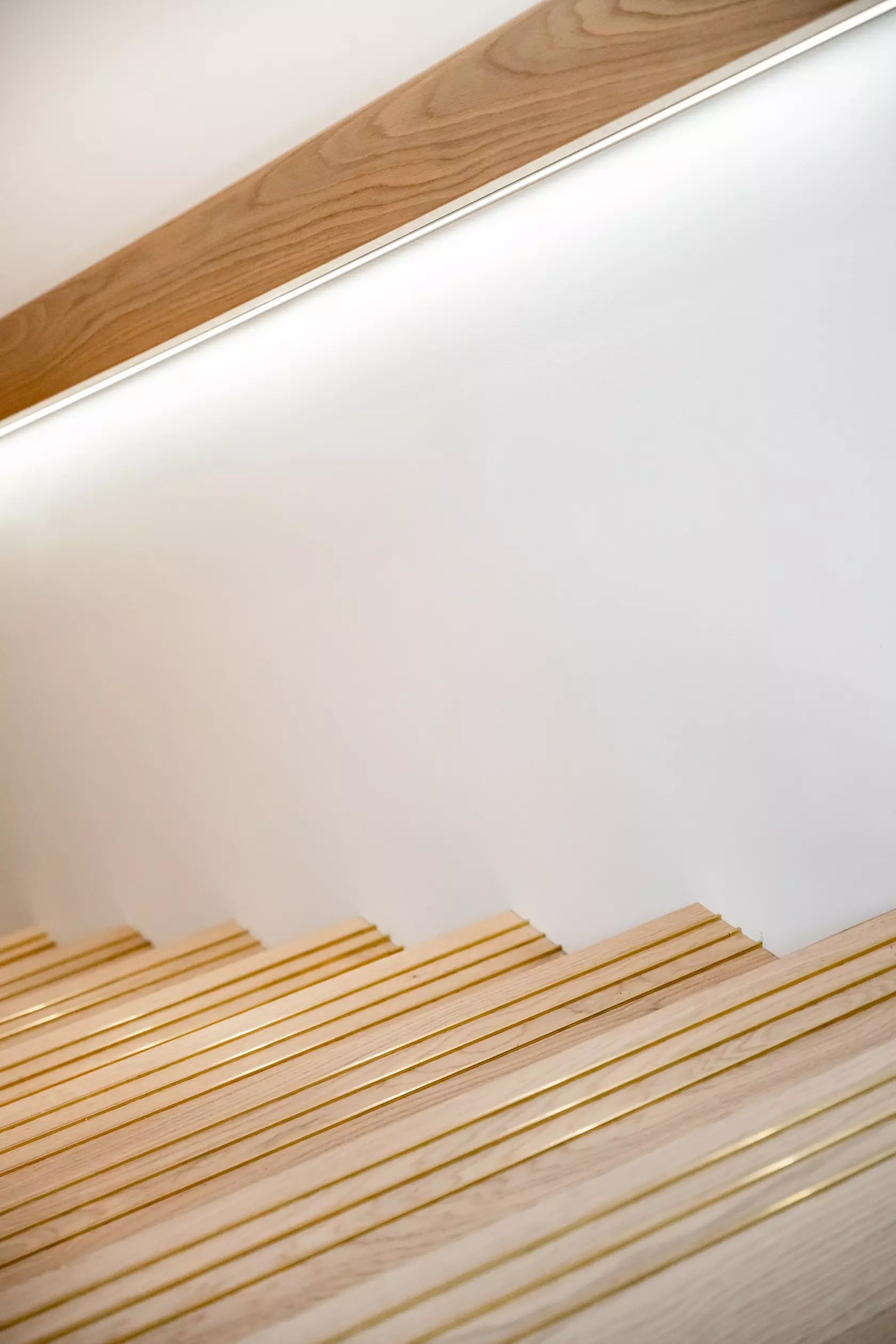
Accessible Designed for applications requiring a compliant nosing – residential or commercial projects where accessibility requirements apply. Same quality of finish and colour matching as the Standard and Premium, built to meet the relevant specification requirements.
If the application is unusual or the stair configuration is non-standard, Forté can manufacture custom nosings and trims to suit. The starting point is always the same: the actual flooring planks, matched exactly.
For full technical specifications on each nosing design – including dimensions, substrate requirements and installation details – refer to the Forté Flooring Design Guide.
What goes wrong, and how to avoid it
The most common issues with stair nosings fall into a few consistent categories.
Specified too late. When nosings are treated as an accessory rather than part of the floor specification, the options narrow. The floor is installed, the stairs are finished, and what's left is finding something close enough. Close enough is rarely good enough, particularly on a premium project.
Wrong profile for the application. Standard, Premium, and Accessible are not interchangeable. Each has a specific purpose. Specifying a Standard nosing for a feature staircase, or missing an accessibility requirement entirely, creates problems that are expensive to fix after installation.
Damage before handover. Nosings are vulnerable during the final stages of a build, when appliances and furniture are being moved without proper protection. This damage often occurs before the homeowner moves in. Specifying temporary protection for nosings during the build phase is a simple step that's consistently overlooked.
Colour mismatch from late ordering. Older or discontinued colourways can be harder to match precisely when an order comes in late. Ordering nosings at the same time as the floor removes this variable entirely.
The single most effective thing an architect or builder can do is treat the nosing as part of the floor specification, not a follow-up item.
Confirm the nosing design at the same time as the floor product. Note any non-standard configurations or custom requirements early – custom nosings take additional production time. Order nosings with the floor, not after it. Specify temporary protection during the final build phase. And if in doubt, talk to the Forté team before finalising the spec – the detail is easier to get right at the beginning than to fix at the end.
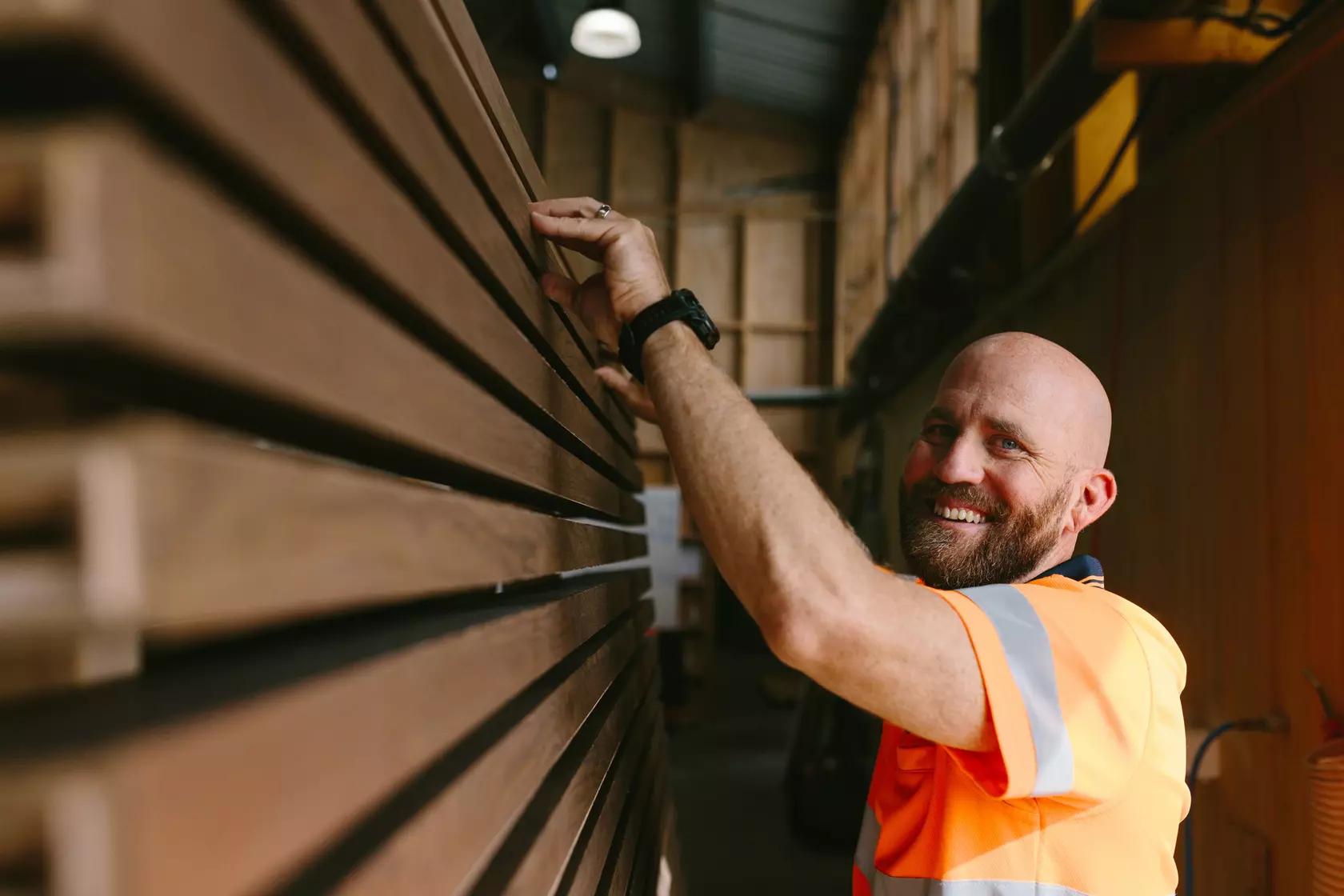
Every nosing that leaves the Forté workshop has been made by hand, checked against the floor it's matched to, and finished to a standard our woodworker Logan describes simply: he wouldn't let it go if he wouldn't have it in his own home.
That's the level of care behind a detail most people will never consciously notice. Which is, of course, exactly how it should be.
For technical specifications, refer to the Forté Flooring Design Guide. To talk through your project or discuss a custom requirement, get in touch with the team.
And if you'd like to understand more about how our nosings are made, read about Logan and the Forté workshop.