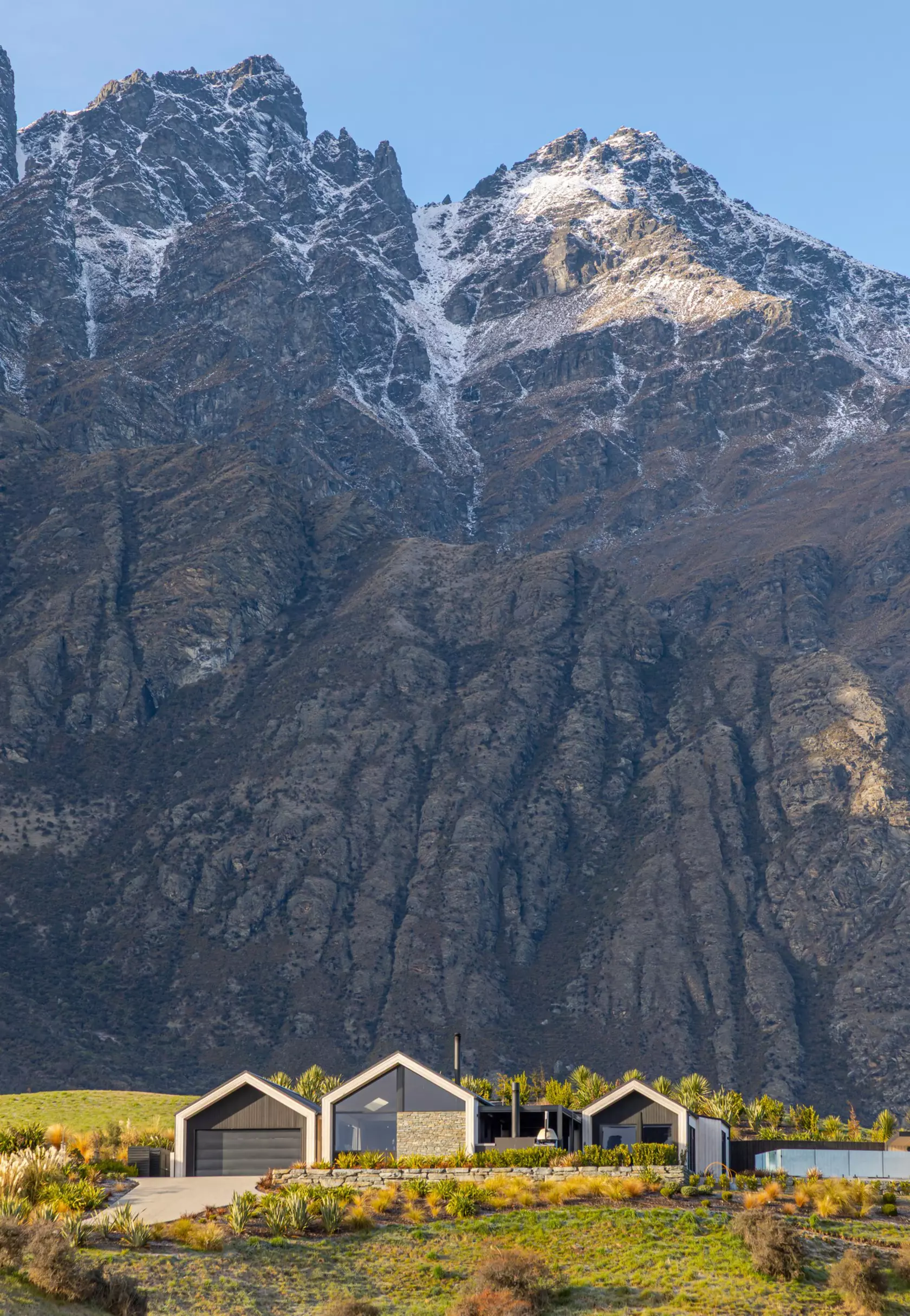

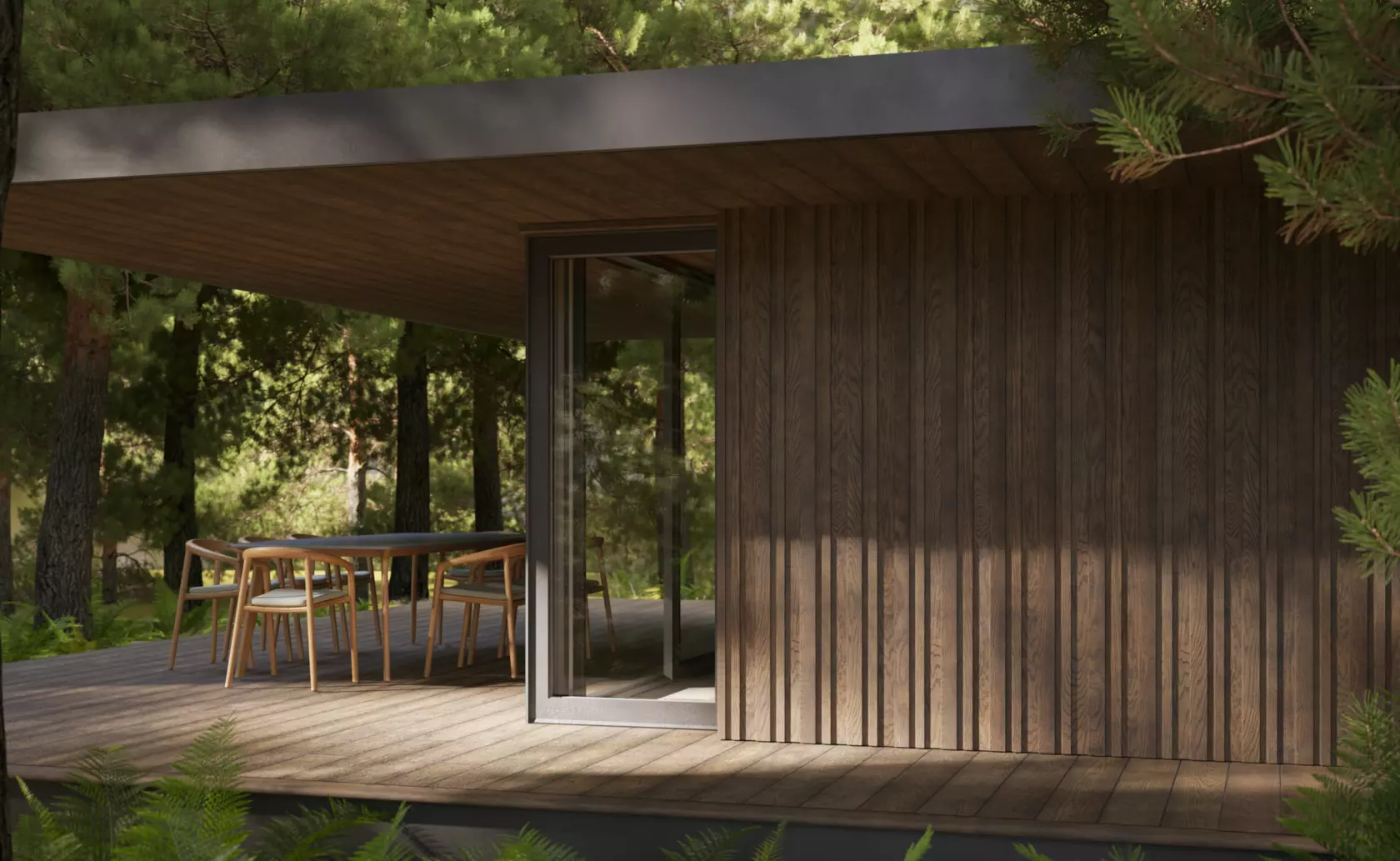



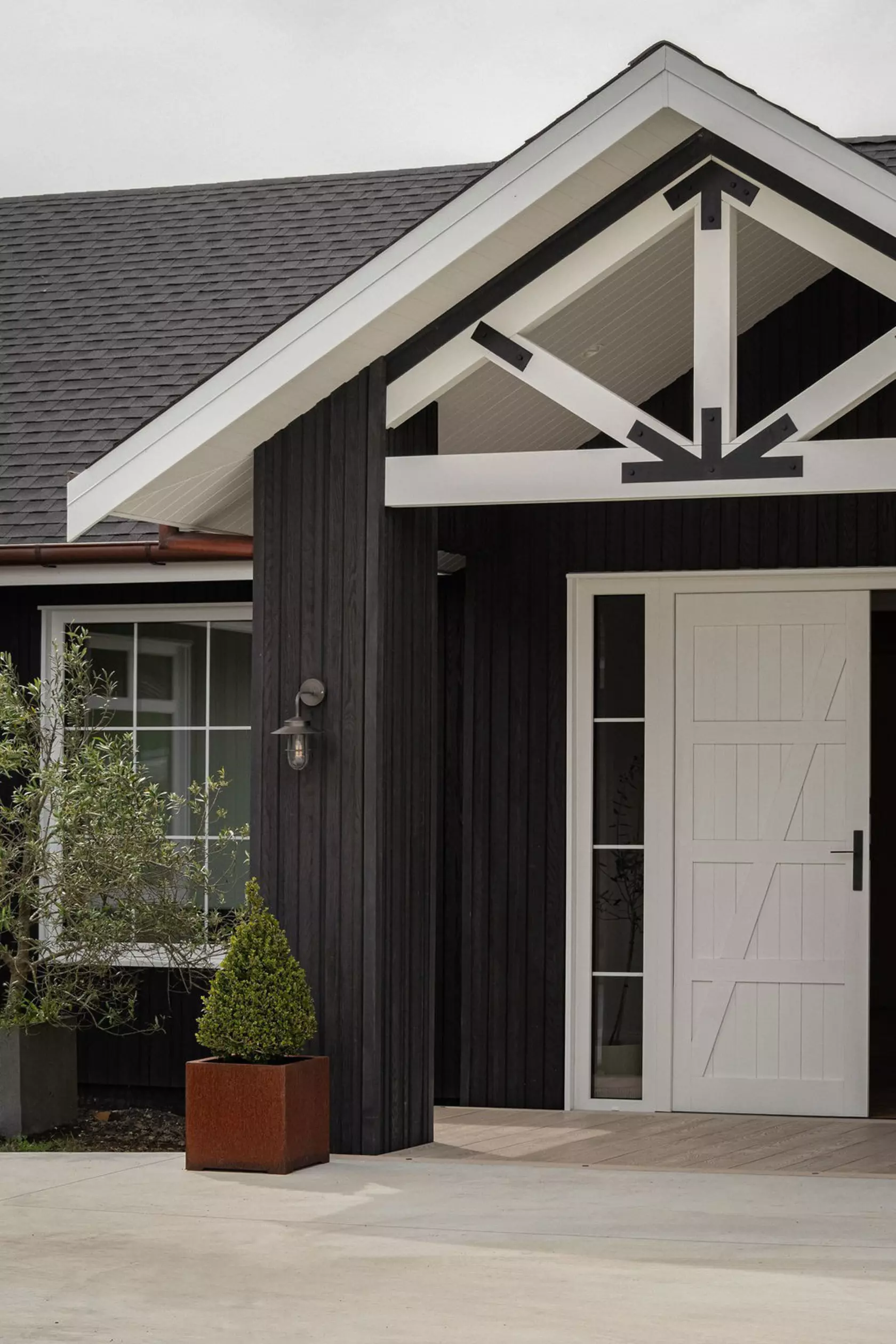
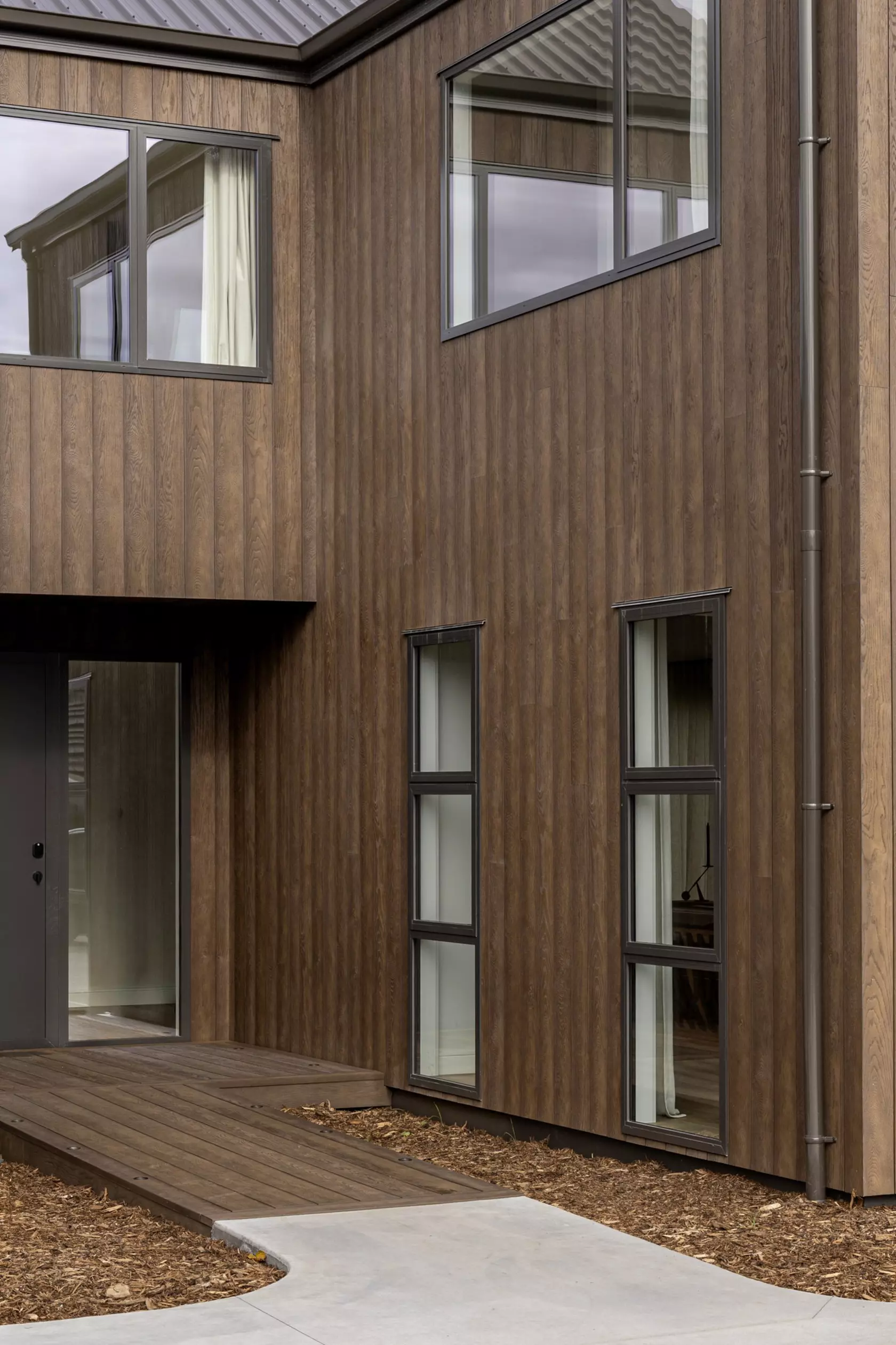

Some coastal sites call for an unashamed showstopper. A landmark rising from the dunes; a statement perched above the surf. Others present a completely different proposition: how little can we impose? How well can we hide?
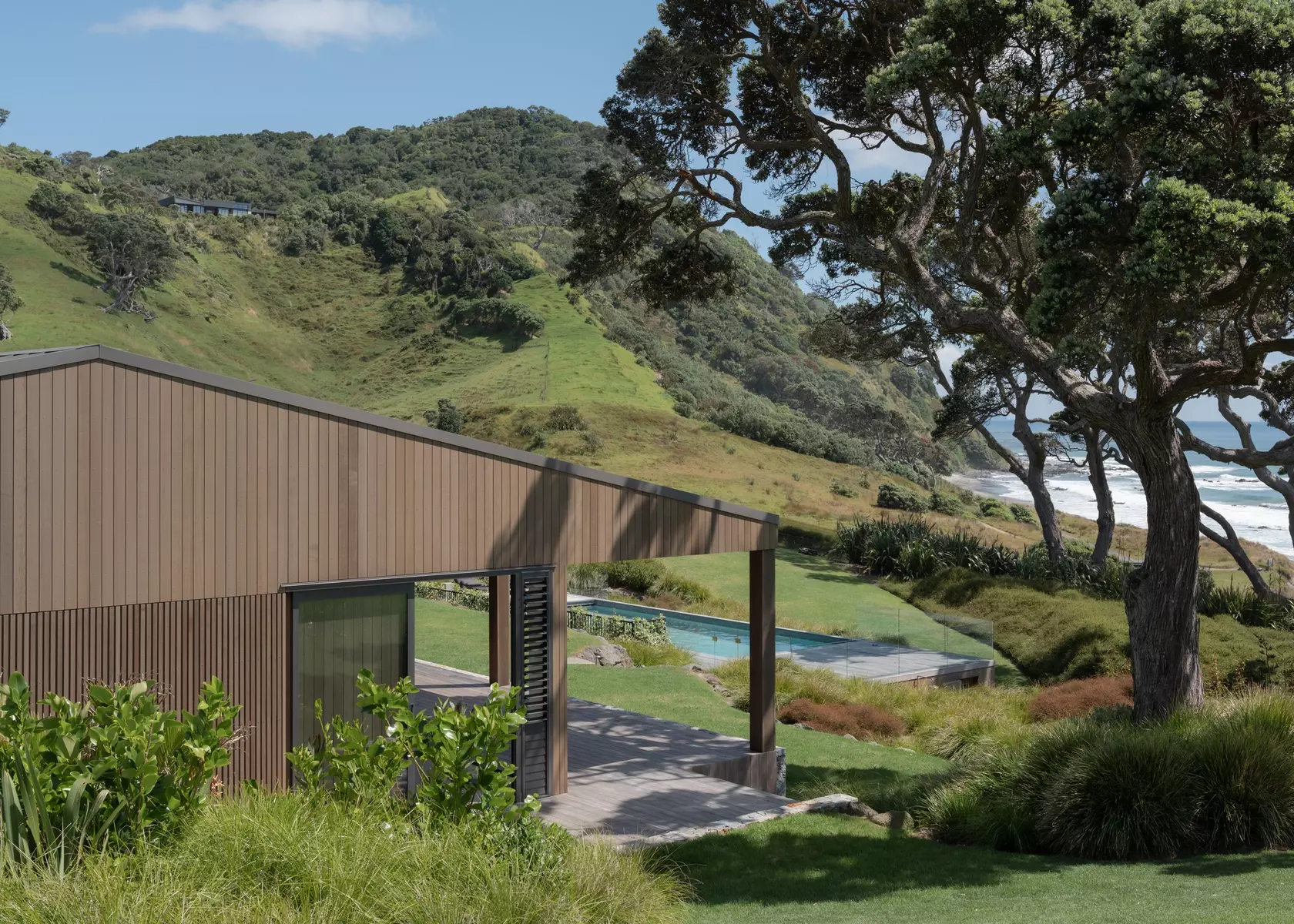
This was one of the latter. When Smith Construction director Nick Smith first stood on this property on the outskirts of Mangawhai, the site made its own brief clear. Established pōhutukawa trees. A private beach. A miraculous slice of seclusion that exists ninety minutes from Auckland but feels a world away. "The location is absolutely stunning," he says. "You can be beachfront, but nobody even knows you're here — yet you still feel like it's your own spot."
Whatever was built here would have to settle into its surrounds as though it had always belonged. That instinct — to build with the environment rather than upon it — has shaped Smith Construction's practice for over a decade. At Pōhutukawa House, it shaped every decision from the ground up.
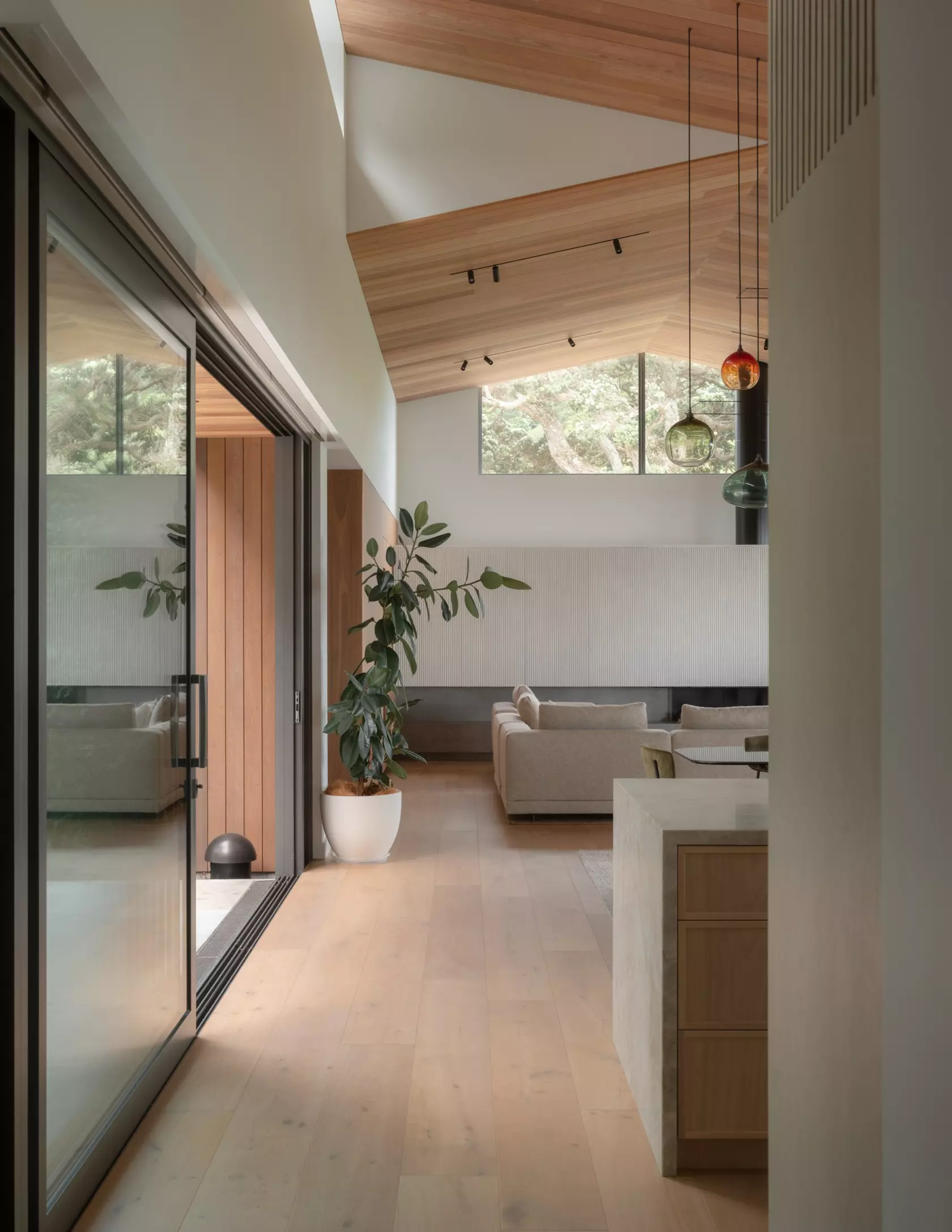
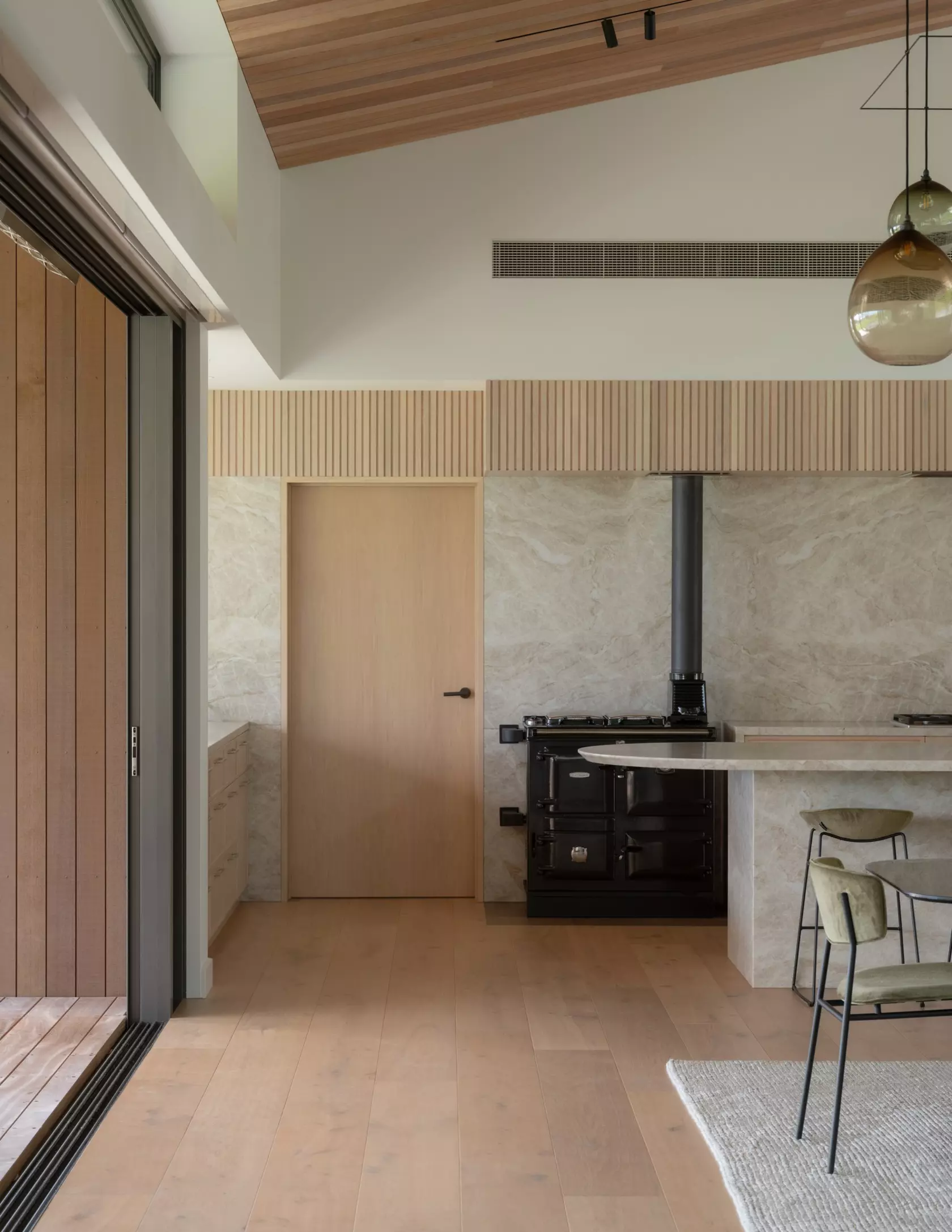
The brief more literally called for a secluded retreat for an extended family: a home that could be lived in hard, that flowed effortlessly between indoors and out, and, most importantly, that honoured the extraordinary setting it occupied. "The most important part was building something that you don't even notice is here," Nick reflects. "It just blends into the landscape."
Working alongside Christchurch-based NOTT Architects, Smith Construction's relationship with the design team was defined as much by responsiveness as by craft. With the architects unable to be on site regularly, decisions had to be made quickly, in the material, and with a shared understanding of the vision. "There'd been a lot of intricate detailing added throughout the build," Nick says, "that the only way they could ever detail it properly was with us working in it with them."
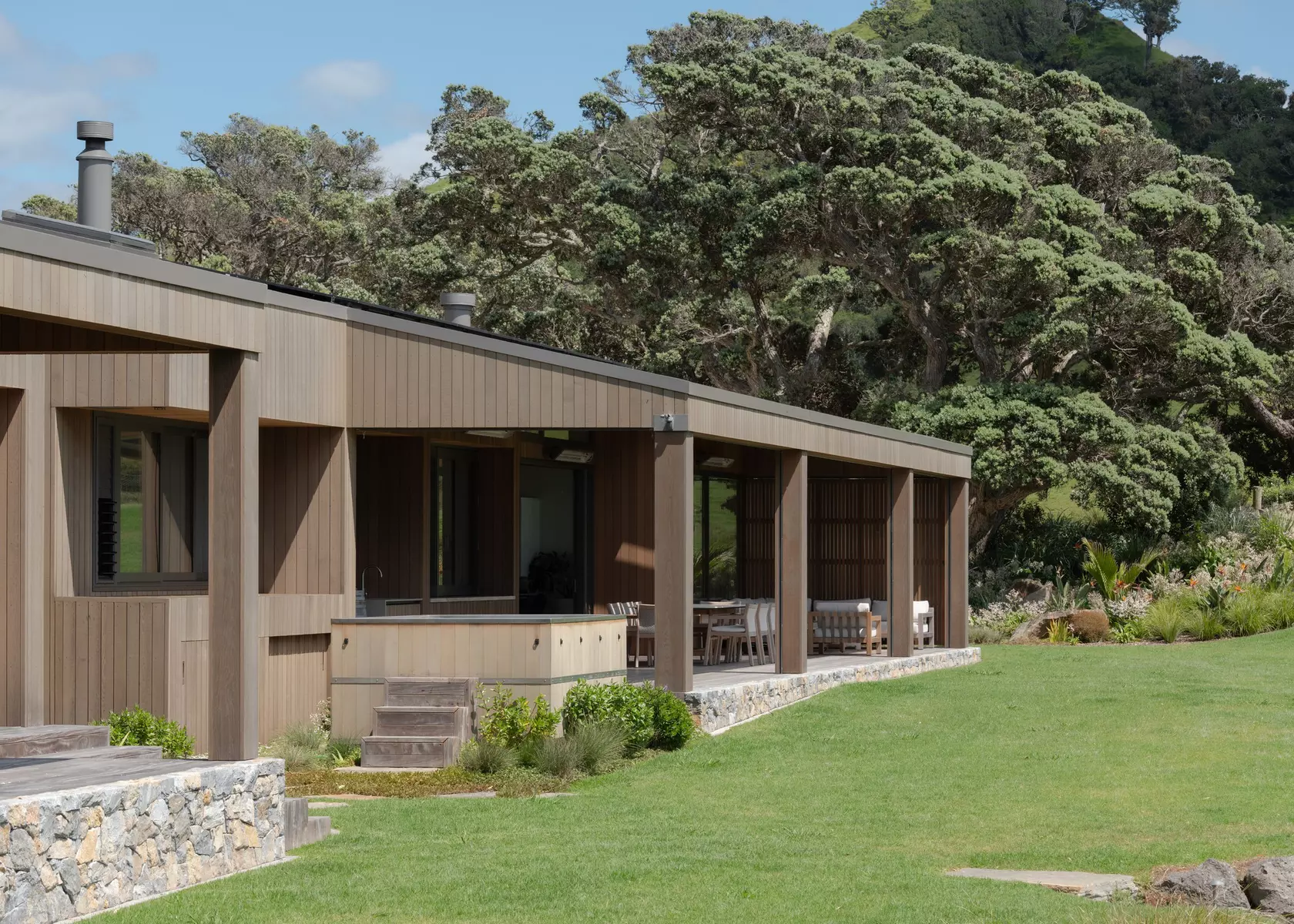
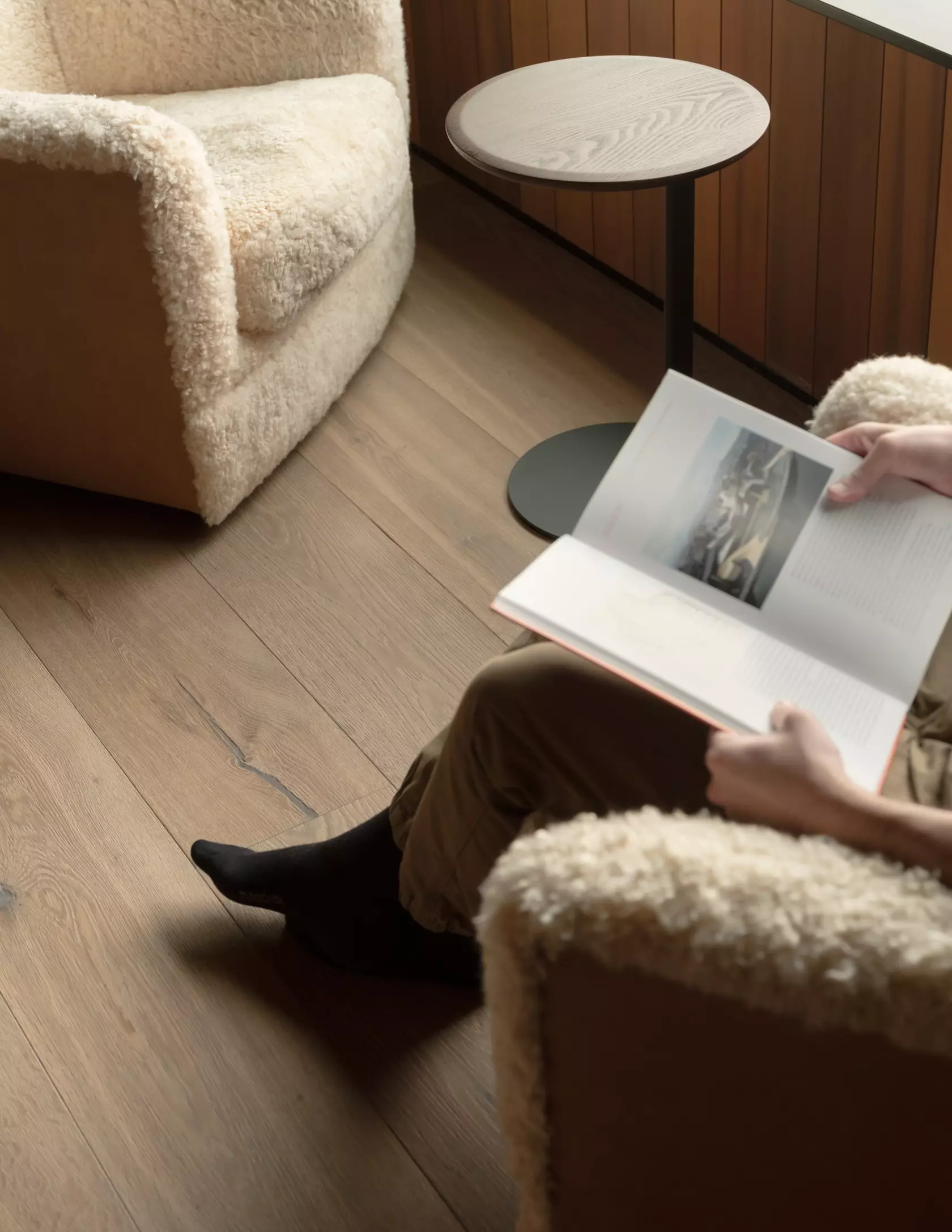
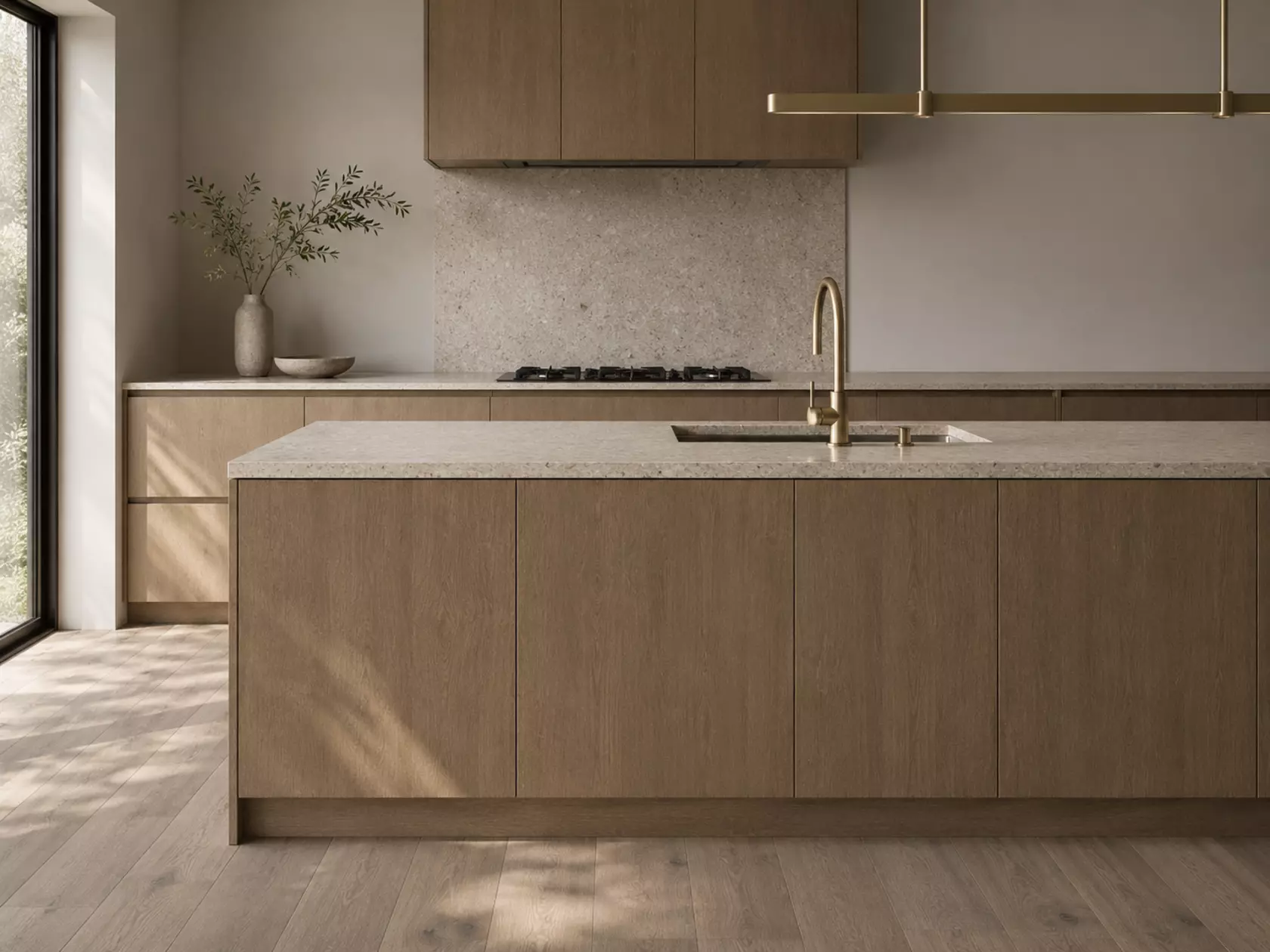
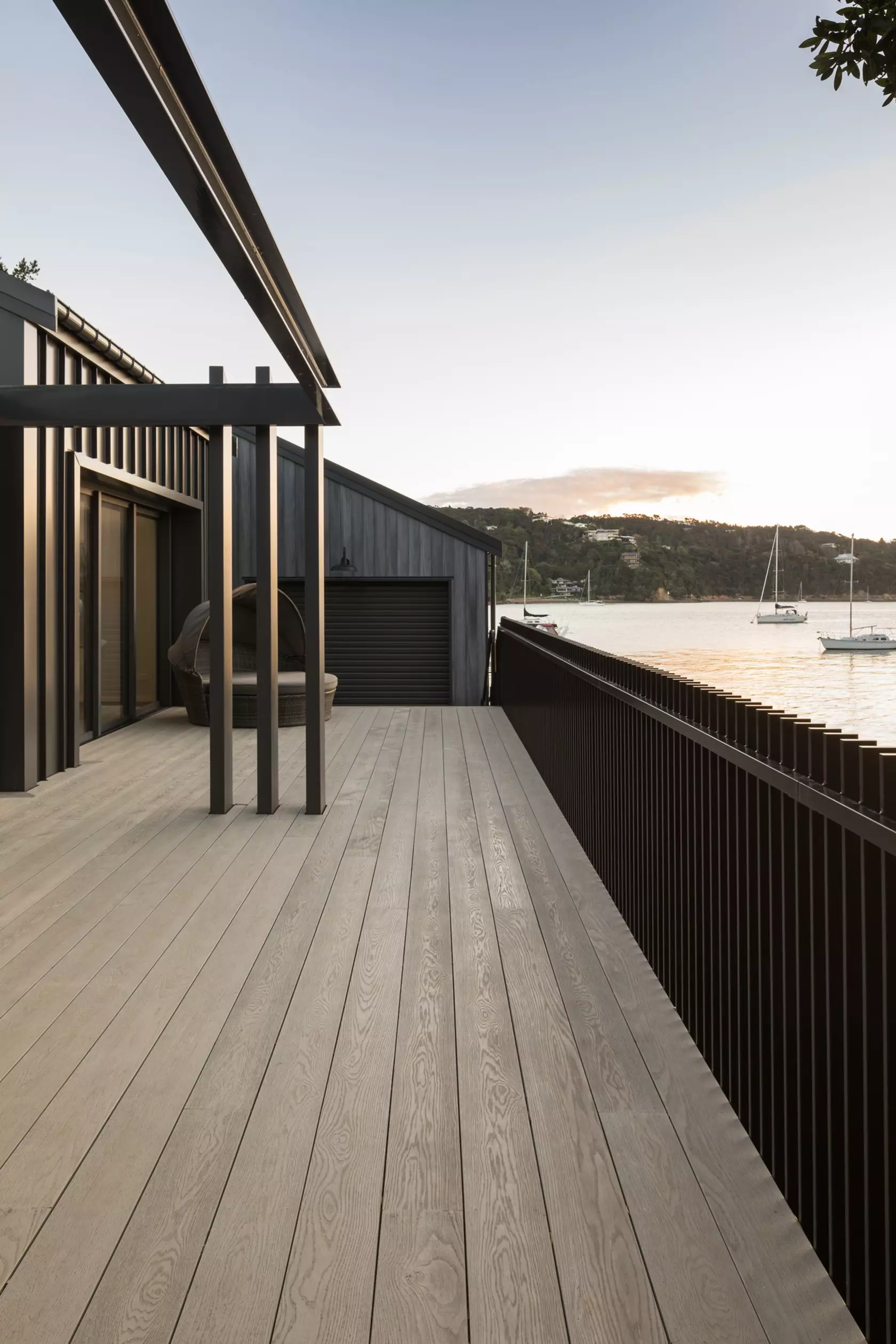
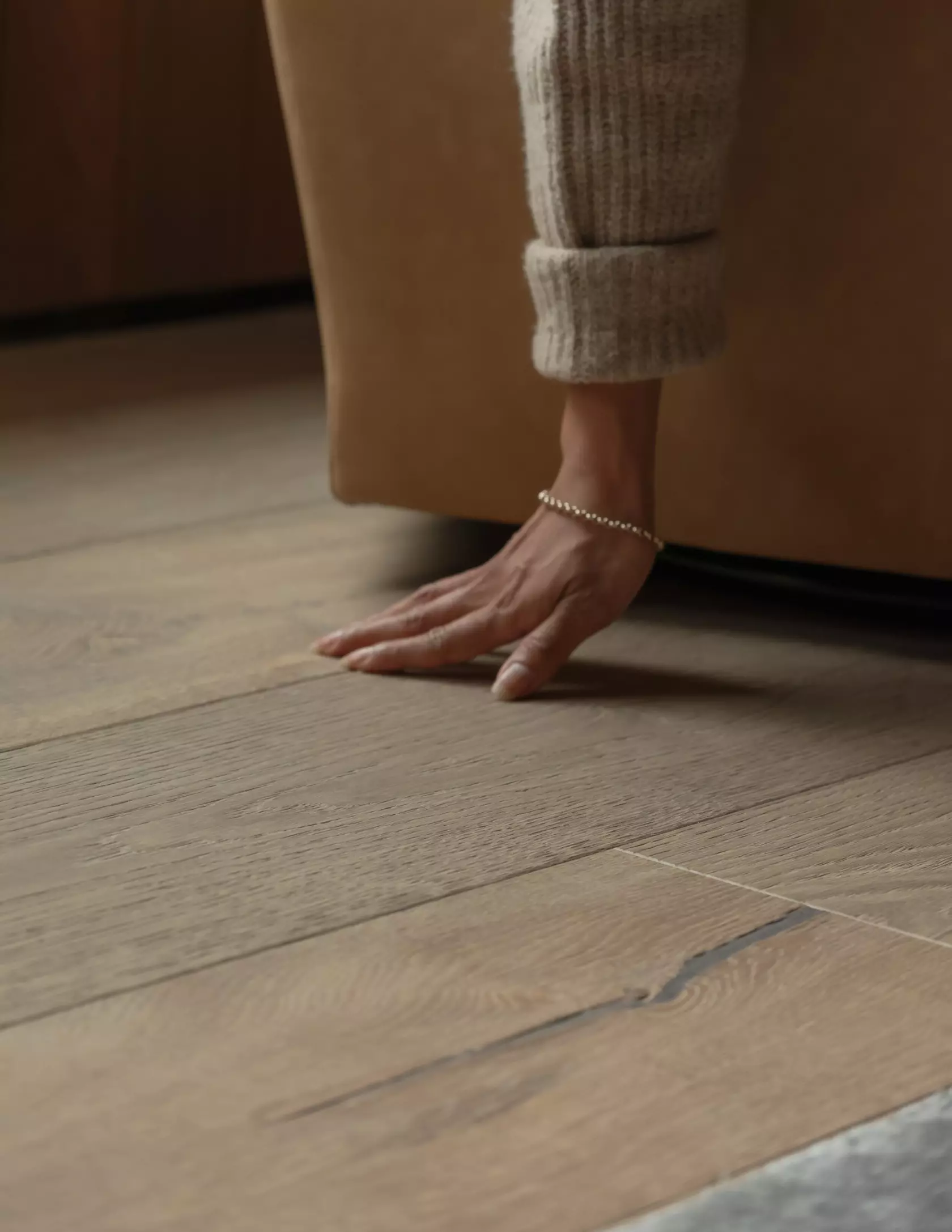
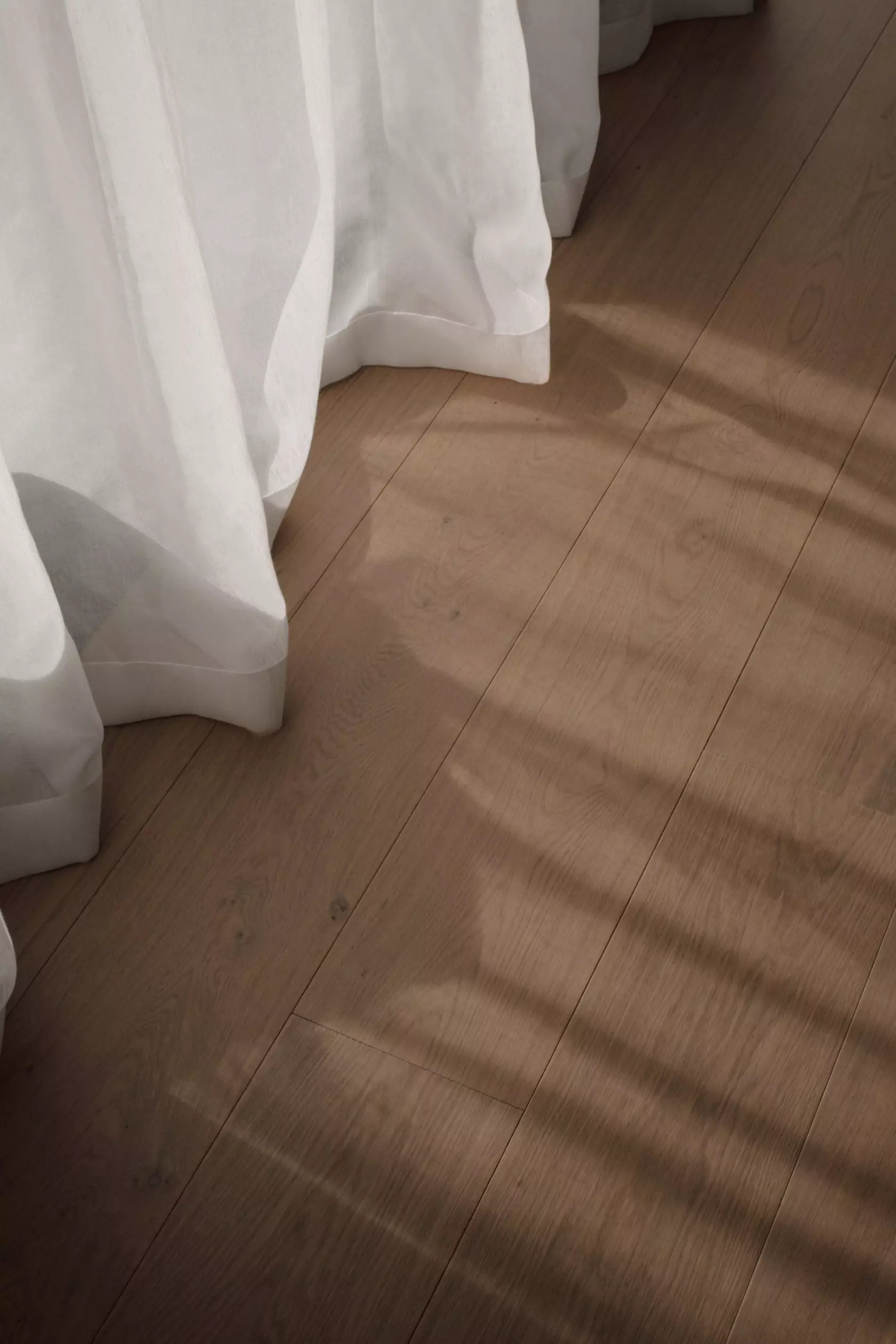
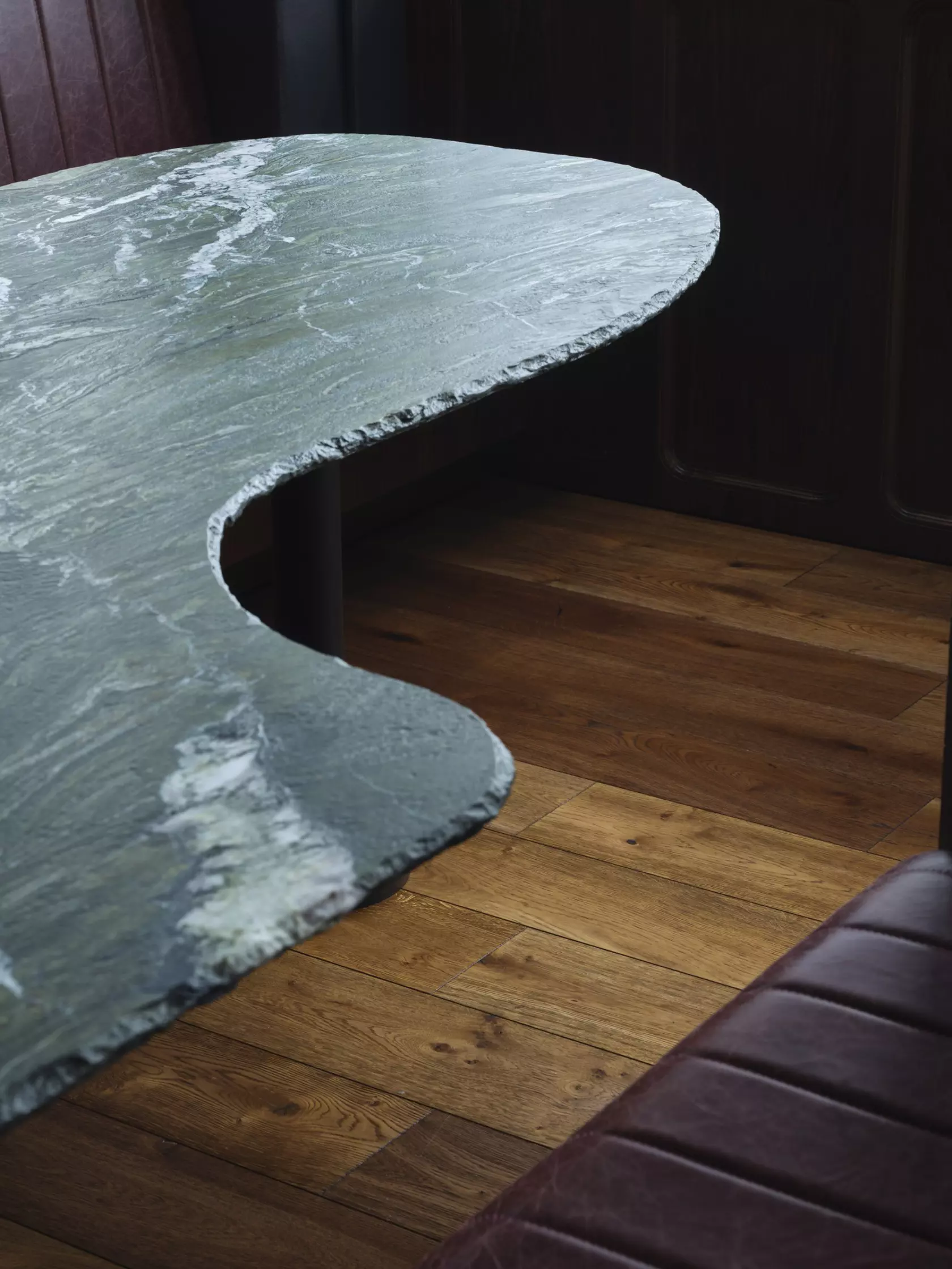
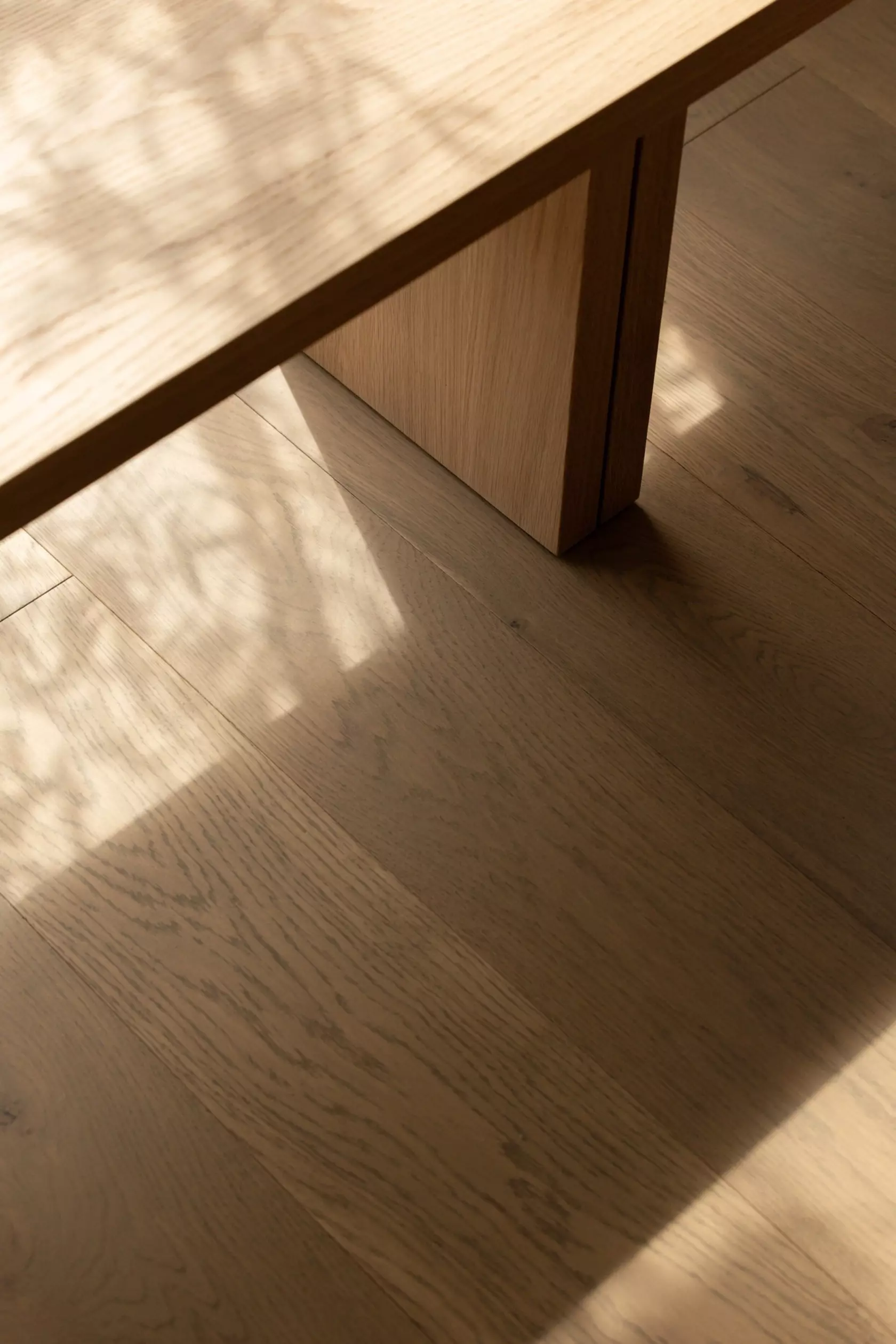
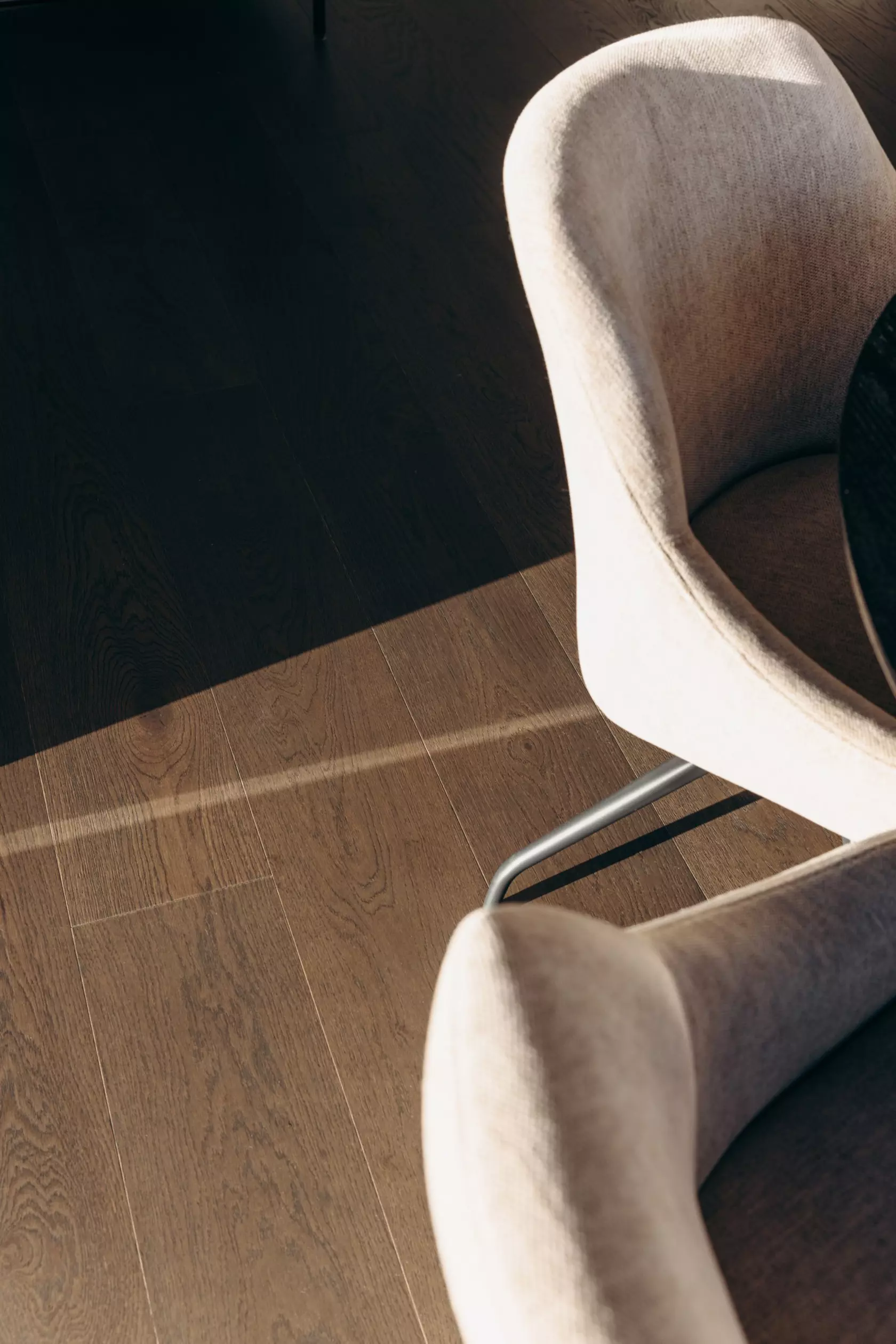
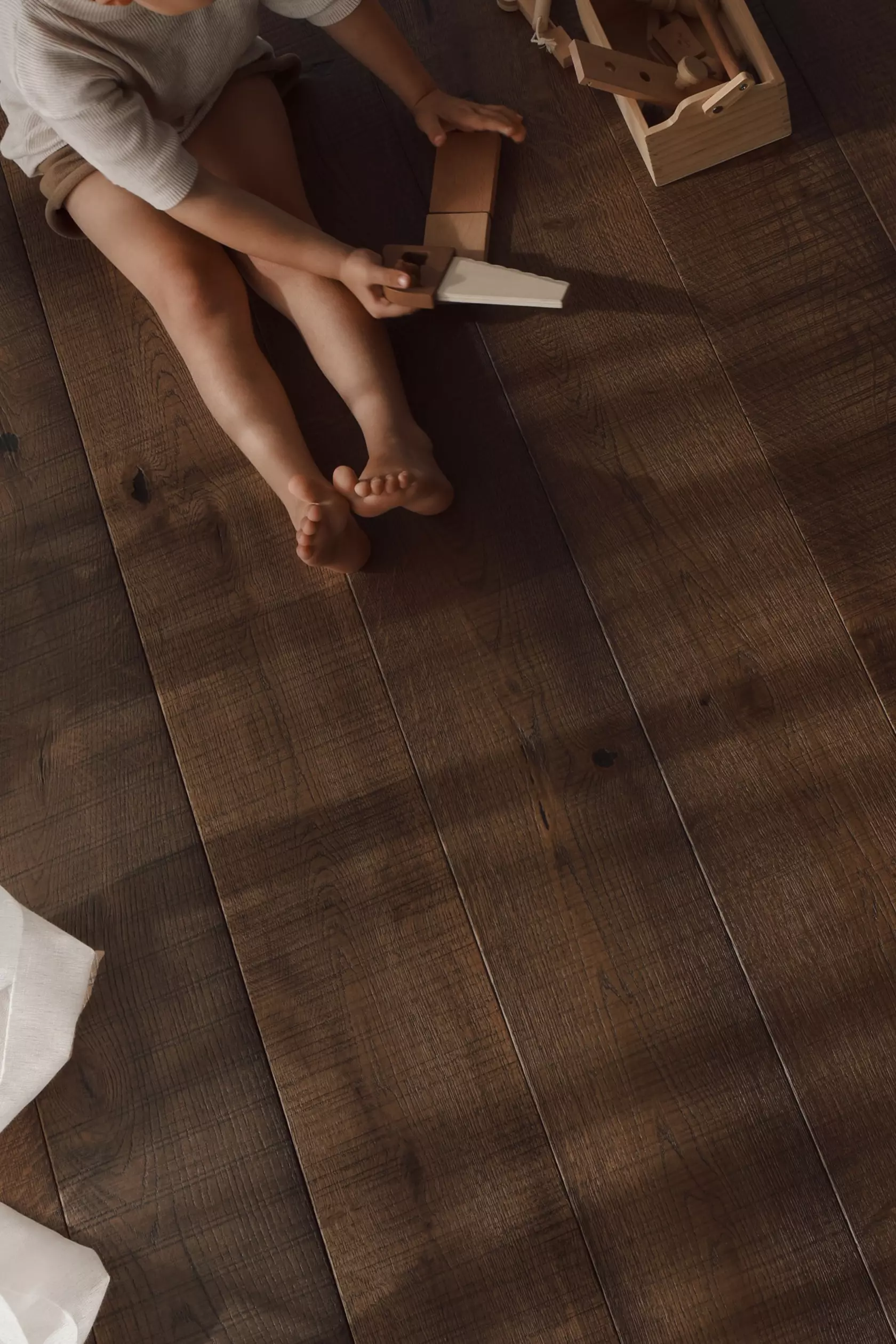
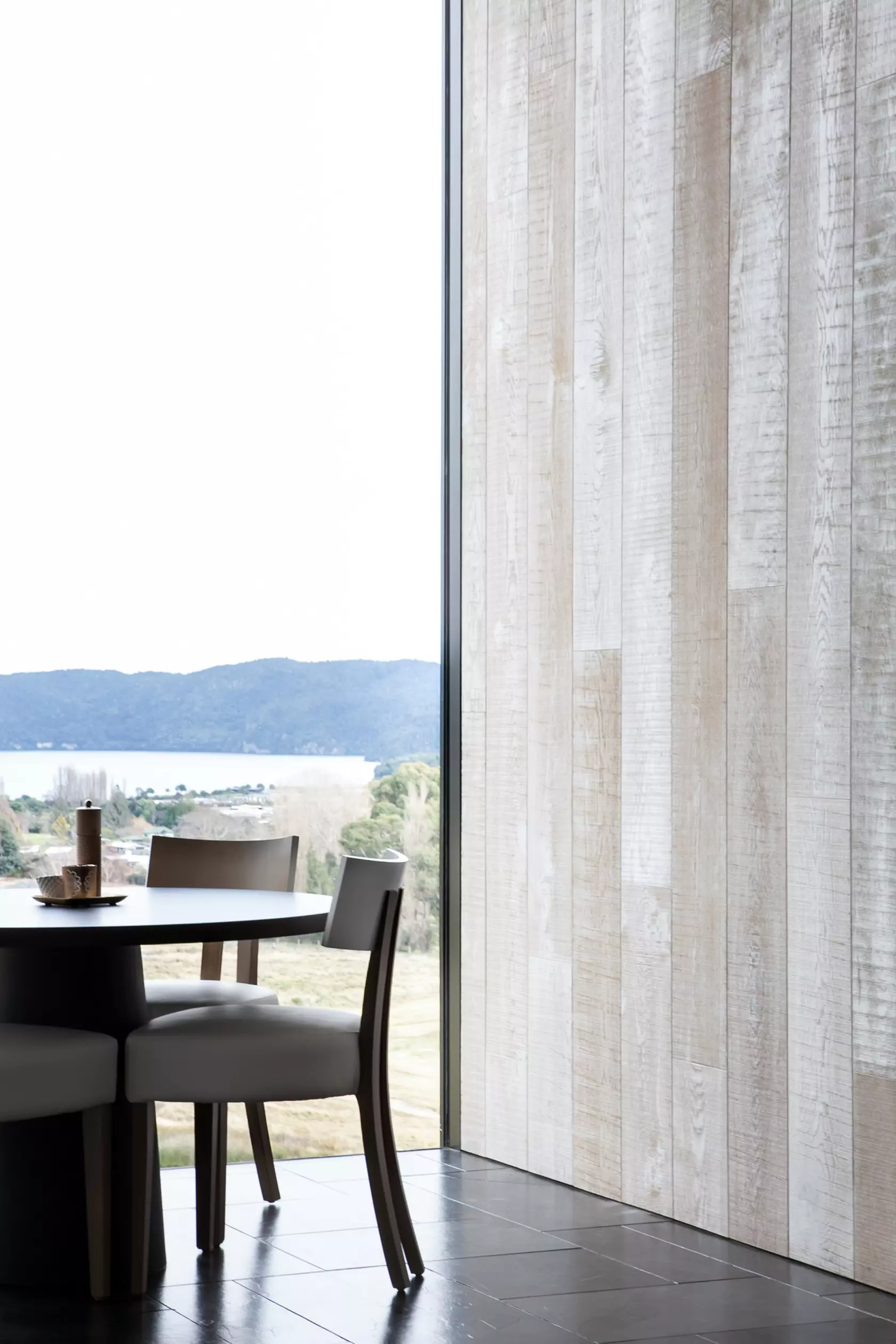
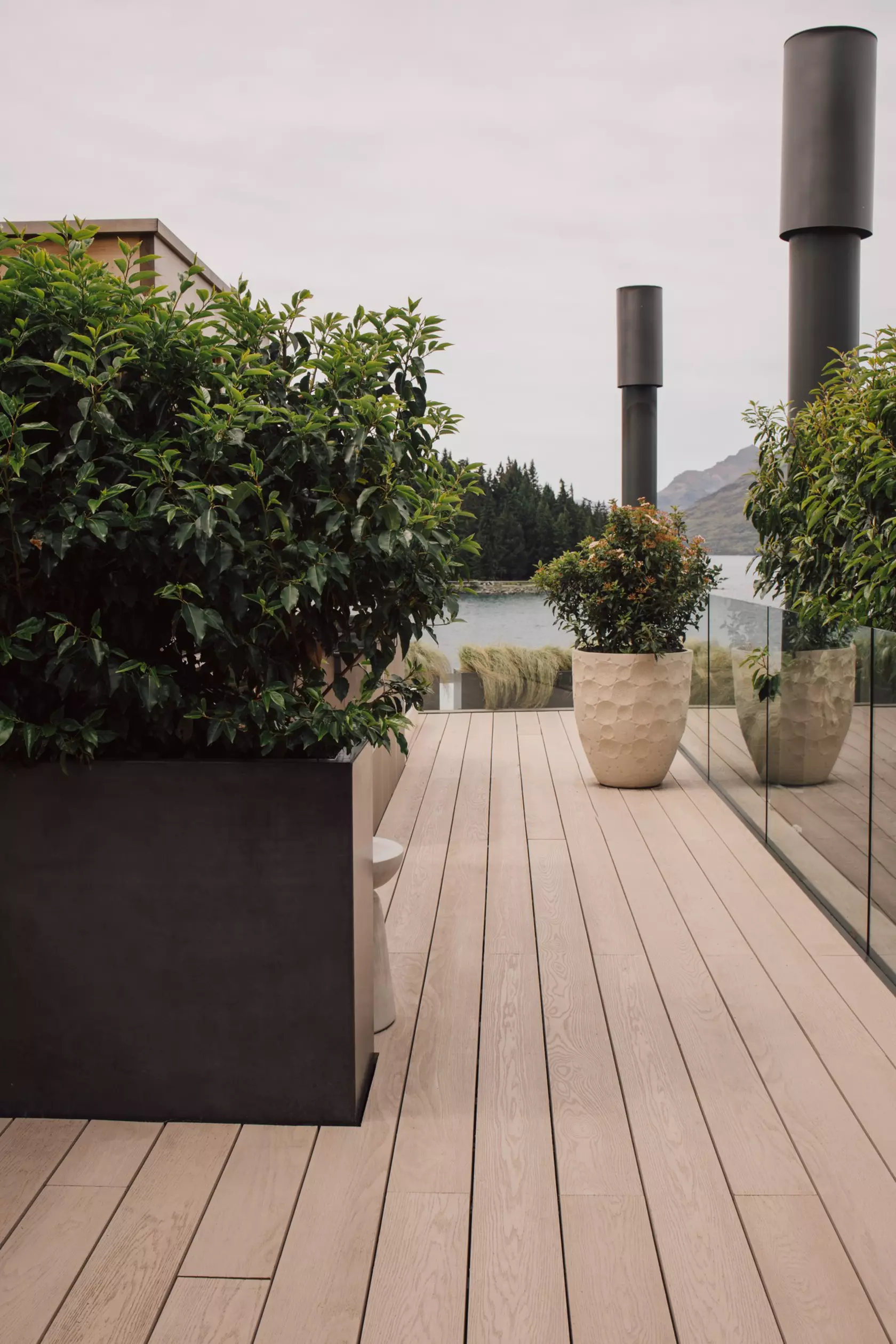
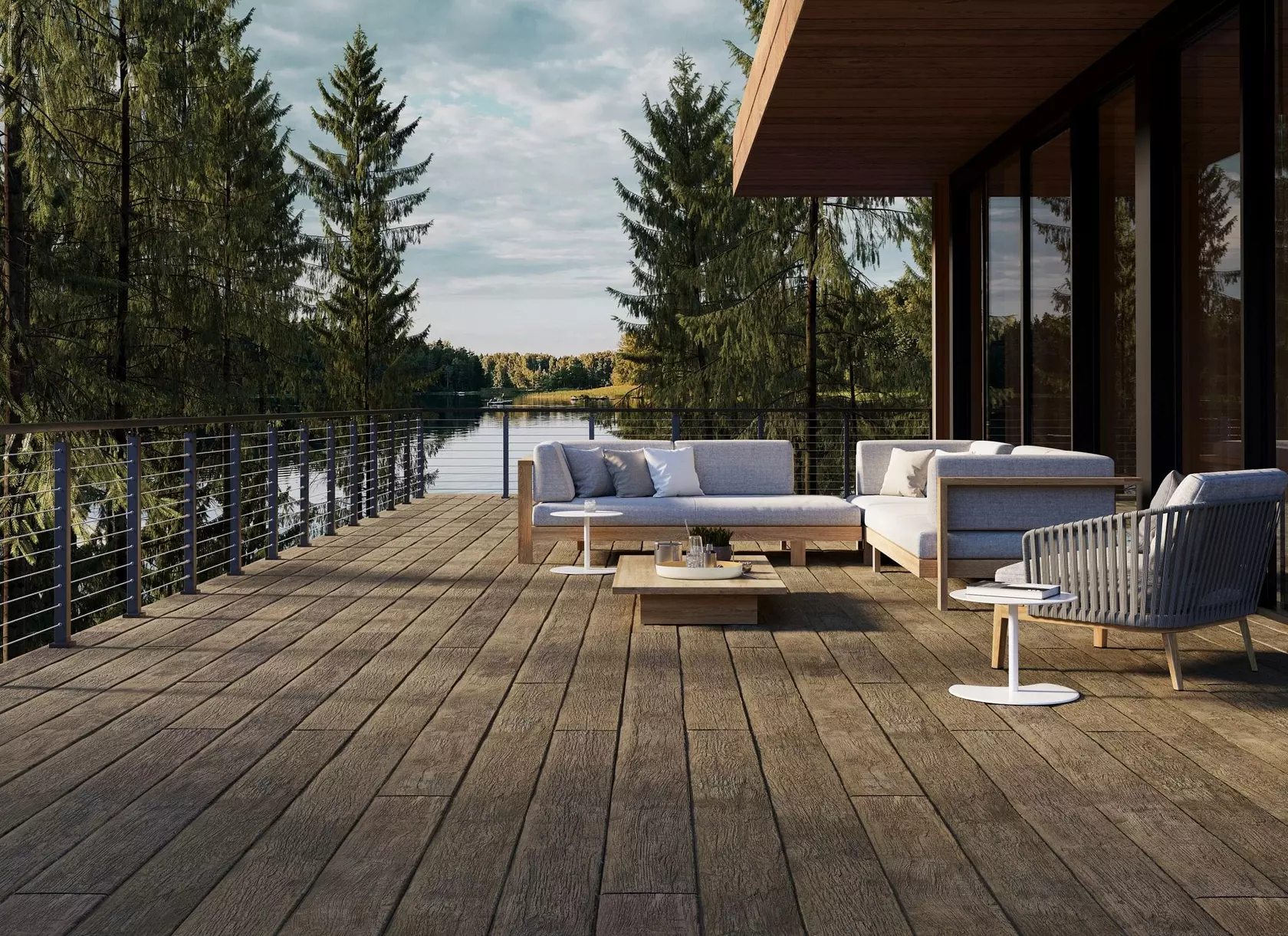
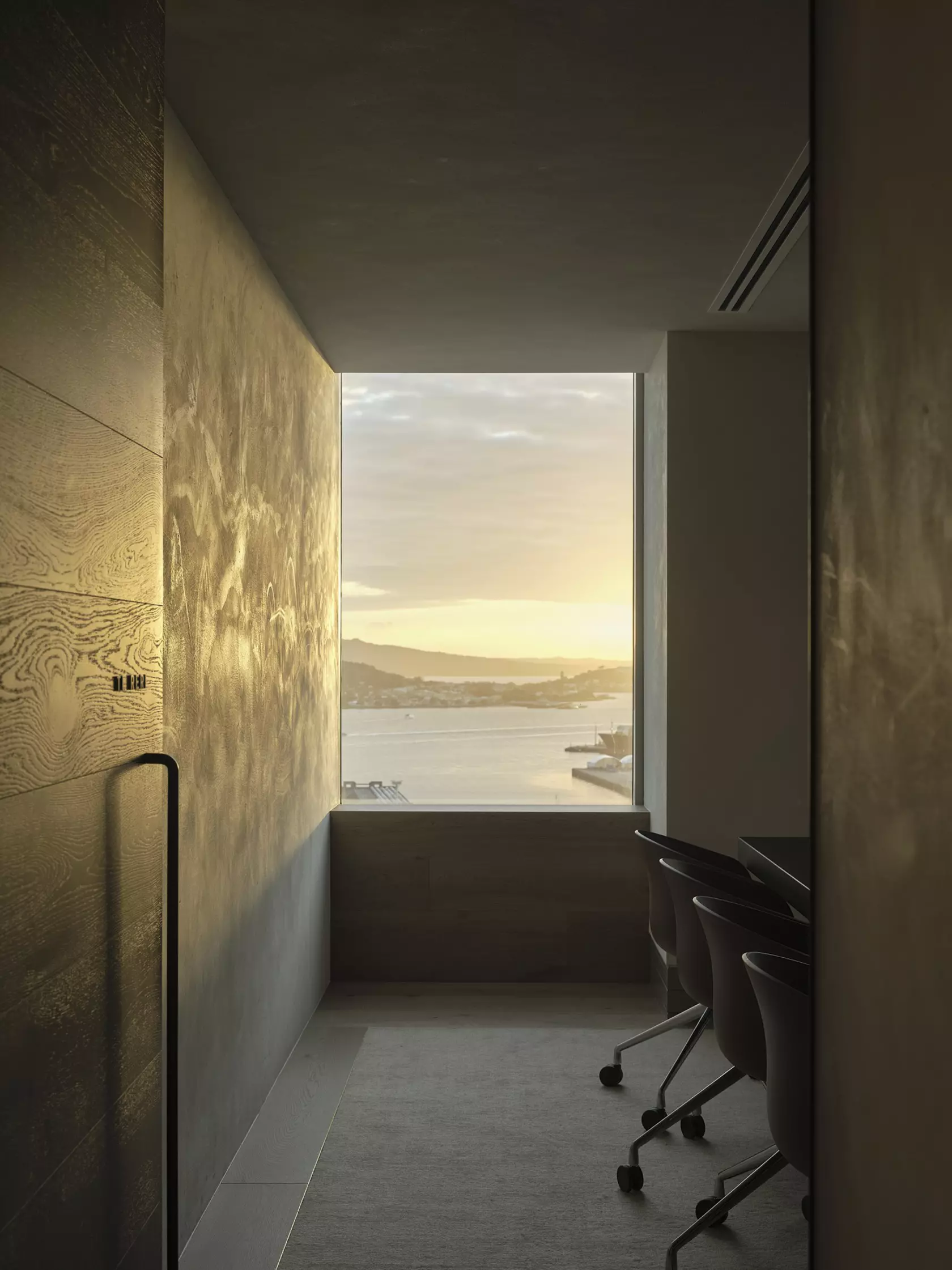
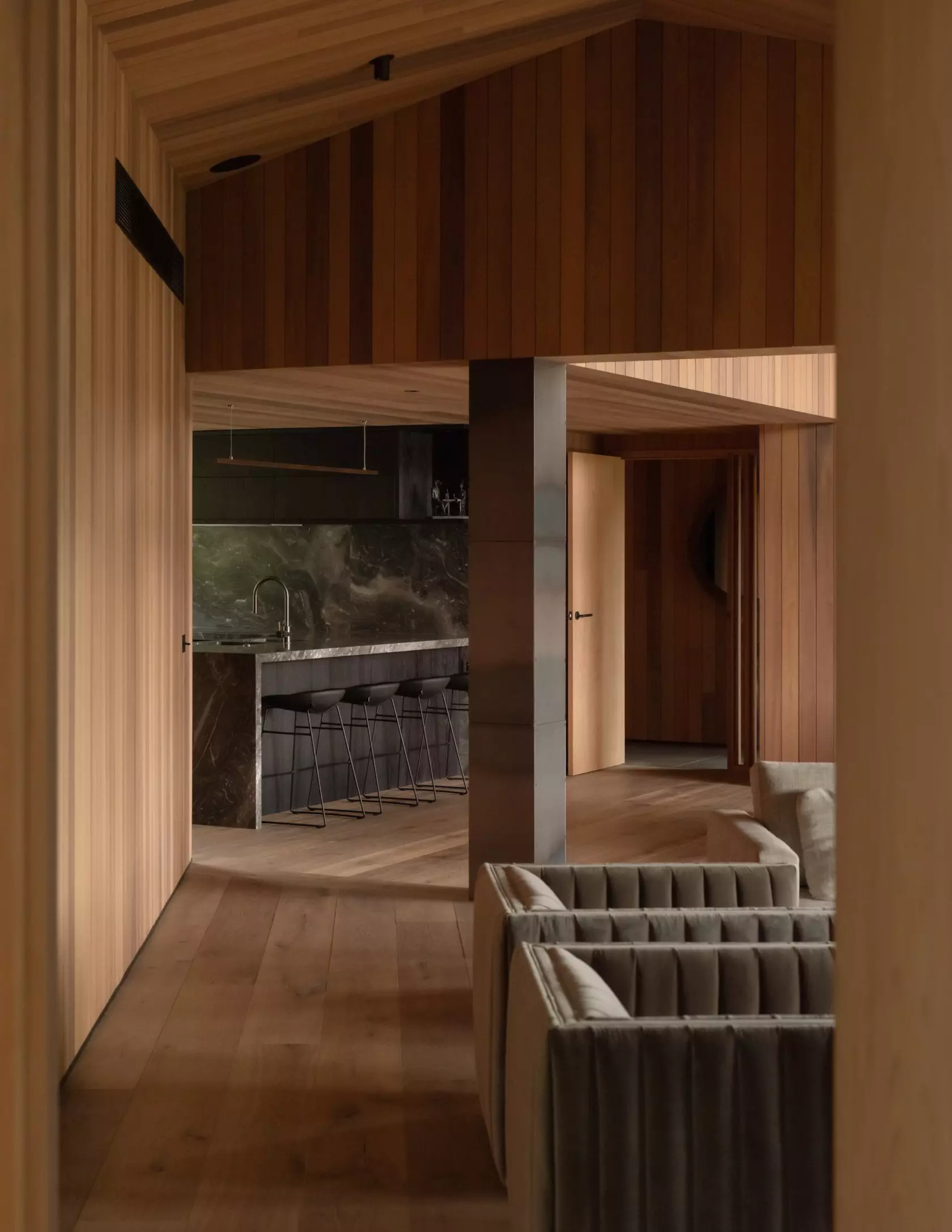
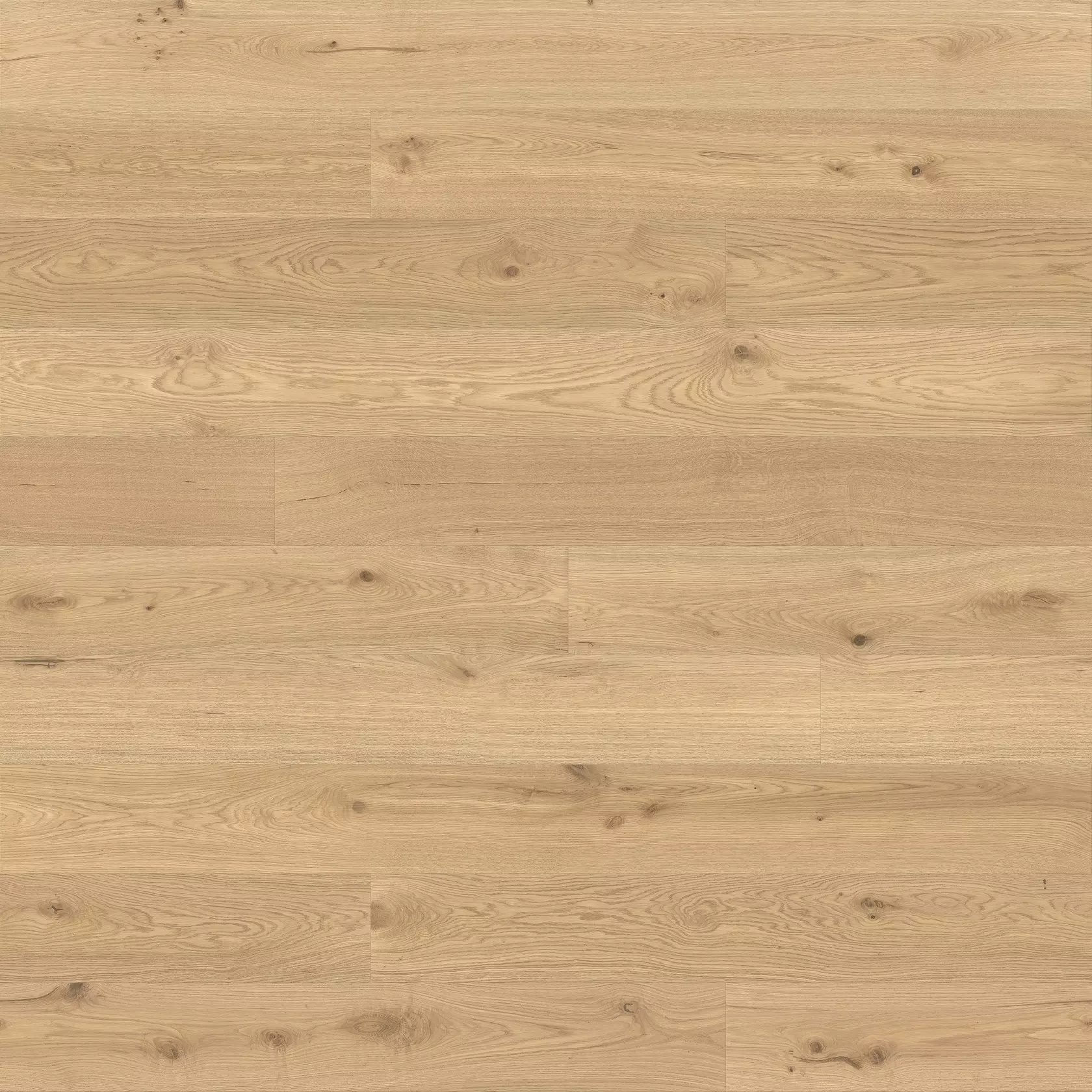
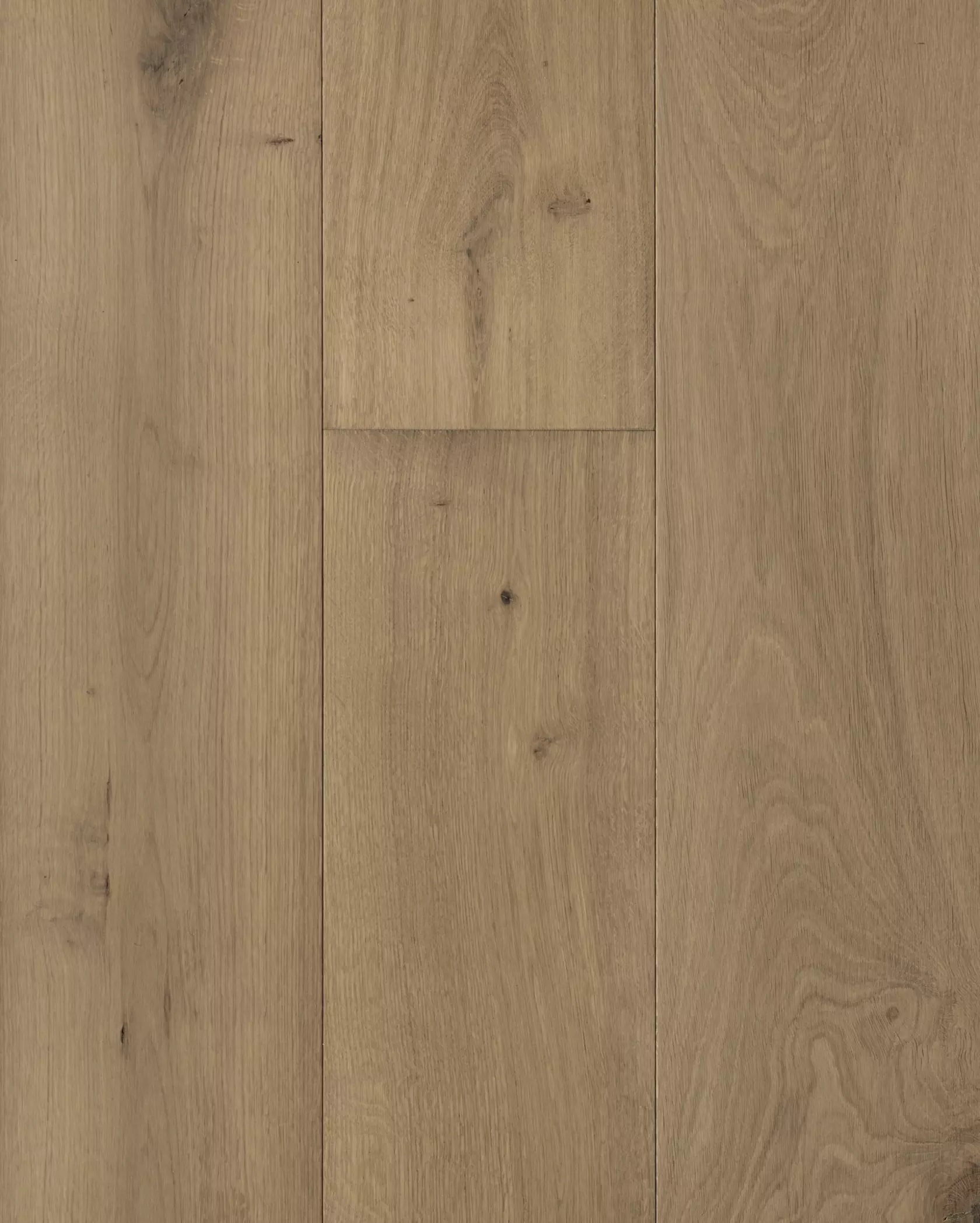
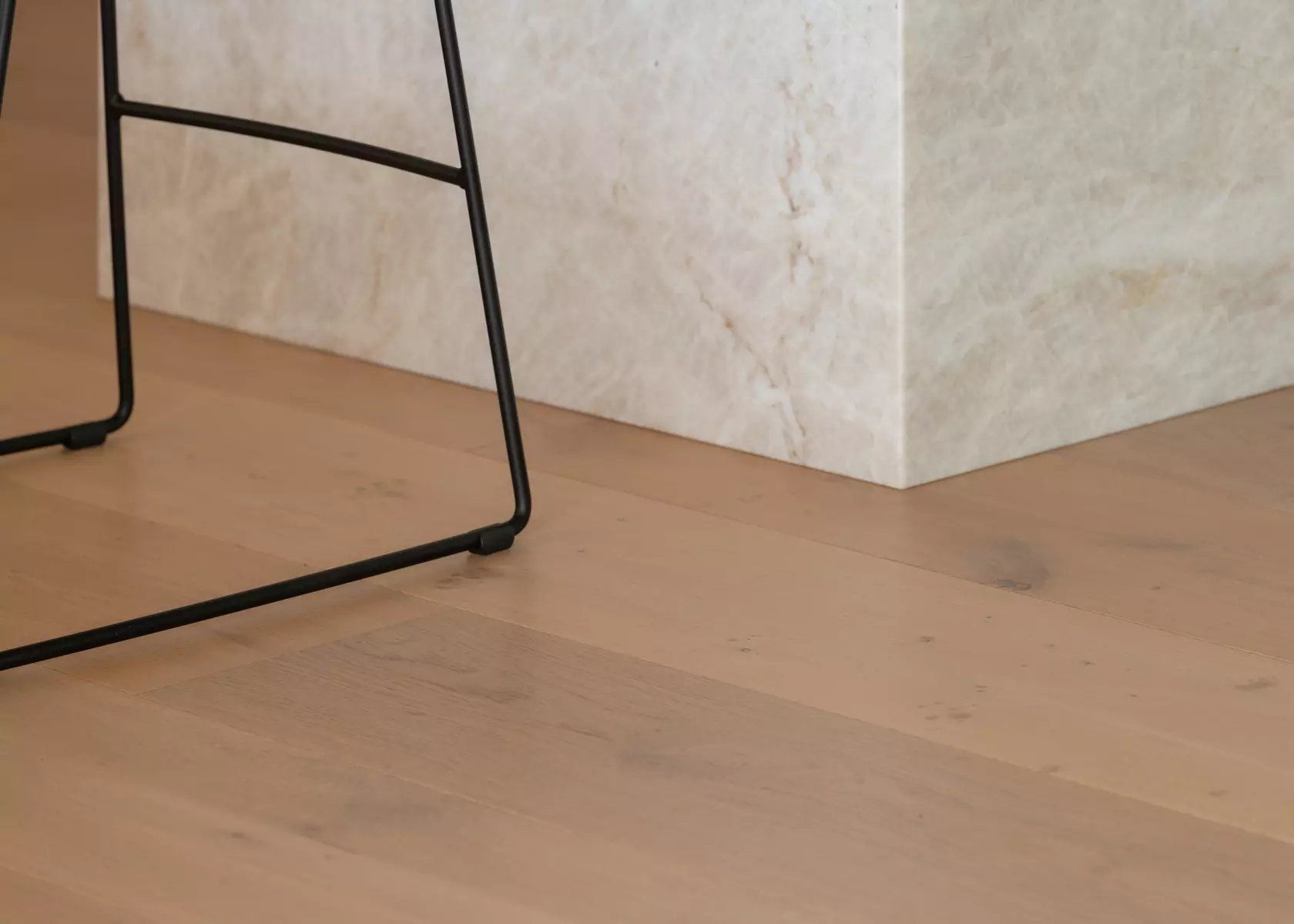
The material palette is where the connection between building and landscape becomes most legible. Forté's Atelier Siltstone flooring was chosen not for its specification alone, but for the way it reads in context. "We were drawn to the coloration of the Forté Atelier Siltstone," Nick says. "The aged and rustic finish is sympathetic to the coastal environment around here and it tied everything in really nicely." The warm, weathered tone echoes the headland at low tide, the colour the coast takes on in late afternoon light — a material that doesn't compete with its surroundings but converses with them. Wide boards extend that quality through the interior, carrying the eye seamlessly between inside and out.
The stone used throughout the landscaping and pool surrounds follows the same logic. Rather than shipping schist from the South, Smith Construction sourced locally — from a quarry an hour to the north. "There's nothing sustainable about trucking your schist from Queenstown to Northland," Nick says plainly. "You should use the local resource of materials as much as you can." The result is hard surfaces that look as though they were always part of the site, because in a sense, they were.
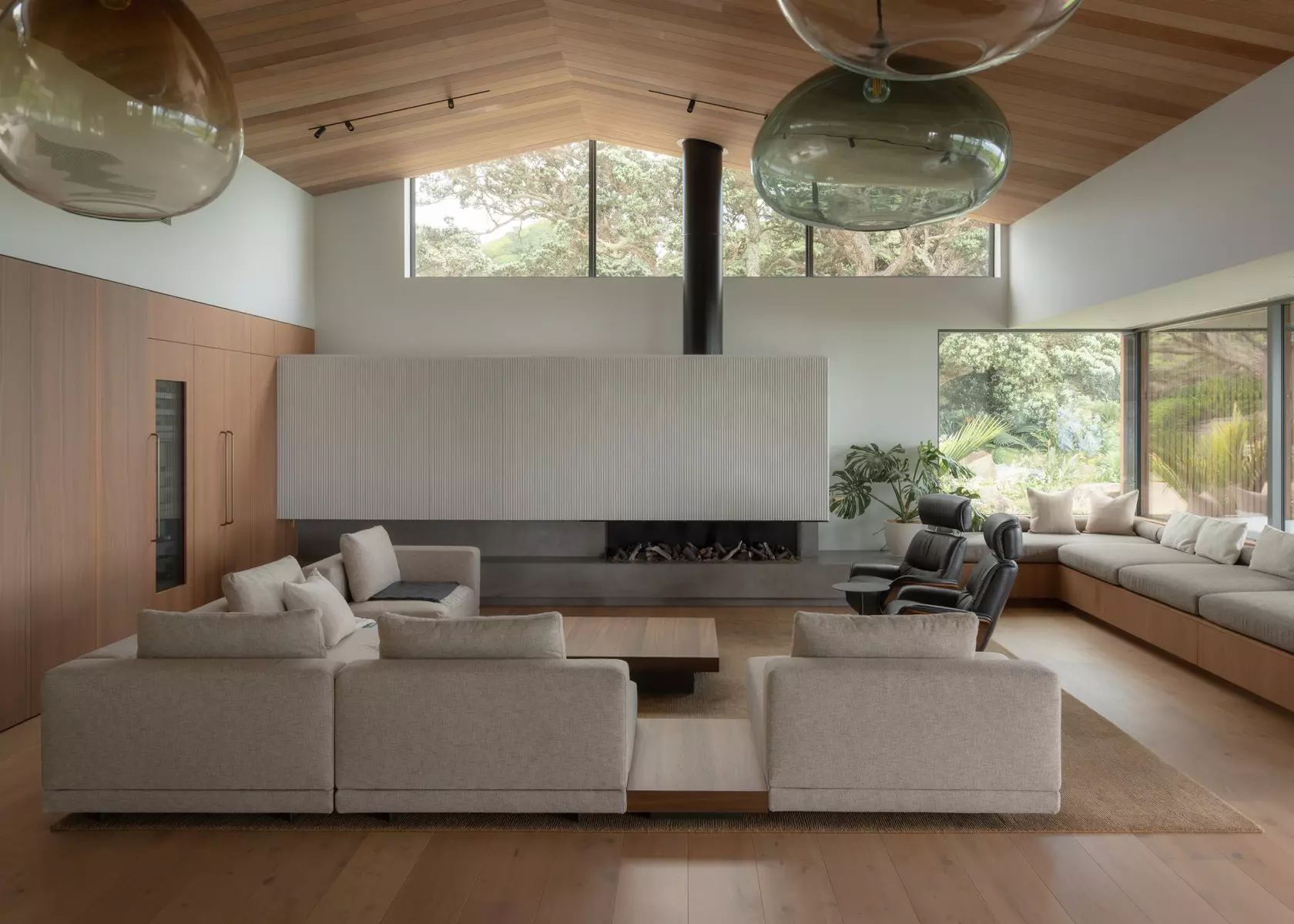
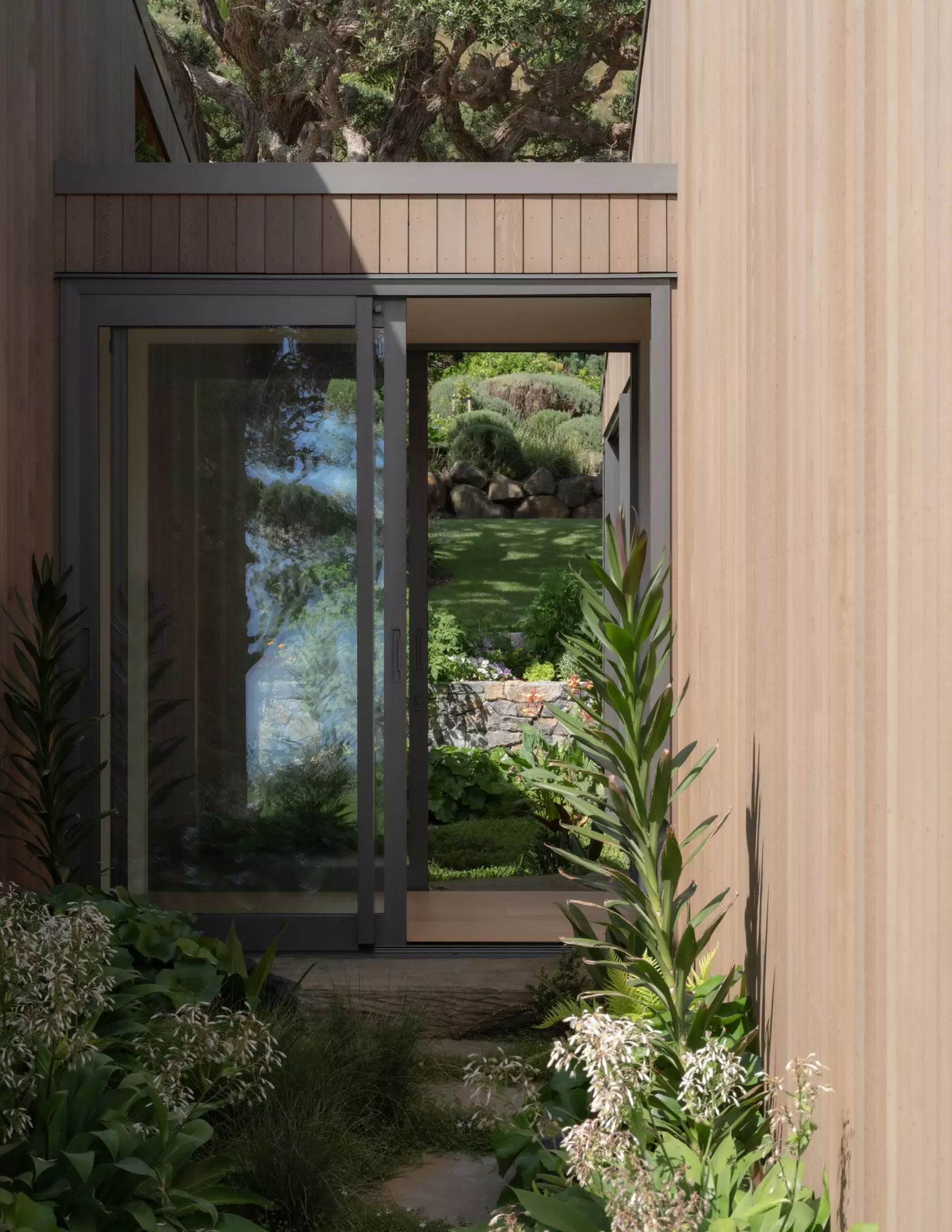
The existing pōhutukawa canopy — mature, irreplaceable, the defining character of the property — was protected throughout the build and integrated into the finished landscape. Native planting has been extended across the property, continuing a broader effort along the coastline to restore land to what it was before the pines arrived.
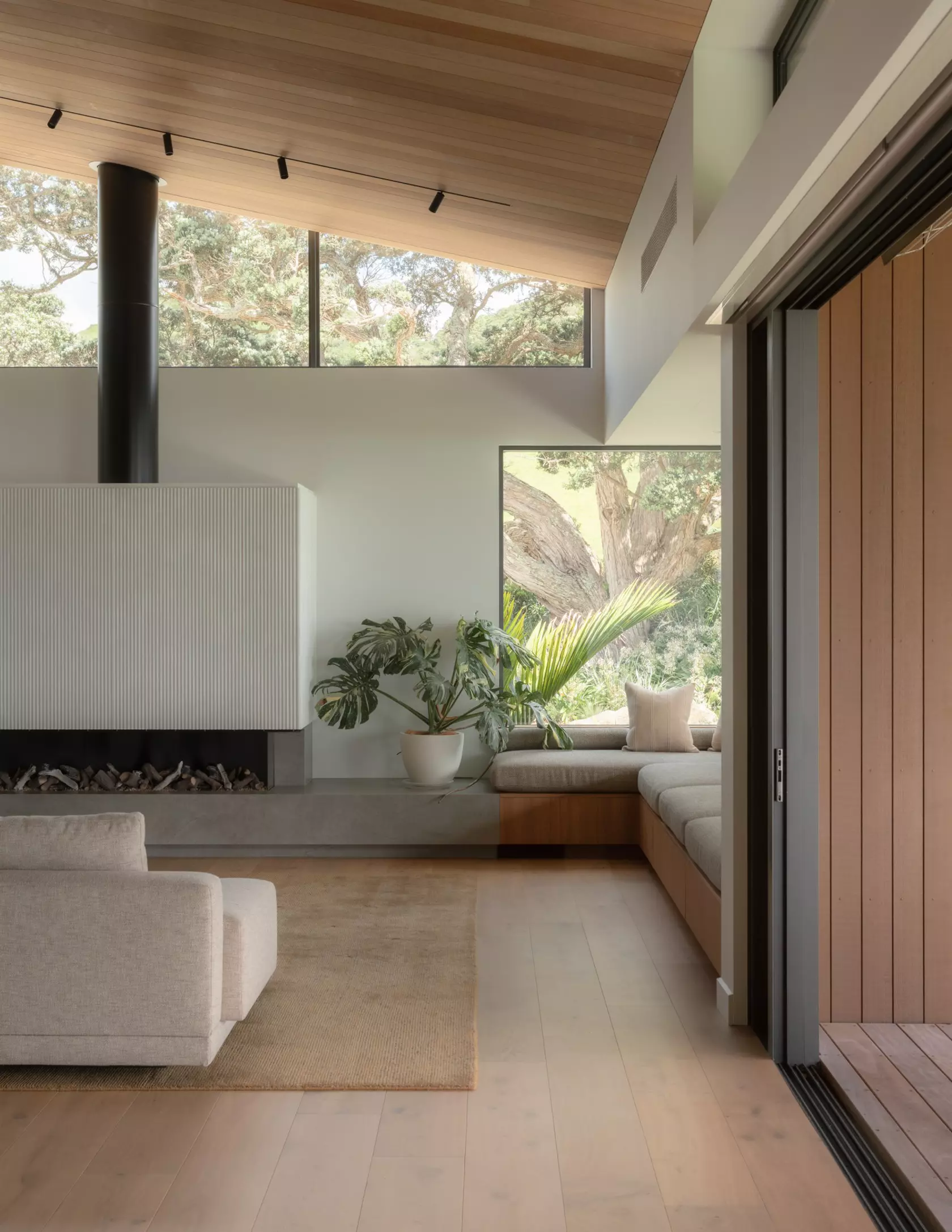
Beneath all of it lies an infrastructure most visitors will never see but that underpins everything they experience. Removing the existing house revealed significant groundwater and ground condition issues that required a complete drainage solution — now running silently beneath every deck and hard surface on the property. All exterior elements and a significant proportion of interior finishes are specified to marine grade. The house is designed to be salt-washed, maintained, and to outlast the one-in-a-hundred-year weather events that arrive every five years on this stretch of coast.
"Coastal homes need to be made," Nick says. "They need salt washed off them a lot — and that way you'll get a lot more life out of it."
Smith Construction's commitment to sustainability extends beyond material selection. Construction waste across the project was managed in partnership with Sustainable Kaipara, a regional organisation established to address a waste issue that Nick describes with directness: "Construction waste produces 70% of New Zealand's rubbish alone — and half of that can either not be created in the first place, or managed in a way that it can be repurposed."
Soft plastics from site were diverted to Future Post, a nearby facility that processes them into fence posts for vineyards. It is the kind of unglamorous, practical sustainability that comes from a decade of working in a small coastal town and having to solve these problems yourself, long before the industry made it easier.
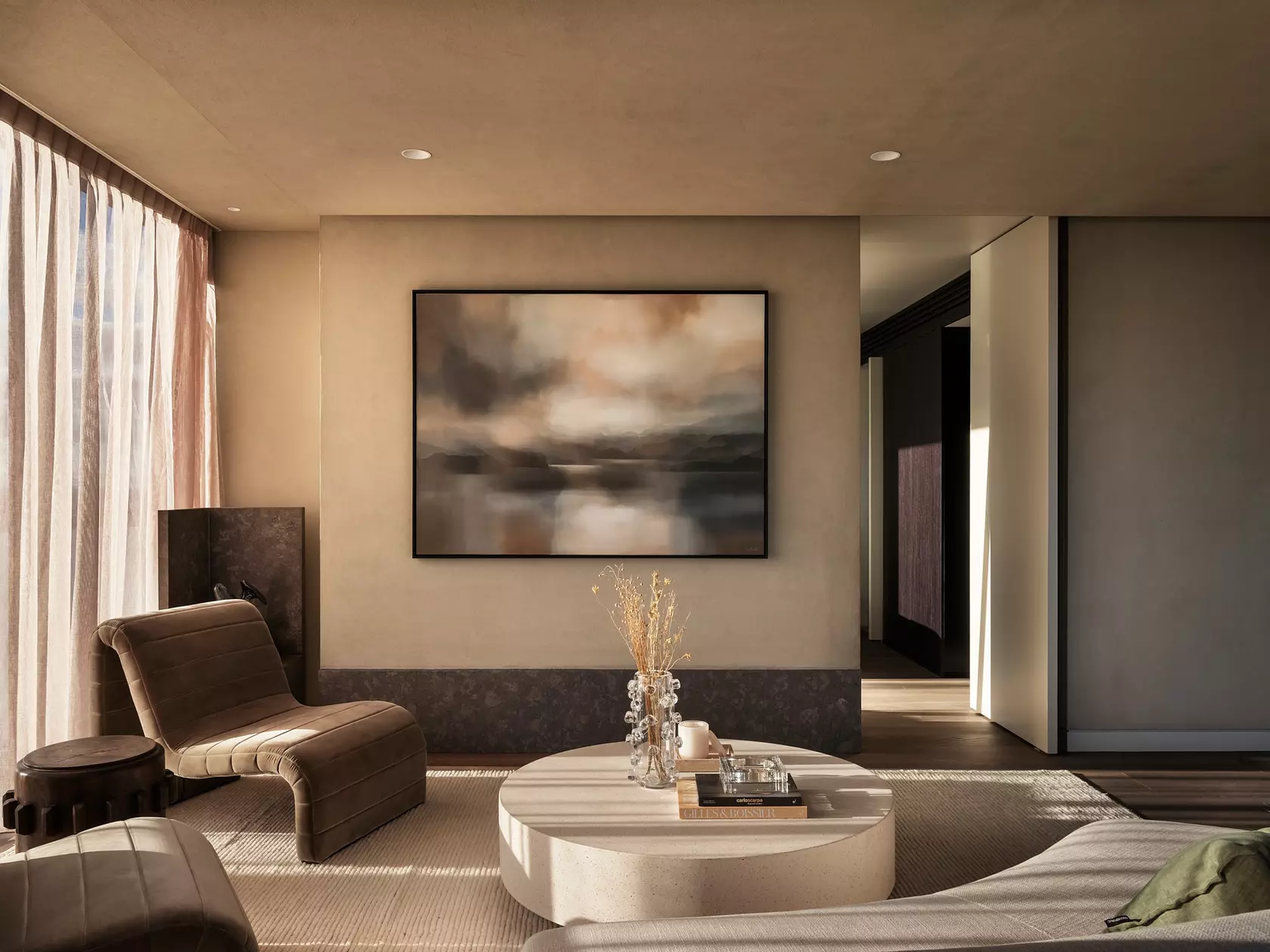
The home itself is generous and alive. A great room at its heart opens into a series of destinations — a snug with a fireplace, an art studio, an indoor-outdoor garden room, guest accommodation, a master suite with both indoor and outdoor bathrooms entirely private from the rest of the house. On the other side of the lobby, the boathouse tiki bar completes the picture. "There are multiple fun activities to do here and a multitude of spaces where you can entertain or you can hide away," Nick says. "They want a home to live in. It's not just to be a piece of art that you can't touch."
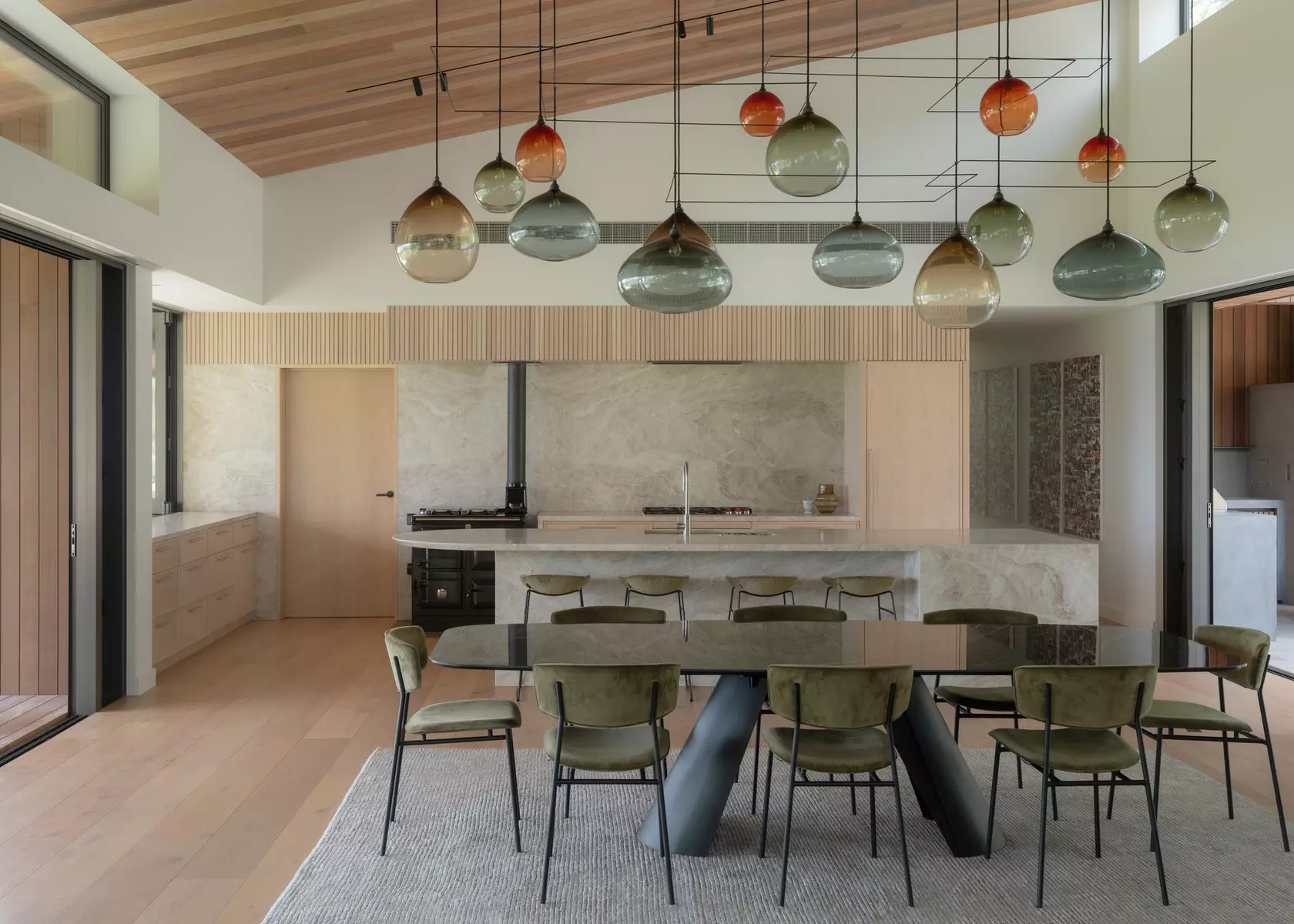
Covered decks on both elevations ensure the house works regardless of weather. Built-in audio runs throughout. It is, emphatically, a home built to be used.
What lingers, though, is something harder to build than any of that. Pōhutukawa House sits quietly in its landscape, shaded by trees that were here long before it arrived — a home that took its cues from the environment around it and was built by a team that understood their responsibility to the place as much as to the brief.