



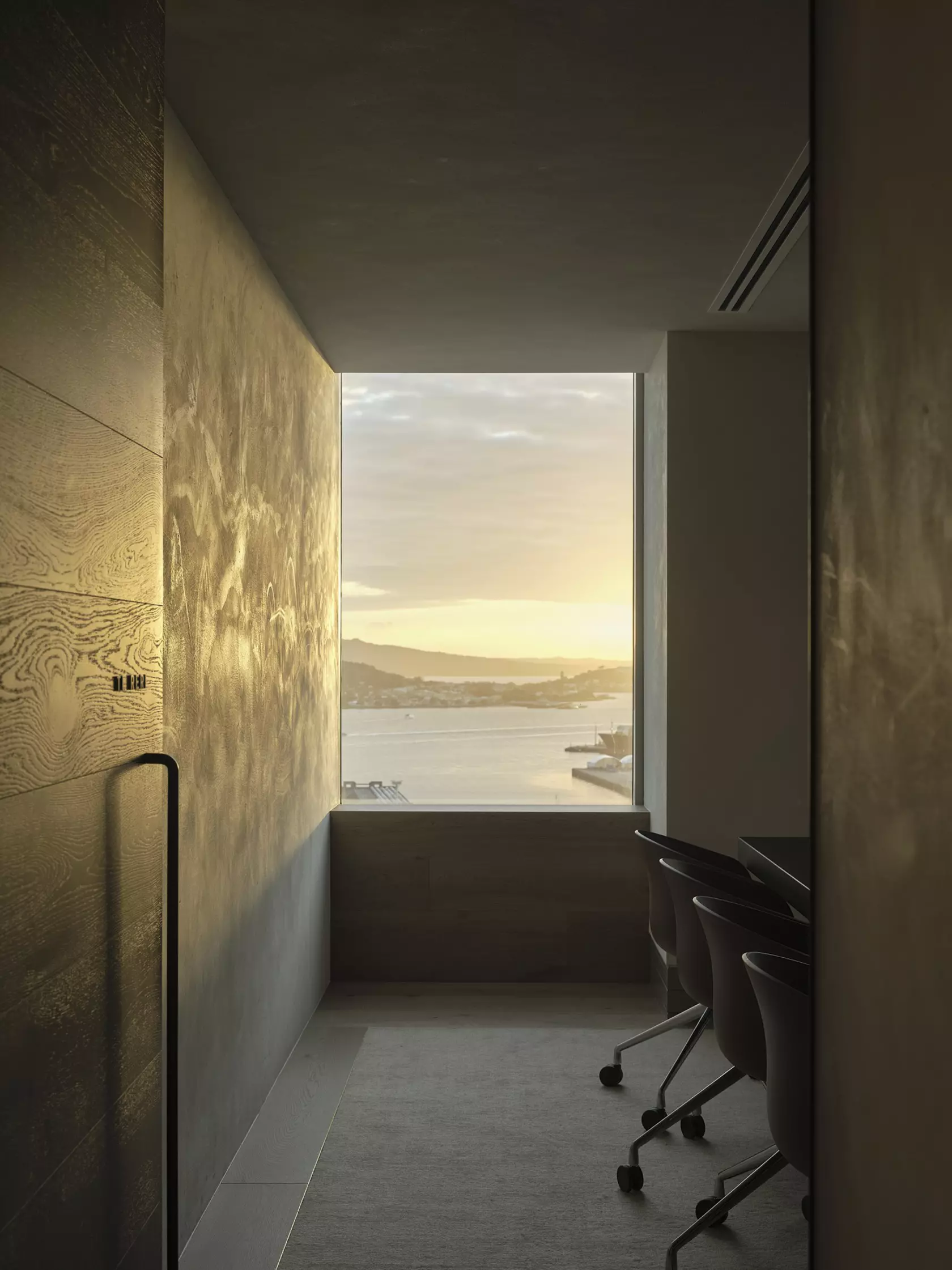

There's confidence in a brief that doesn't specify a singular finish, fixture or colour. When The Research Agency (TRA) returned to José Gutiérrez for their latest fitout project, their ask was more philosophical than that — a request for a workplace built around people, not performance. The result is a space that has cleverly redefined what a high-functioning office can feel like.
Gutierrez' work with TRA spans fifteen years and three distinct chapters: a High Street fitout in 2010, a relocation to Britomart in 2015, and now a complete reimagining of that same Britomart floor plate. With each iteration, the brief has grown more refined — a reflection of a business that understands the value of design and engages with it seriously.
TRA has also grown considerably in that time. Now operating across Auckland, Sydney and Melbourne, the consultancy is by any measure a significant business. But scale, in this case, made the design challenge more human, not less. Post-pandemic, a large proportion of their team had settled into remote work. The question was never how to mandate a return, but how to make the office genuinely worth coming back to.
For Gutierrez, the longevity of the relationship was inseparable from the quality of the outcome. "They trust us. We understand what they're about," he says. "Knowing them as we have for the last 15 years — we've ended up with this as an evolution of what that used to be." That accumulated understanding meant TRA could hand over a brief built not on specifications, but on feeling. They spoke about what they wanted people to experience. The studio's job was to translate that into built form.
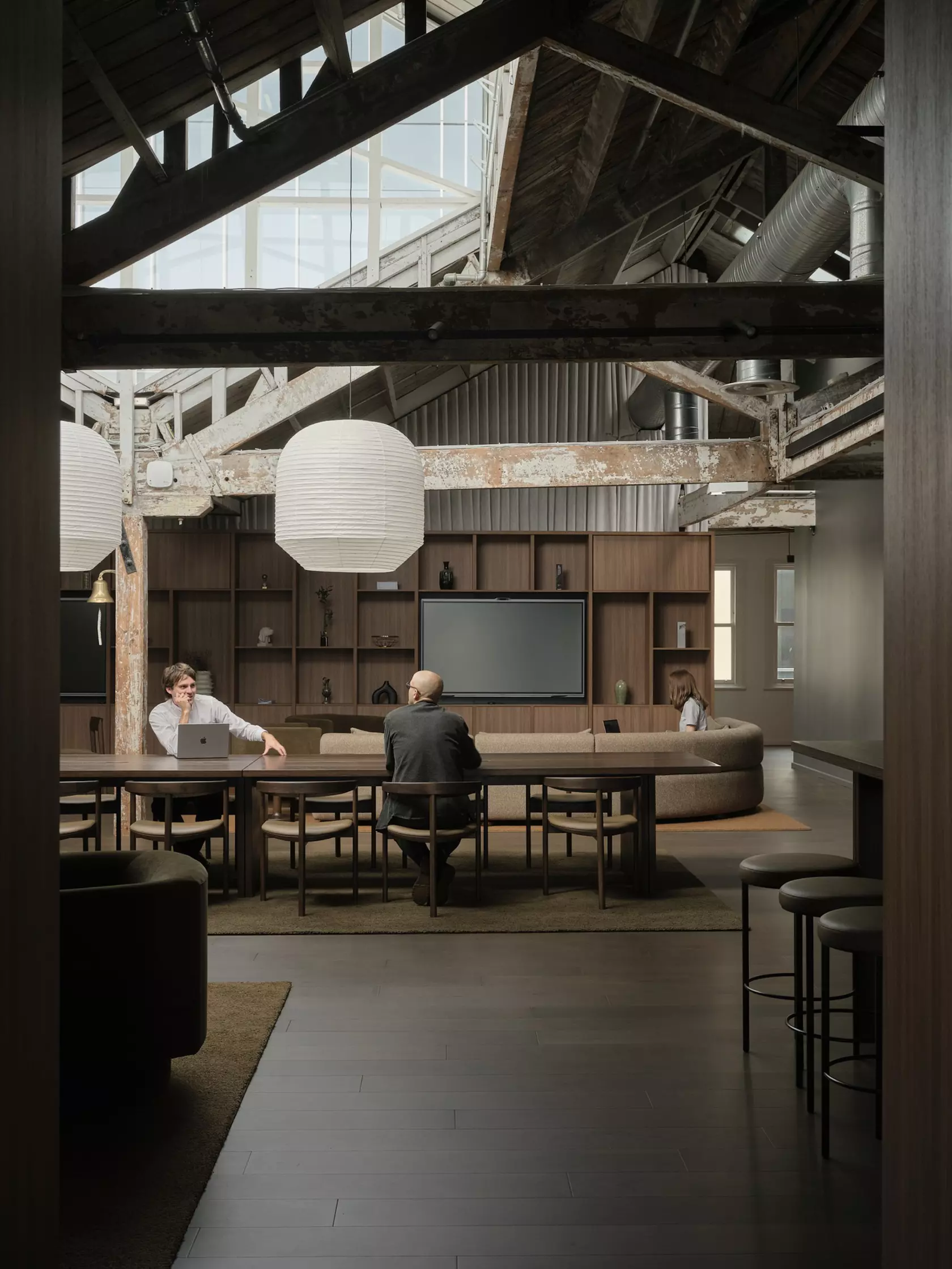
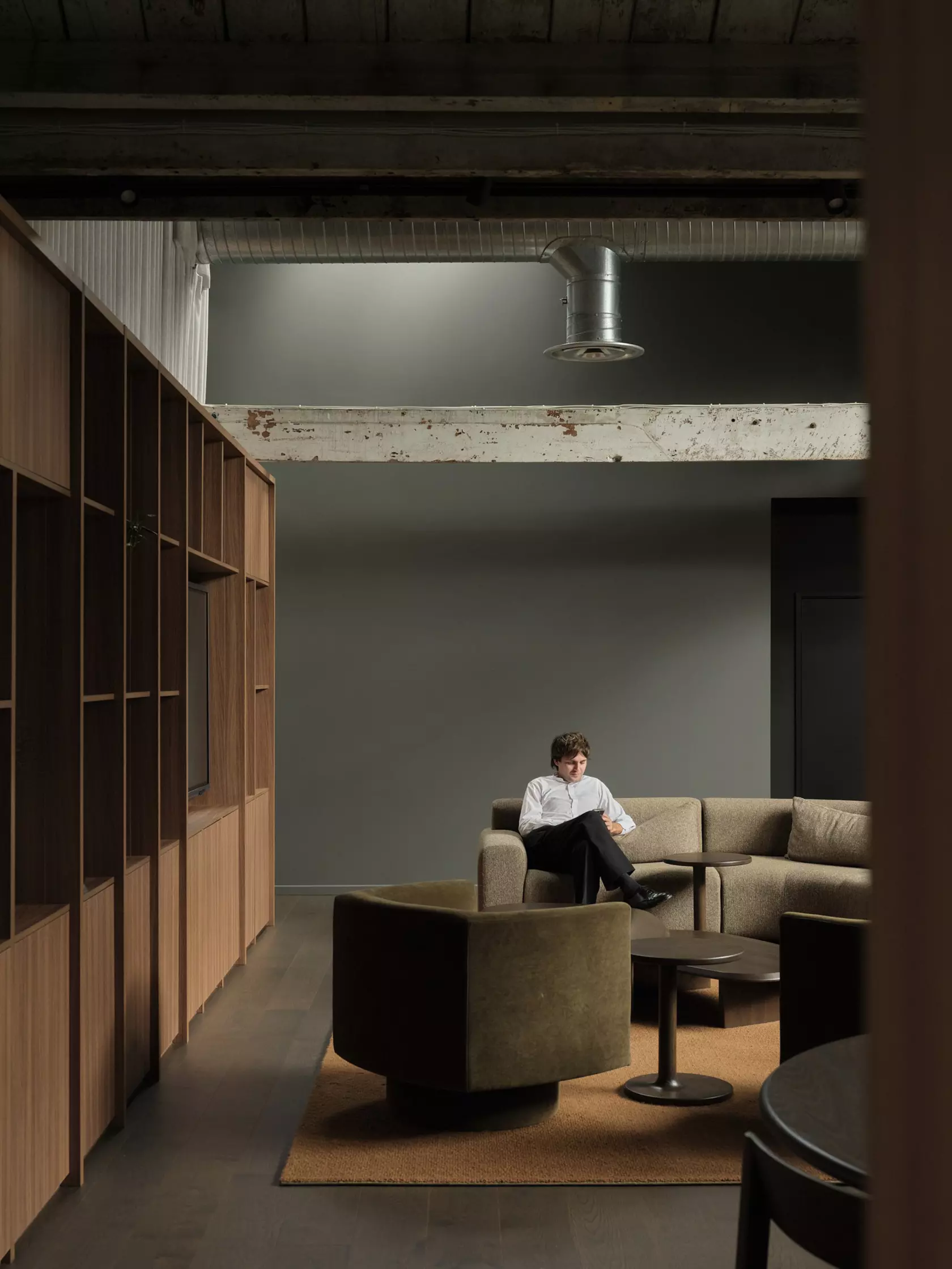
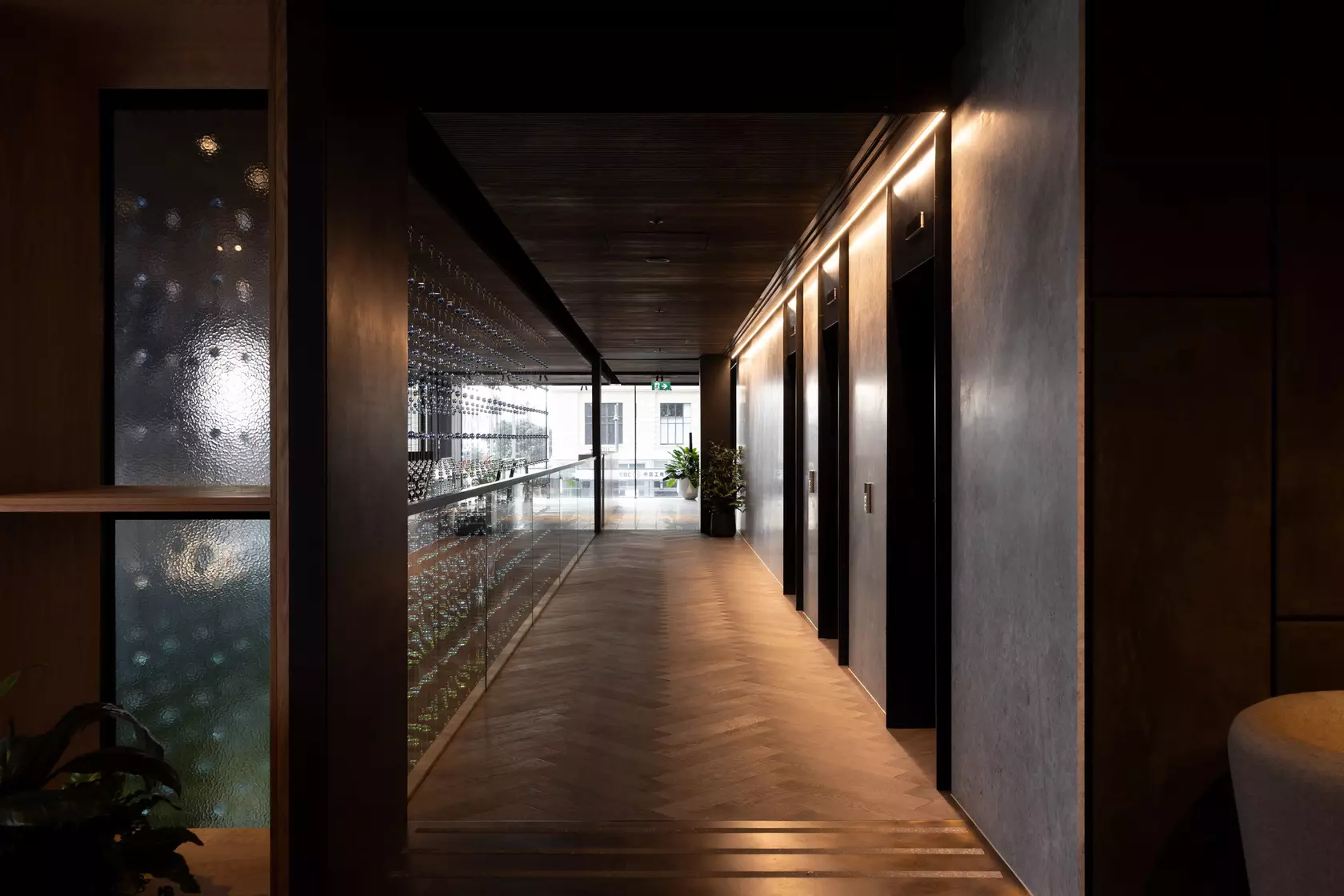
The previous layout was considered for its era: ordered, symmetrical, designed to impress on arrival. What it lacked was warmth, and a reason to move about. The new concept replaced spectacle with choreography.
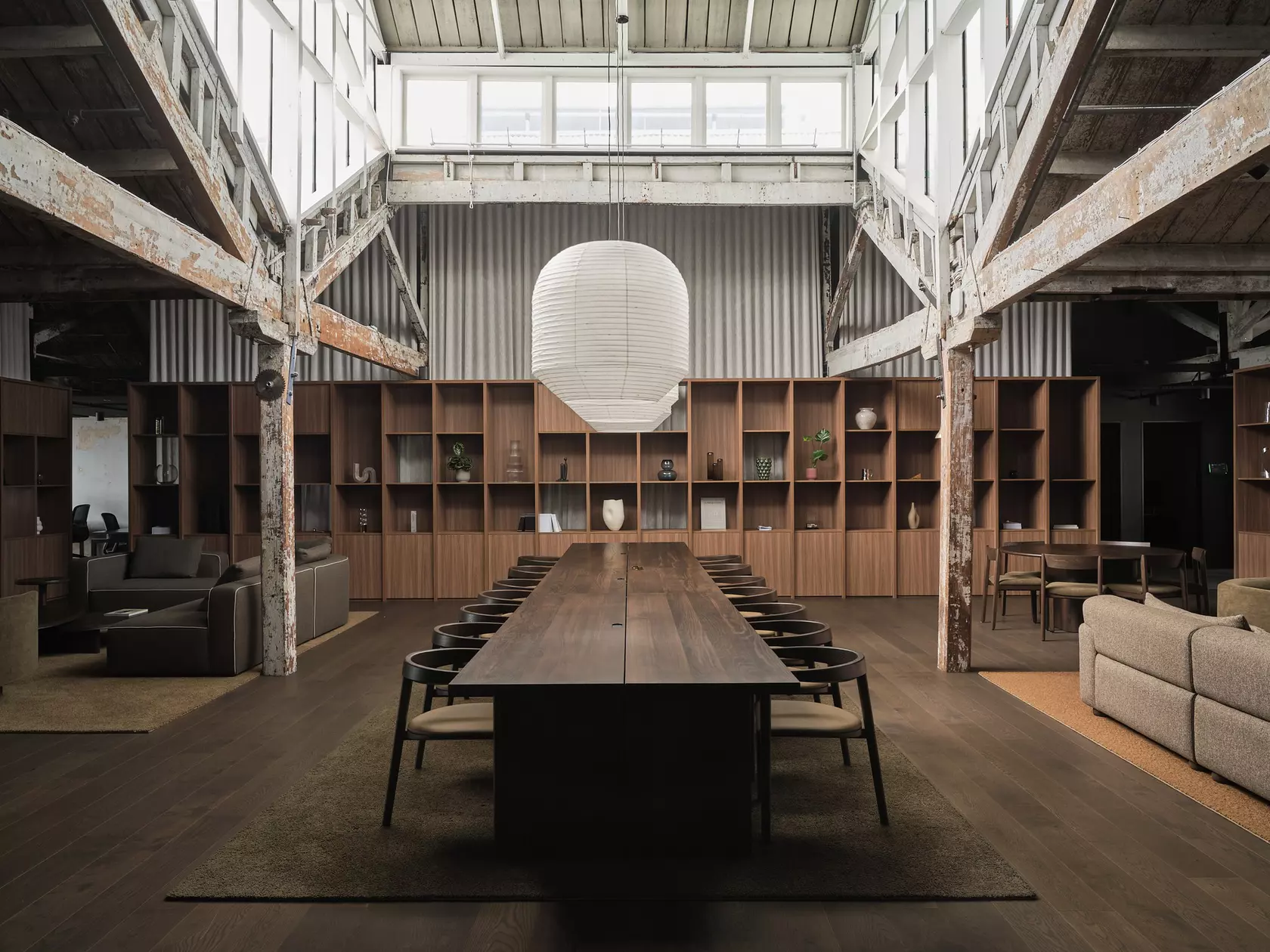
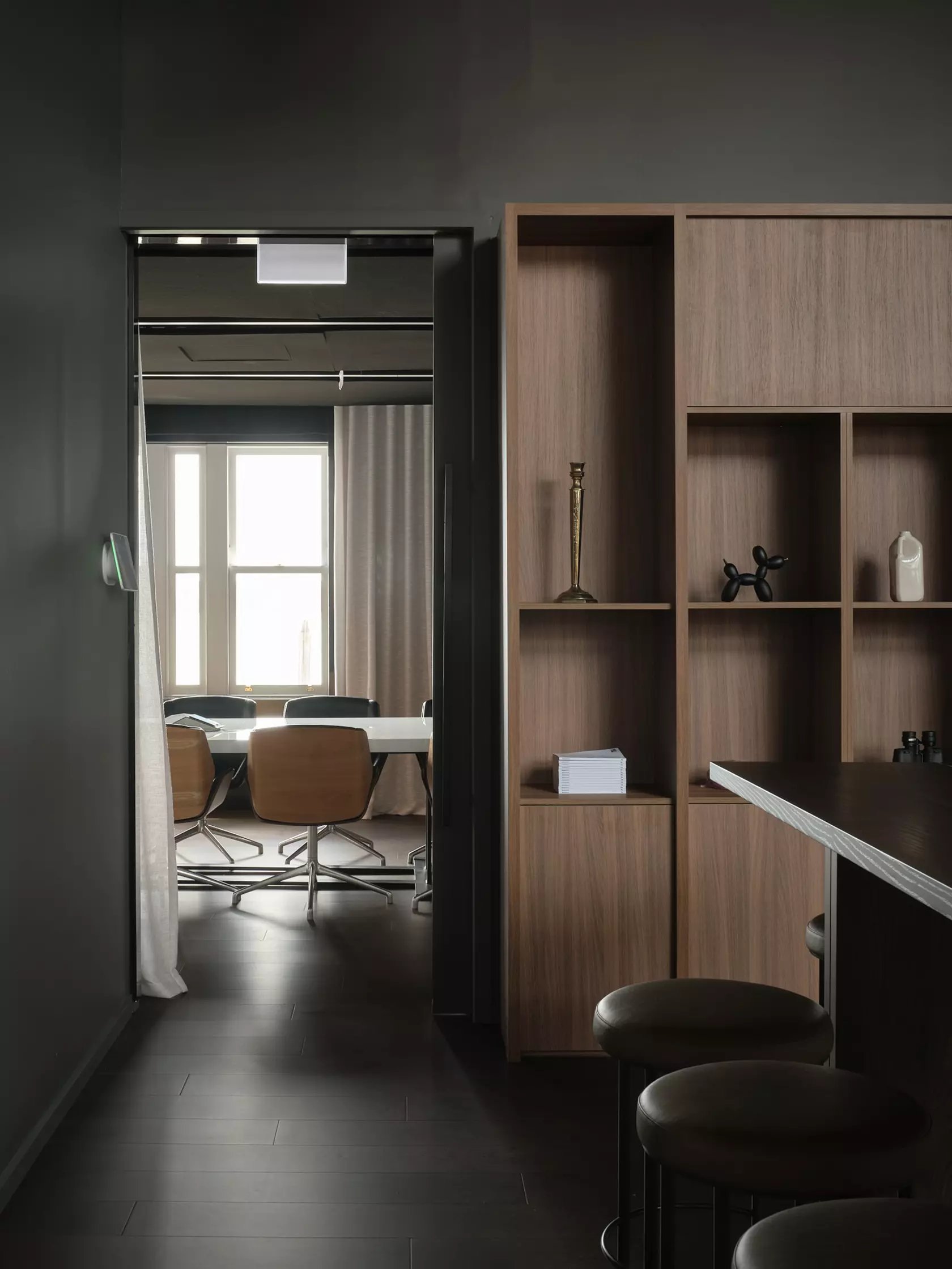
At the centre of the design sits a generous social courtyard; a civic gesture within a workplace. All task-focused spaces, meeting rooms, acoustic pods, and workstations are positioned at the perimeter, so that every journey through the office passes through this shared heart. Encounters become inevitable. Conversation, spontaneous.
"We thought: why don't we create this big social space, and put all the more functional, traditional components of the office around the perimeter... and therefore force people to walk across it?" Gutierrez reflects. "As you're walking across, you might have a chance meeting with someone that might spark a conversation, that might lead you into solving the issue you have around a particular project."
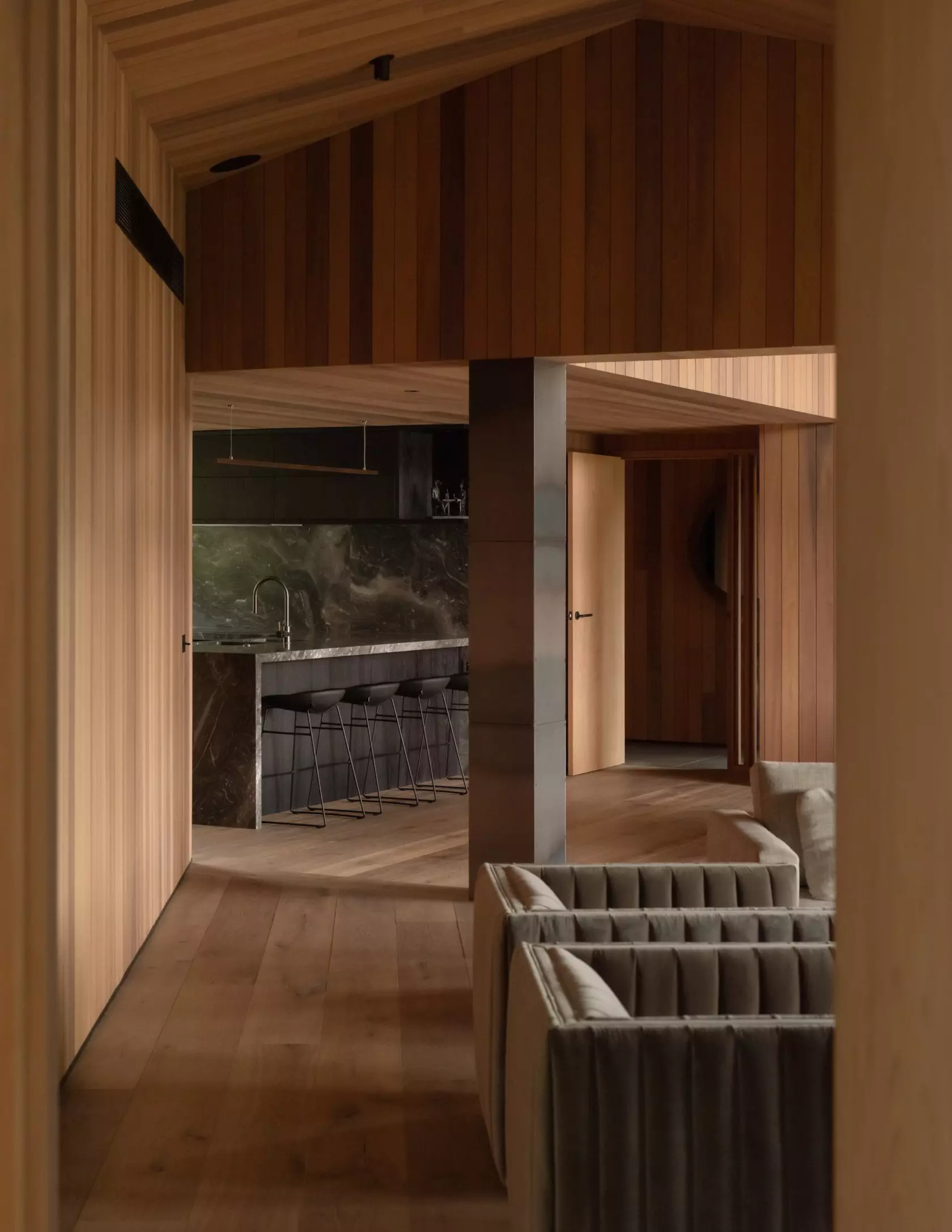
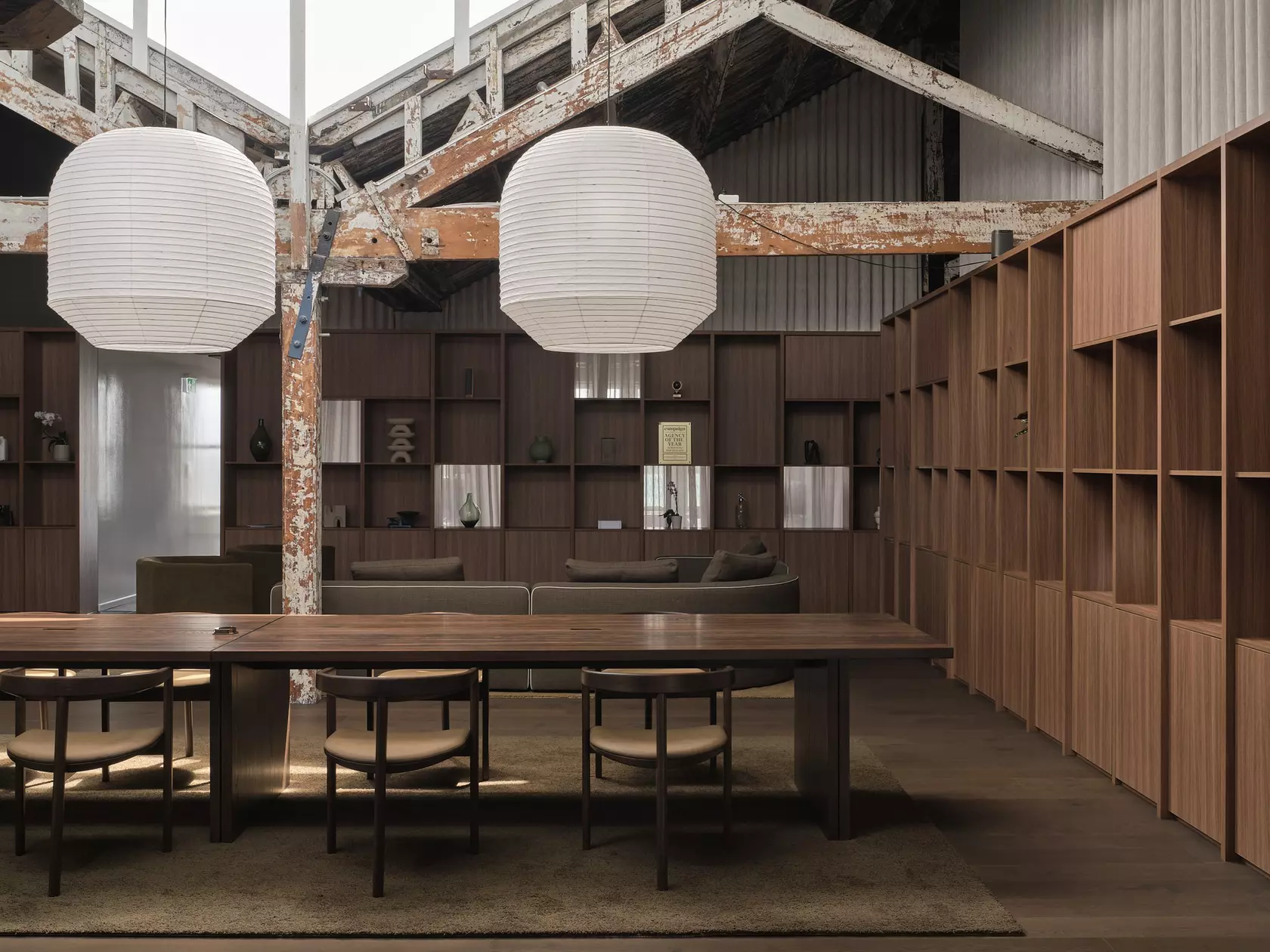
It is the kind of spatial thinking that shapes culture rather than simply housing it. The building's existing clerestory roof anchors the whole proposition; flooding the central zone with natural light that shifts and deepens across the day, lending the space a dynamic quality that no fitout specification alone could manufacture.
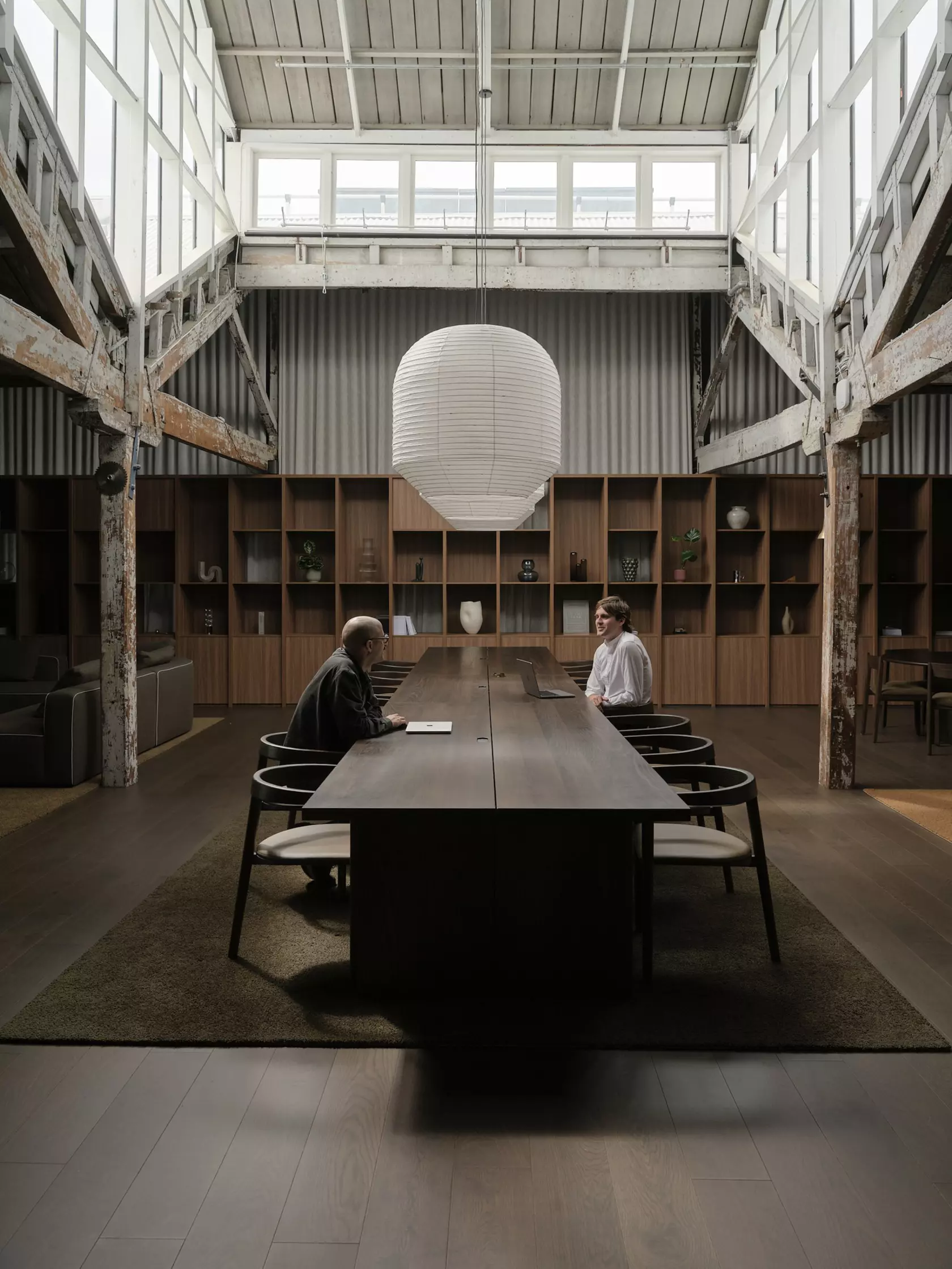
TRA's brief returned again and again to a single word: humanness. A commitment not to a residential aesthetic as such, but to the way in which such spaces promote a sense of grounding, ease and presence. "They talked about seeking humanness," says Gutierrez. "Putting more emphasis on people — on how they feel — rather than creating this big 'look at us' moment. It was more about: let's be more concerned about our staff, and how they're going to work and how they're going to feel, rather than being a showcase."
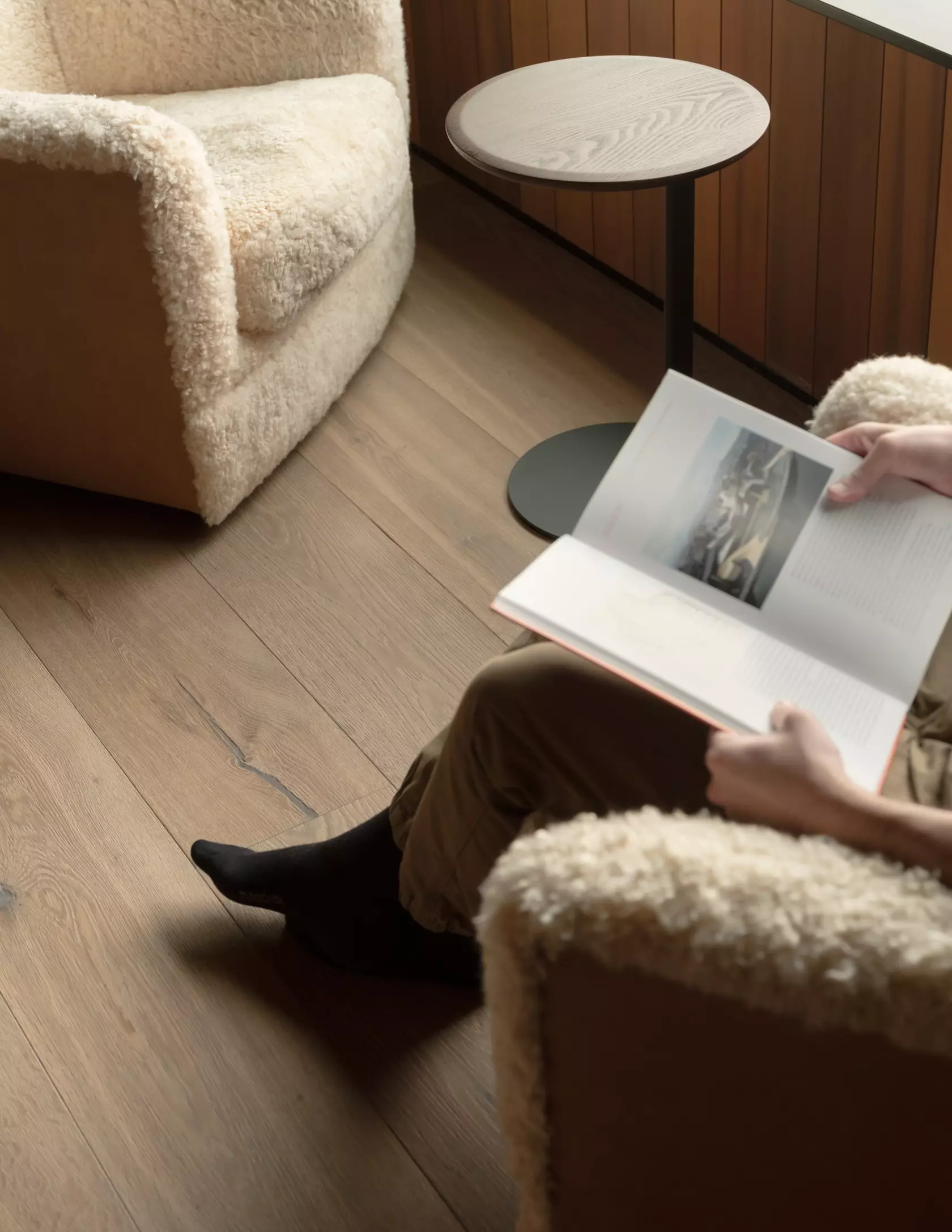
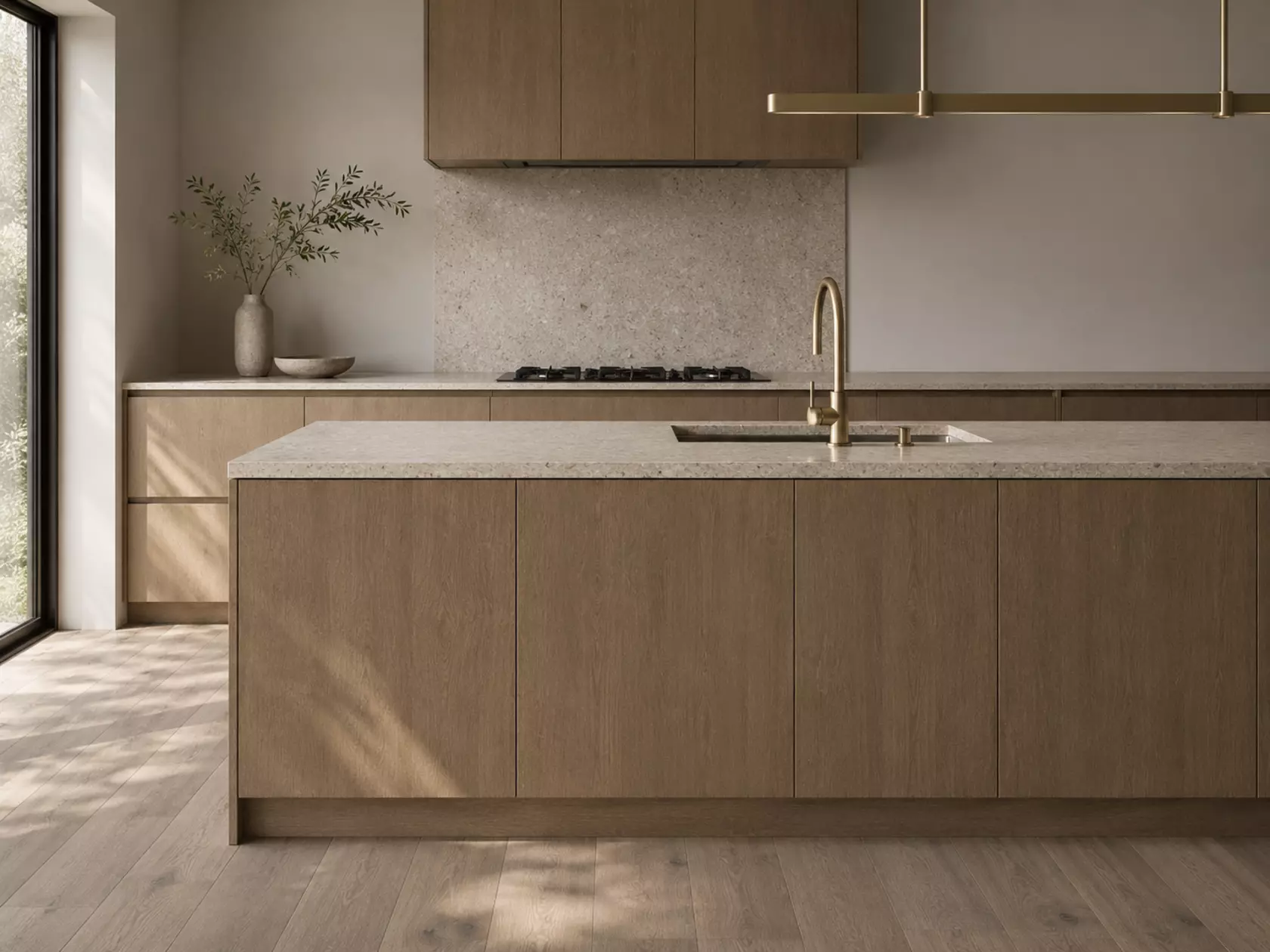
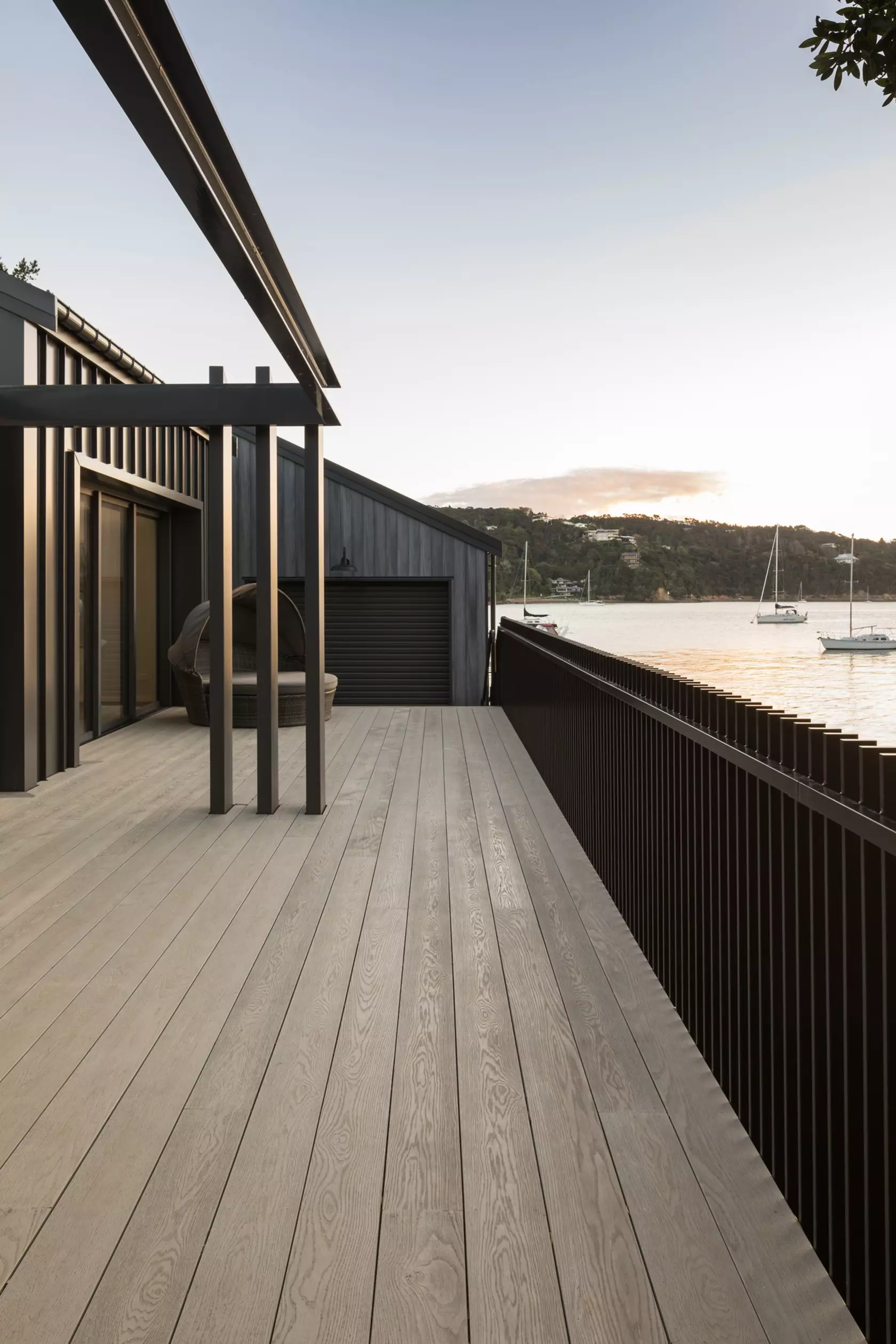
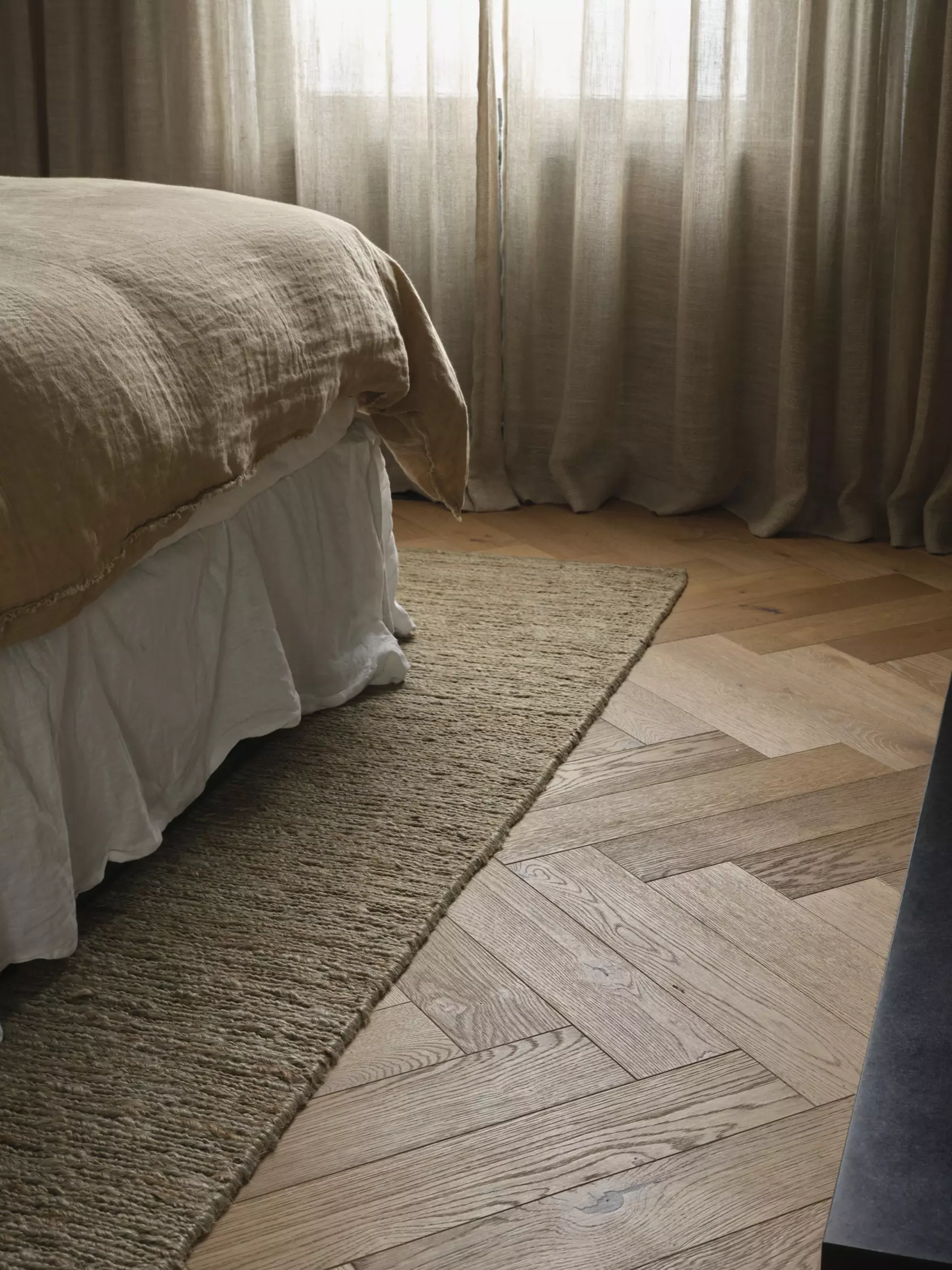
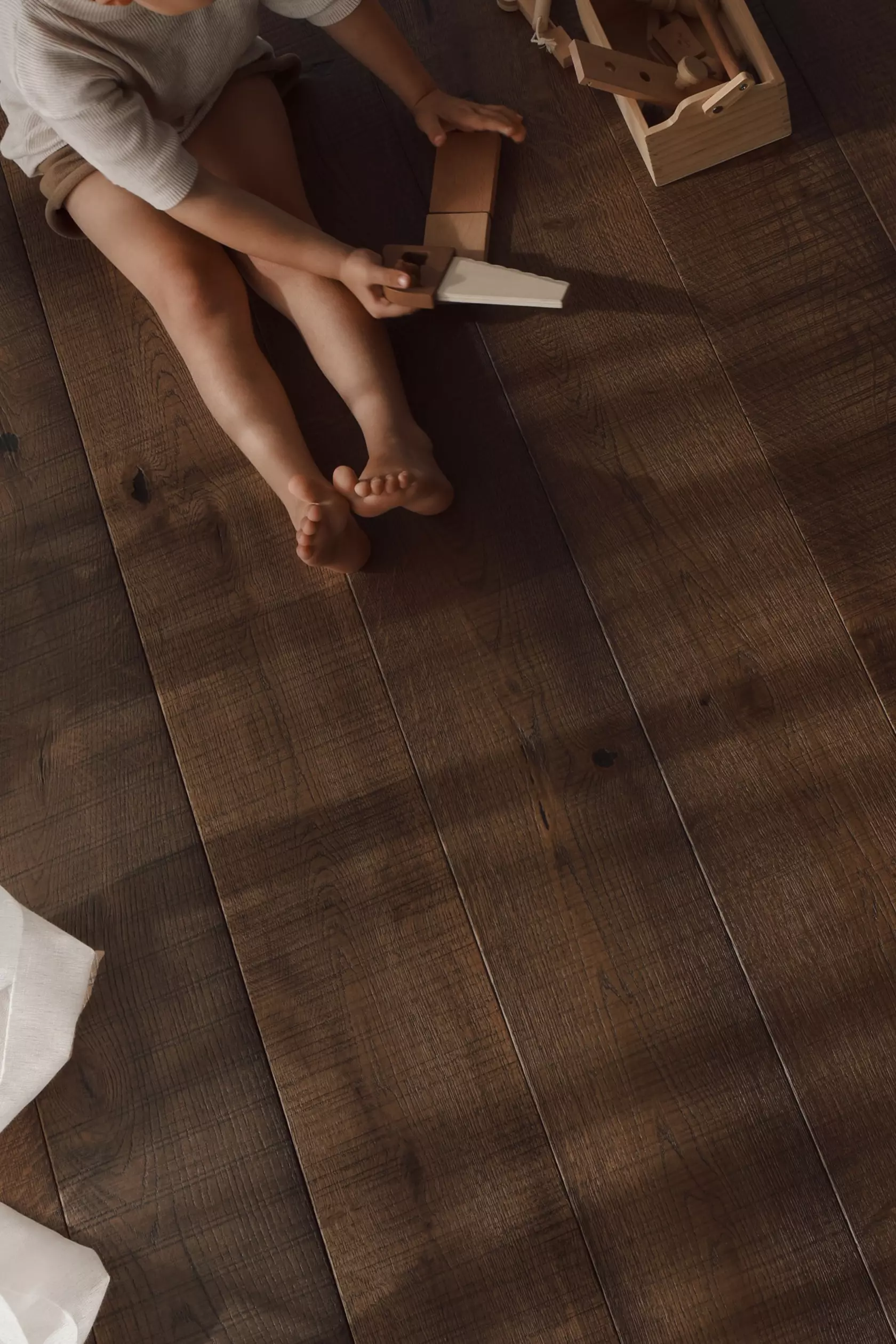
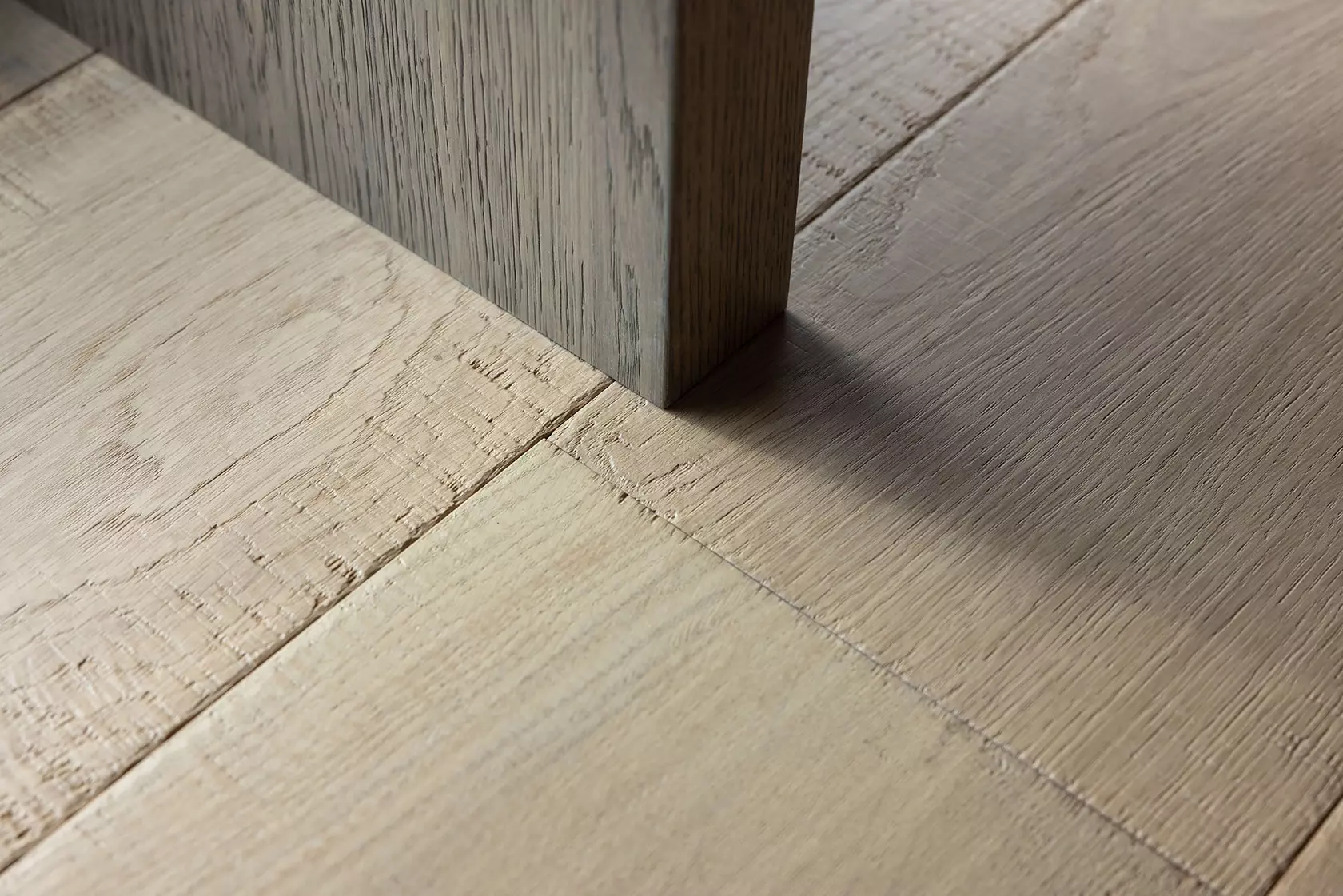
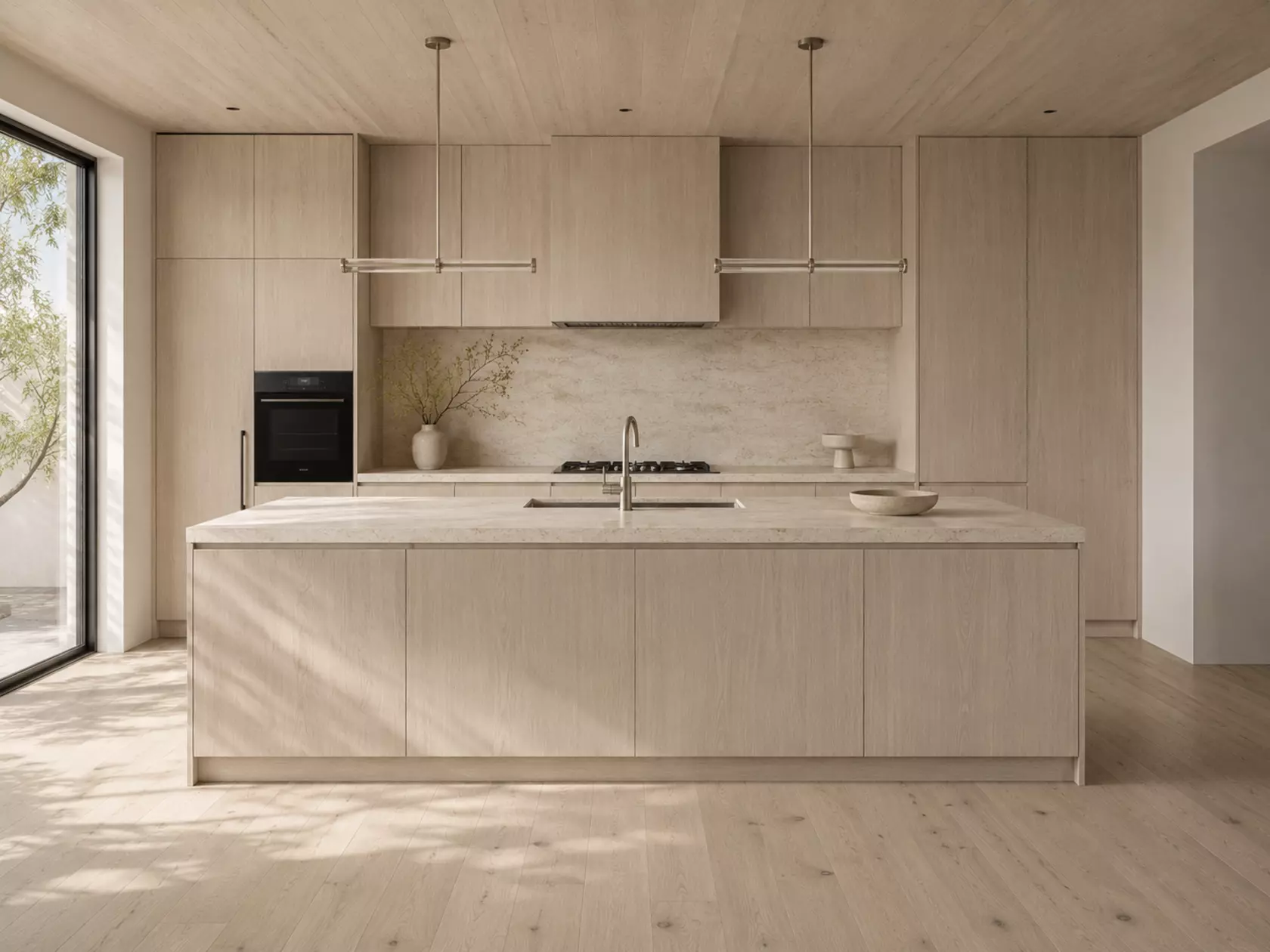
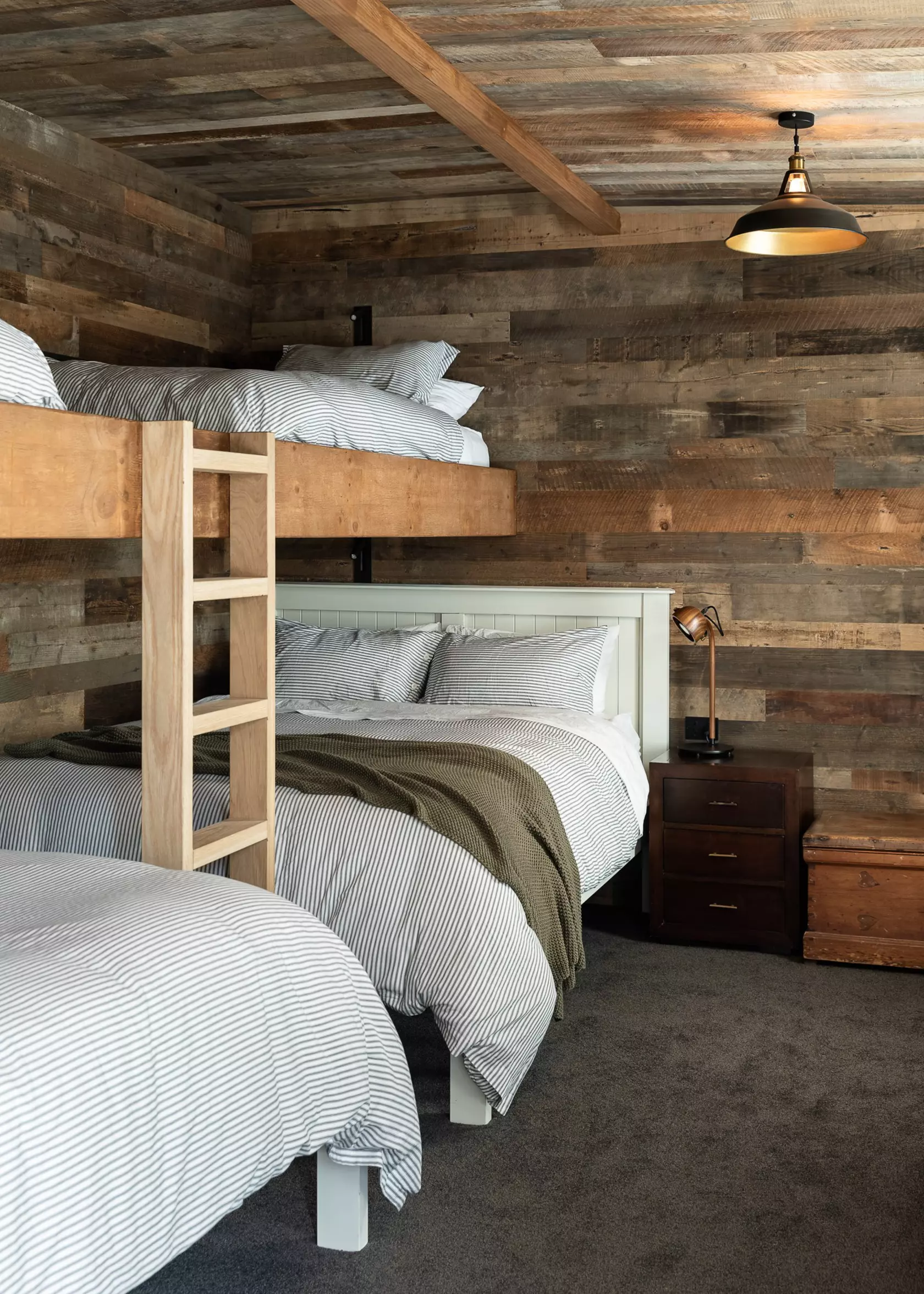
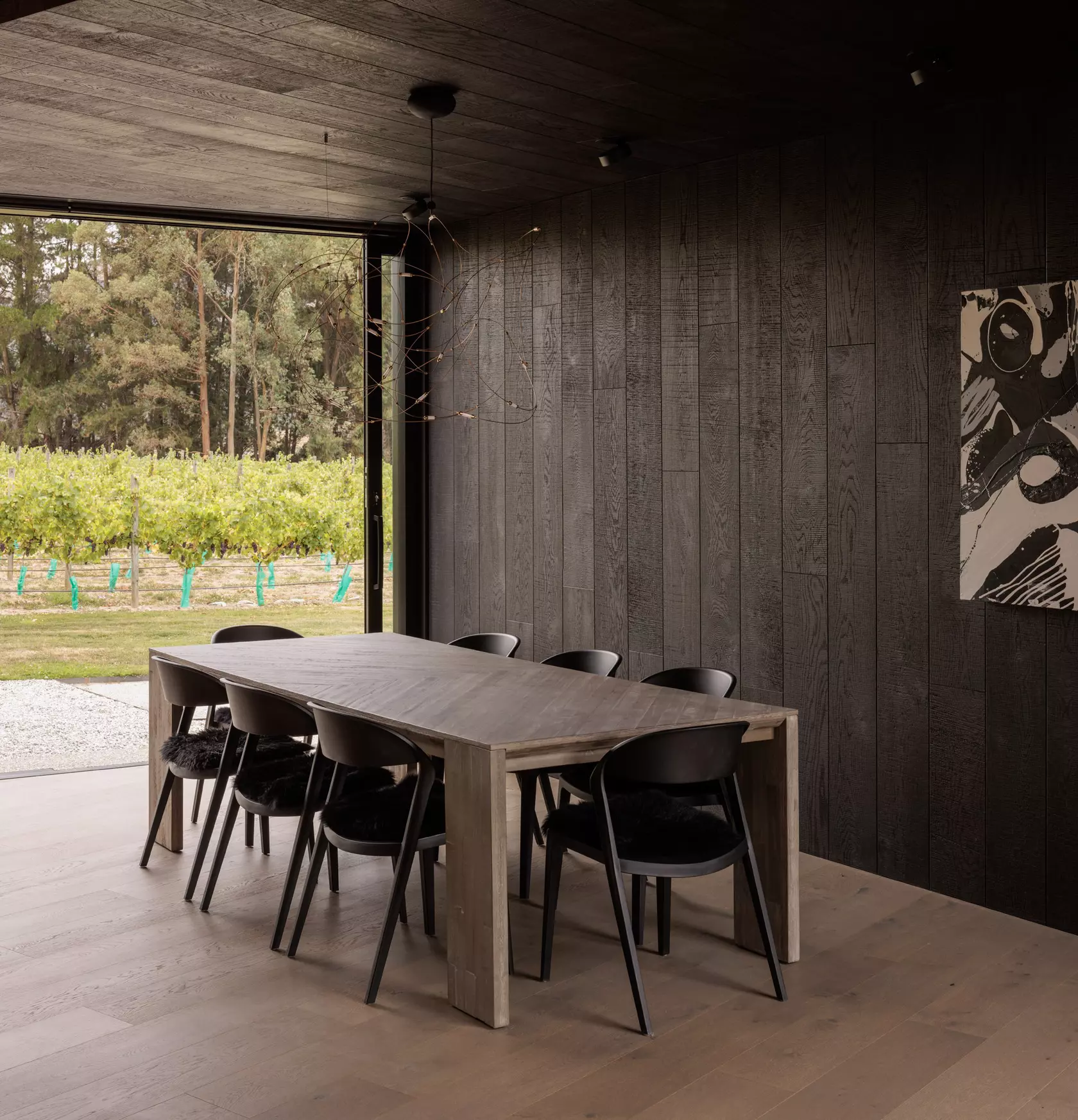
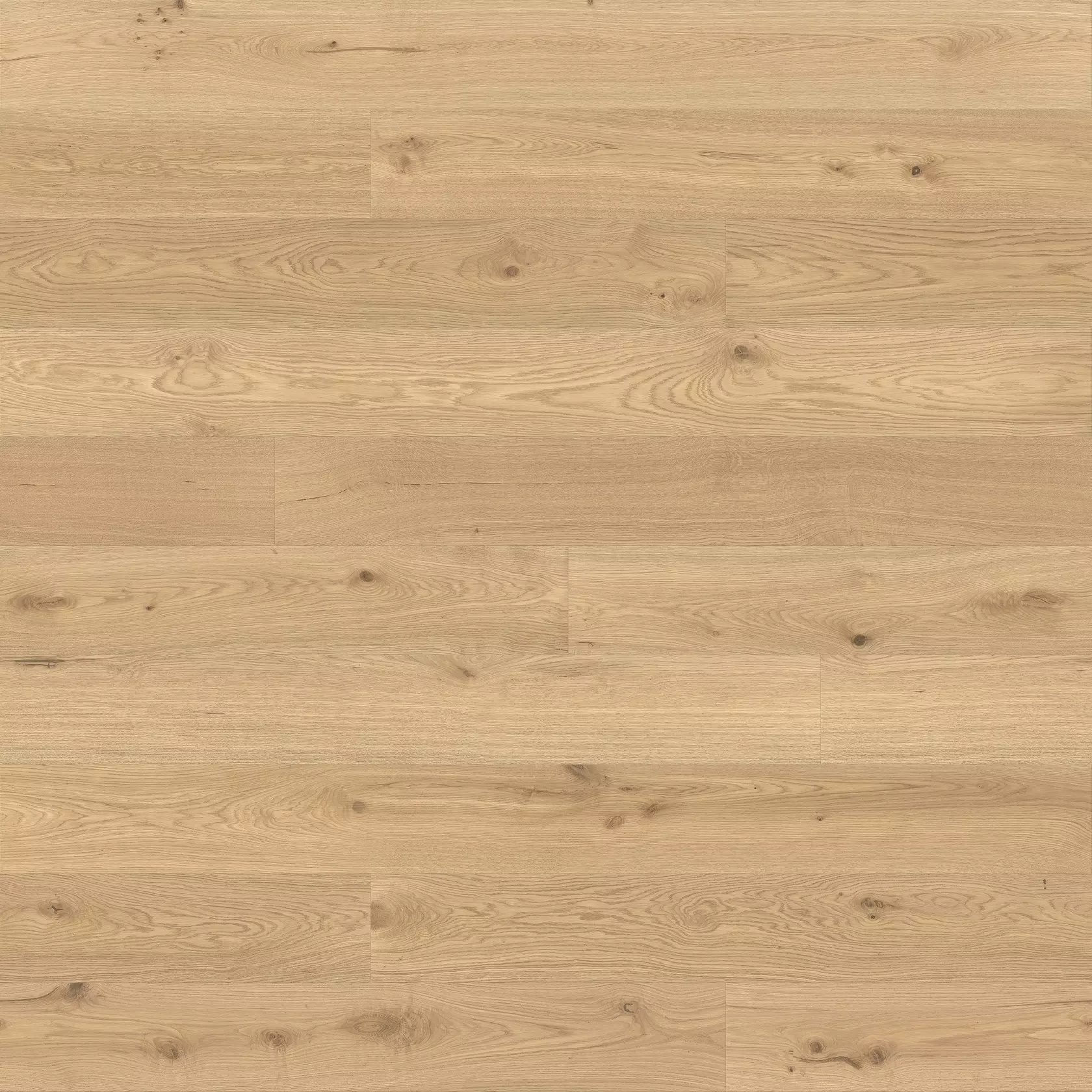
The design responds in kind. Underfoot, Forte's Loft flooring in Soho sets the tone from the moment you enter — a charcoal-toned European Oak with a grey wash and lightly brushed texture that draws out the timber's natural knots and character. It is the kind of material choice that does subtle but important work; grounding the space, softening the acoustic environment, and lending an unmistakably residential warmth to what is, technically, a commercial fitout. "A timber floor is maybe what I'd associate with a home," Gutierrez notes. "And I think that's a key part of it."
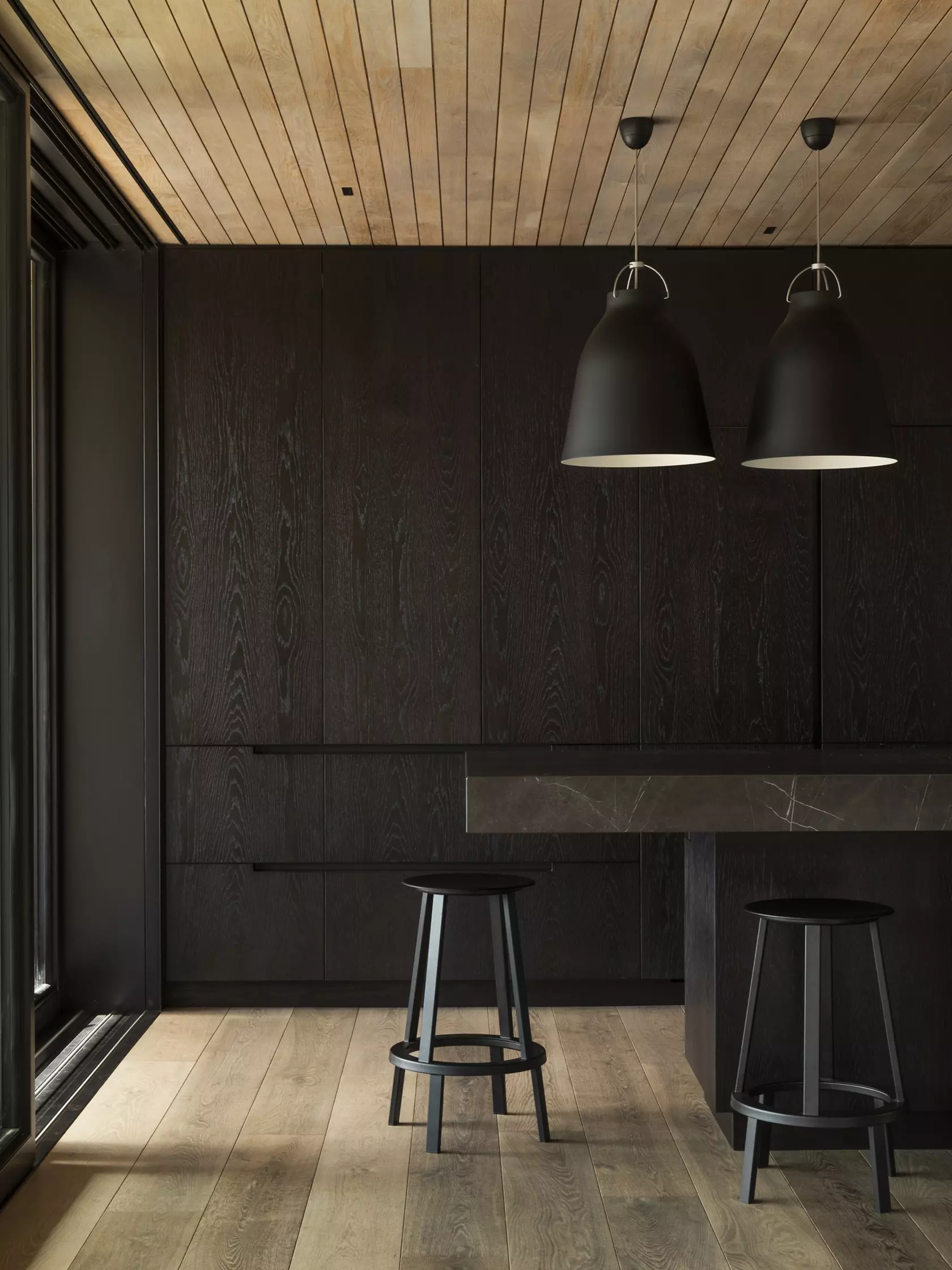
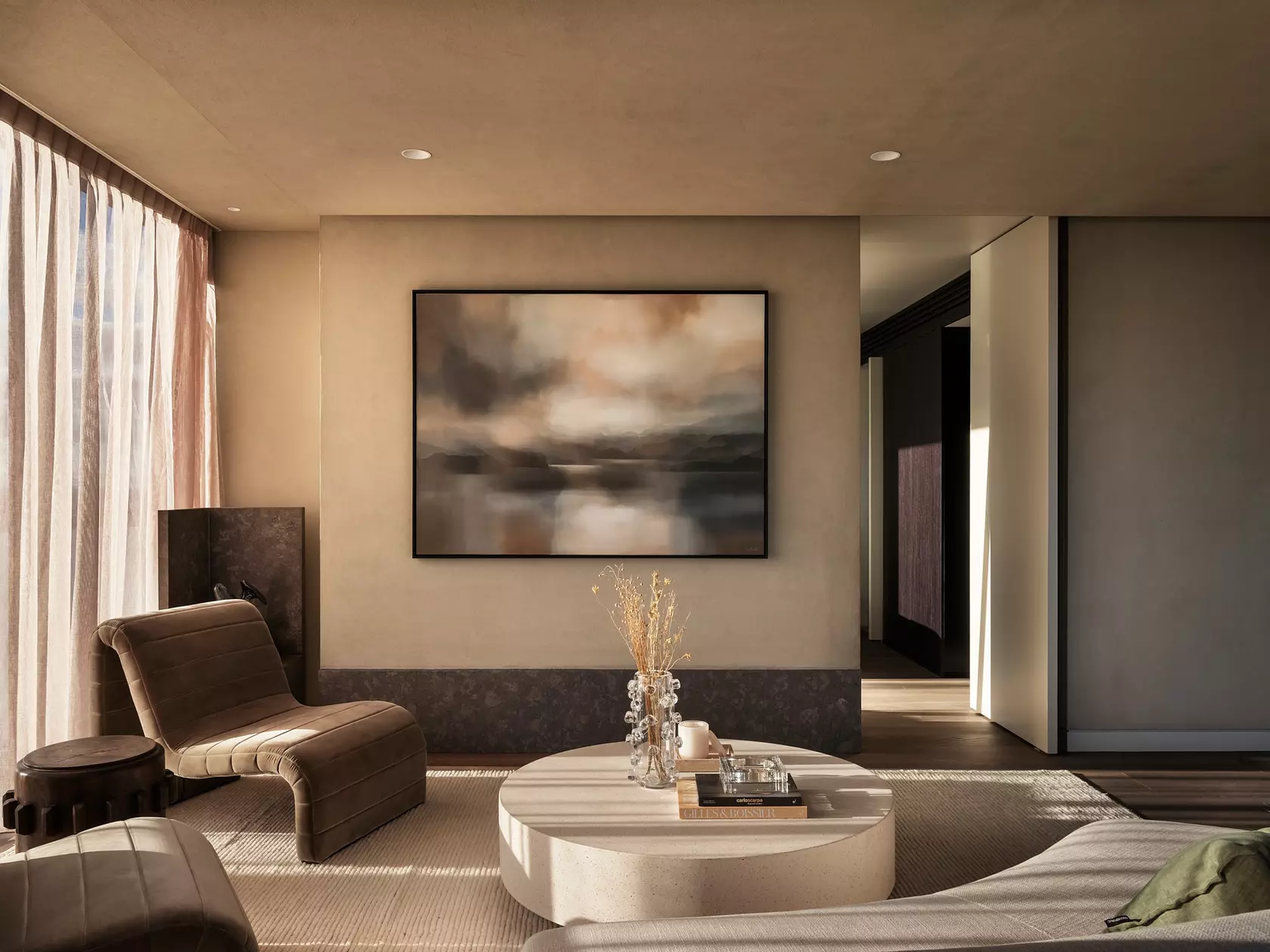
From there, the material language continues in the same register. A large, curving sofa that invites you to settle rather than perch. Armchairs and a rug that wouldn't look out of place in a well-lived-in home. A kitchen designed for lingering. Custom cabinetry not only defines the courtyard edges but provides a canvas for TRA's own objects: plants, photographs, the small accumulations of identity that transform a fitout into a place. "The idea was for them to populate the cabinetry almost like you would in your own living room," says Gutierrez, "with a plant that you like, or old photographs."
The colour palette draws from TRA's brand but is restrained in application — warm, rich tones tempered for daily life with forty people. "For us to build a space with their exact colours would have been amazing, but a little bit too intense," Gutierrez explains. "So knowing what they do, we took those colours and toned them down. There is a connection — it's not obvious, which I like."
Acoustic performance was addressed with equal care. Full-height curtains, layered soft furnishings, and deliberate zoning mean the space absorbs rather than amplifies. "You can be sitting here with about 20 people in the main space and you're not talking over each other," Gutierrez observes. "You can have a conversation down there and someone can be having a more private one over here." For an open-plan in layout, it's surprisingly intimate in feel and function.
The most telling outcome isn't aesthetic but behavioural. Since moving back in, TRA's team has returned; not reluctantly, but enthusiastically. Weekly gatherings of over forty people now happen naturally in the courtyard. The quiet pods are used. The couches, too. The office has become, in the truest sense, somewhere people choose to be.
"They've somehow achieved an office that doesn't look like an office," Gutierrez says. "Maybe it looks a bit like someone's nice house. And I think that's what the attraction is."
Delivered in just twelve weeks — with TRA temporarily relocating while the entire floor was stripped and rebuilt — the project is a study in precision as much as vision. What endures is something harder to specify than any schedule or material board: the sense that a space was made by people who knew exactly what they were designing for, and for whom.