











Showcase
One Saint Stephens
Auckland


Parnell doesn't do architectural conformity. Walk a single block and you'll encounter Victorian villas, Edwardian terrace houses, mid-century modernism, and ultra-contemporary builds – often side by side. It's one of Auckland's most architecturally diverse suburbs, and surprisingly dense for an established and highly aspired-to neighbourhood. For MAP Architects, that eclectic context wasn't a constraint, but rather permission to be bold.
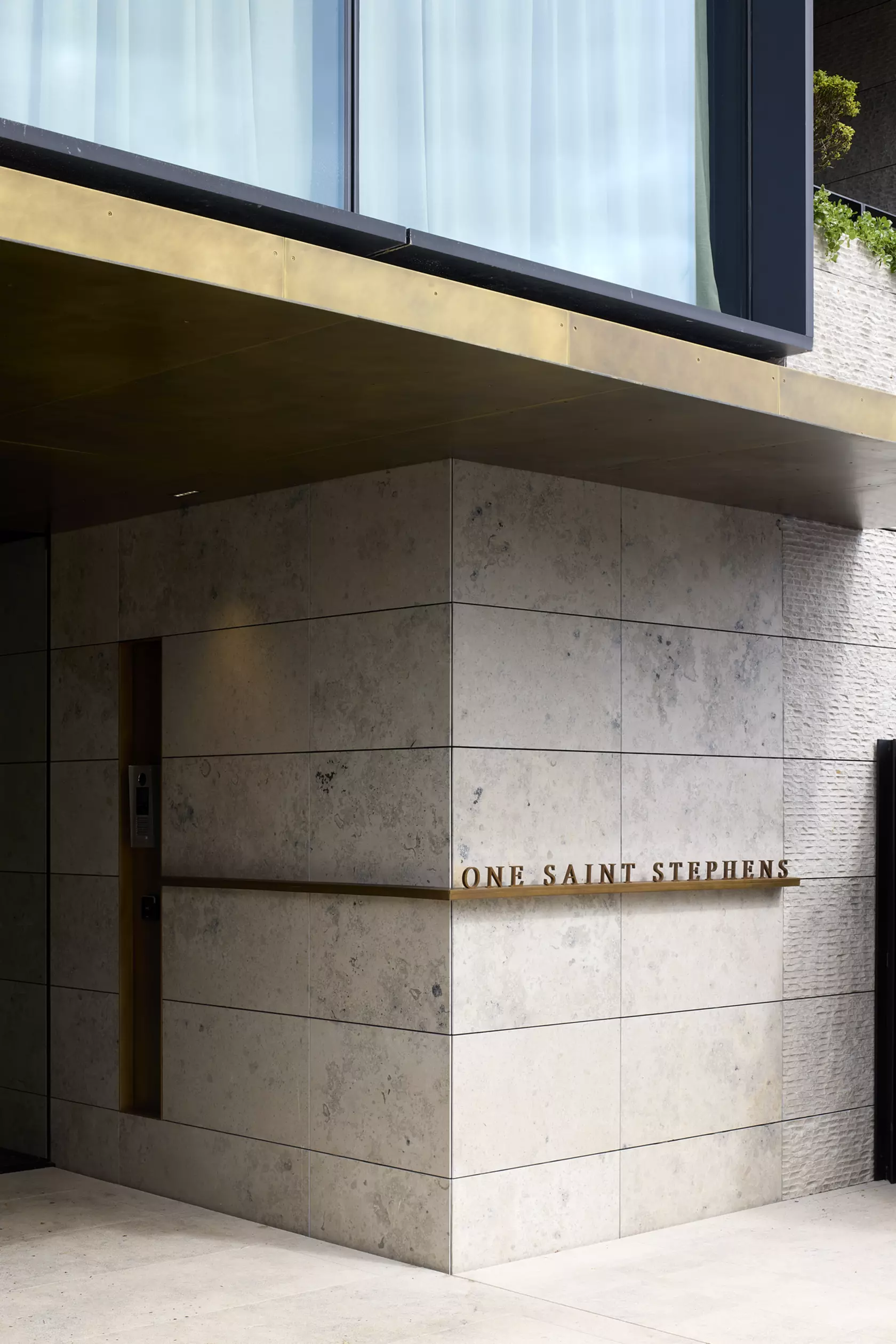
One Saint Stephens occupies a prominent corner site with three significant heritage buildings as immediate neighbours, including the landmark Holy Trinity Cathedral. MAP Director Simon Elvidge's vision was clear: "To create a solid, muscular building, simple, monolithic, and with depth. We wanted to create an anchor to the corner and make a confident statement."
The brief called for a design response that acknowledged and respected the architecture and 'atea' of Holy Trinity Cathedral while establishing its own contemporary presence. The project underwent rigorous urban design and heritage consultation – engaging Heritage New Zealand Pouhere Taonga, the Parnell Community Committee, Waitemata Local Board, and local Iwi representatives of Ngāti Whātua Ōrākei – before Auckland Council granted consent in July 2022.
Another challenge within the brief was the request for 13 significantly different apartment types across 28 units. Rather than force a predetermined solution, Elvidge and the development team at Countrywide Properties & Experiences by Coopers let the architecture evolve in response to what the site offered. Understanding the target market shaped everything. "We were very conscious of the fact that a lot of the purchasers would be downsizers," Elvidge explains. "It was targeted at a market coming out of larger family homes. What we were really conscious of was trying to provide the same amenity, or potentially greater amenity."
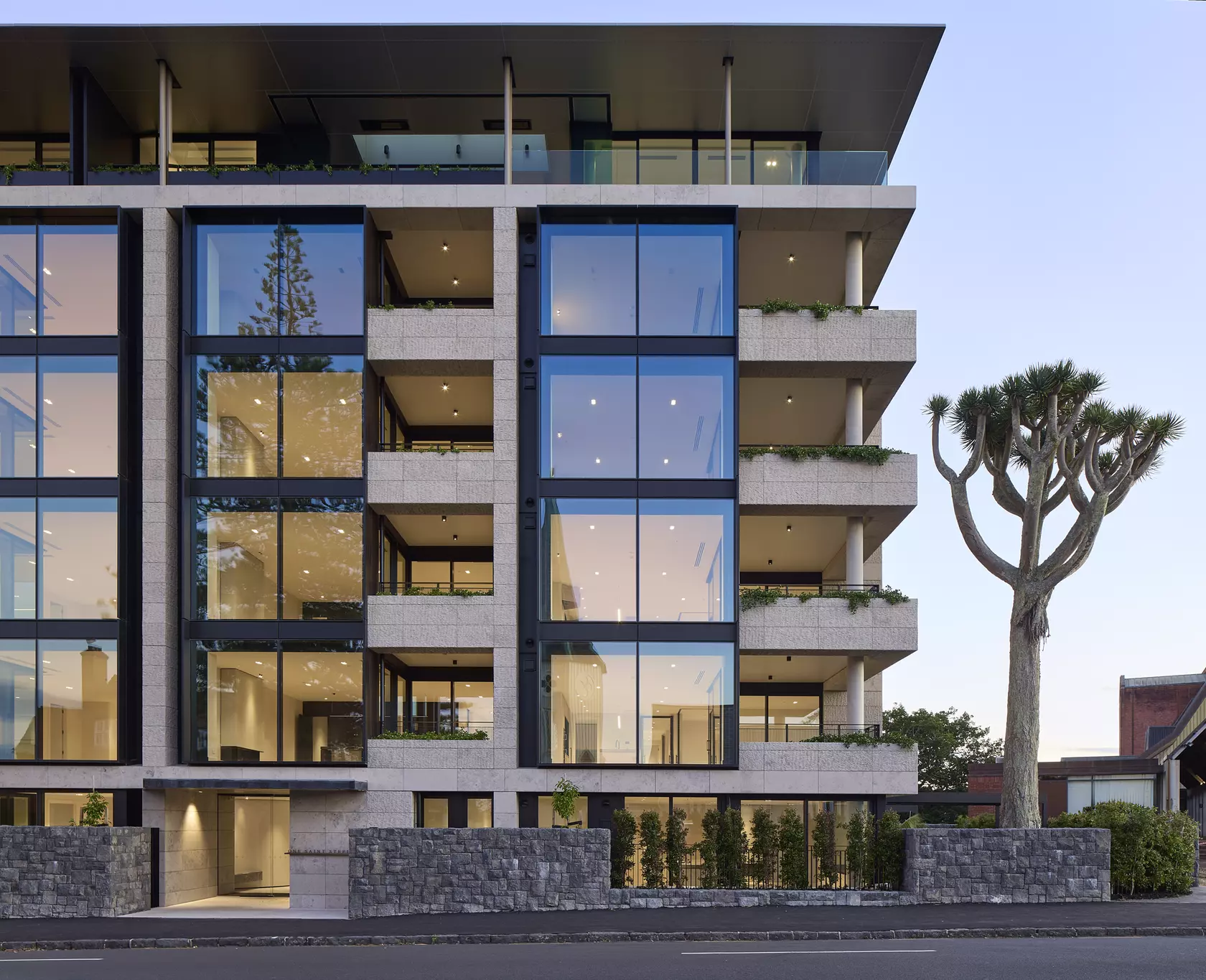
The building’s materiality does the heavy lifting in establishing its heritage context. The northern facade facing St Stephens Avenue is clad in limestone, a deliberate nod to the Portland stone of the Auckland War Memorial Museum. Deeply carved terraces provide both depth and privacy, preventing the building from reading as a flat wall of apartments. At the top, the penthouse level floats above the stone base, its fine roof edge adding visual interest at the skyline. Verdant planters soften the stone frame without undermining its solidity.
The southern elevation takes a different approach: black terracotta rainscreen cladding with triangular faceted tiles in a glossy finish creates texture and vertical emphasis. The interplay between these two facades – stone and terracotta, horizontal and vertical – gives the building its architectural tension.
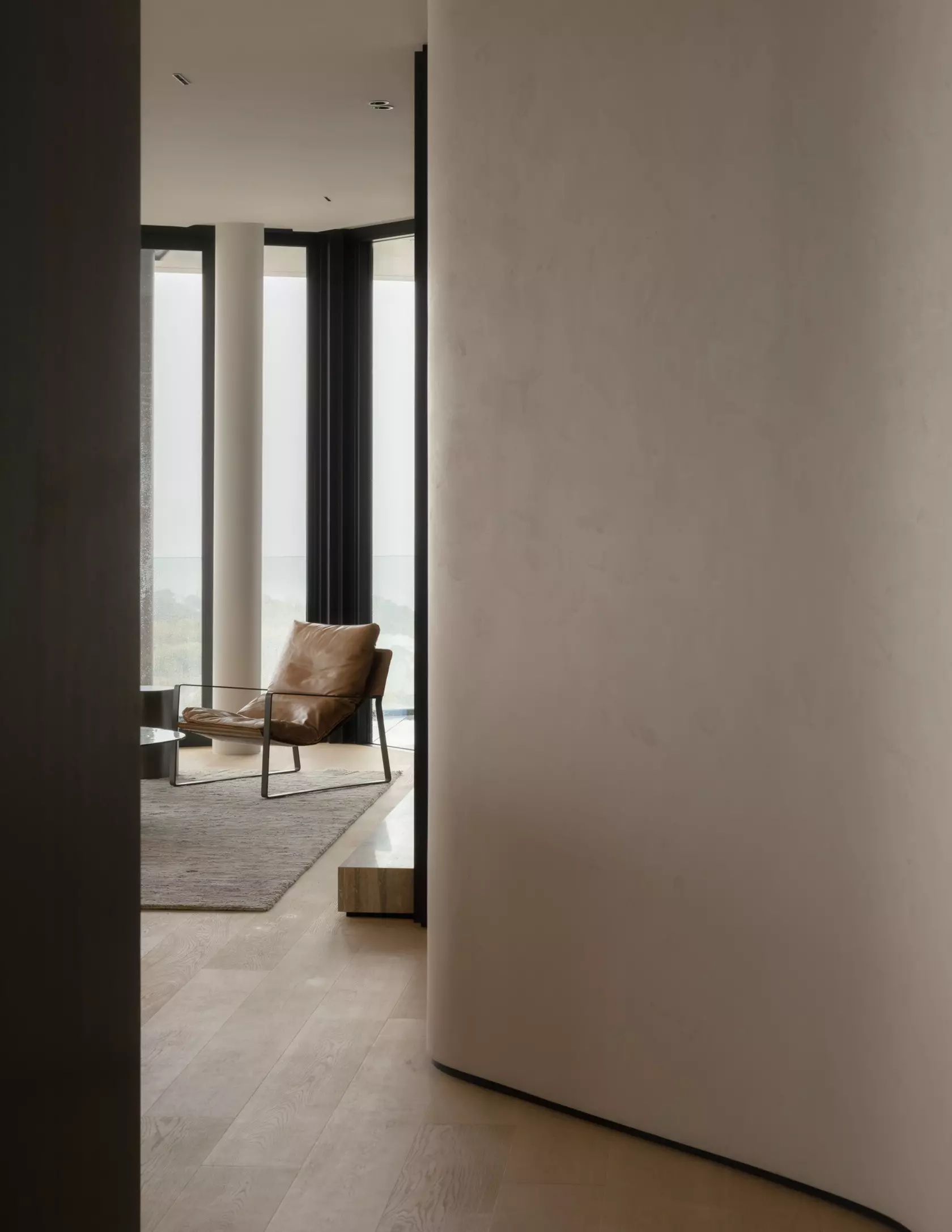
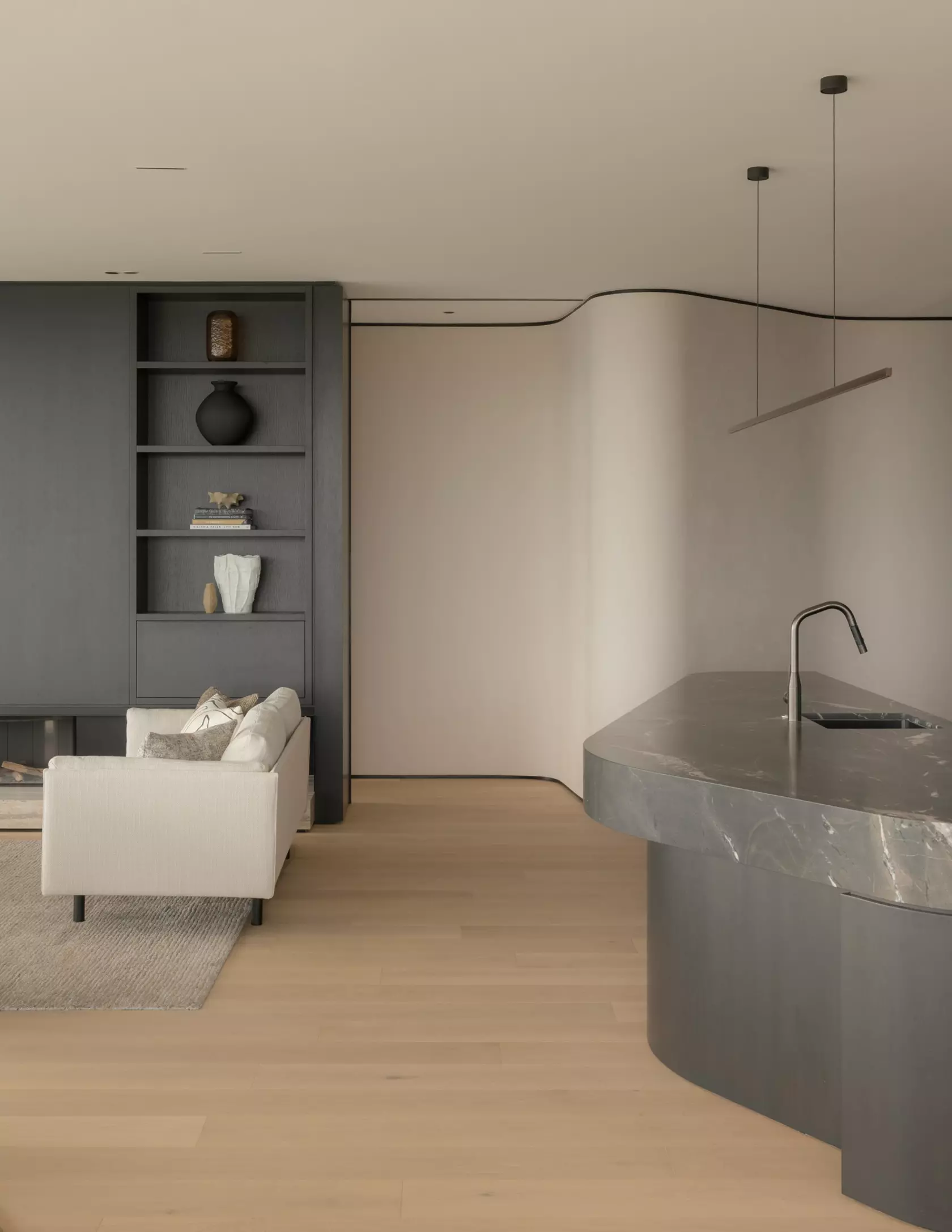
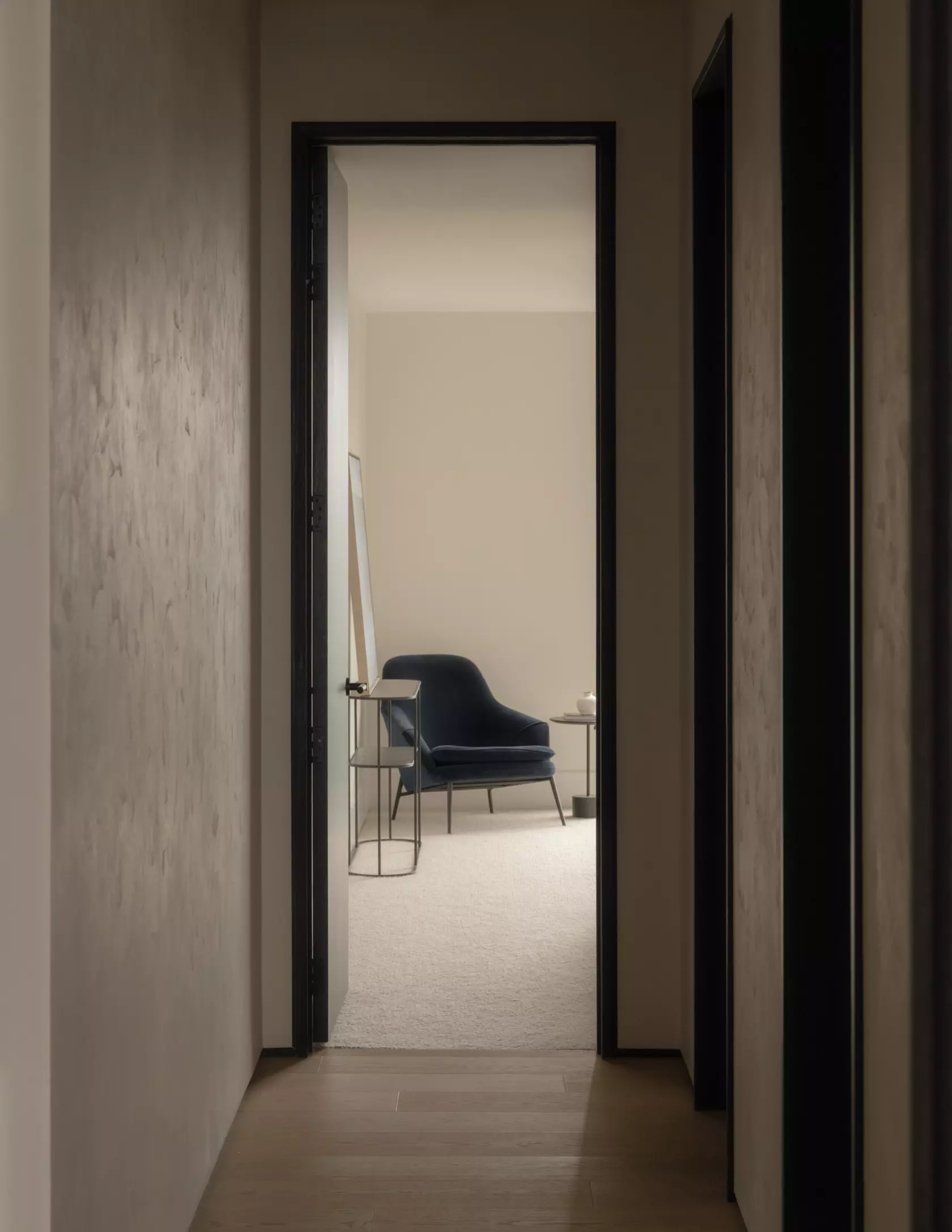
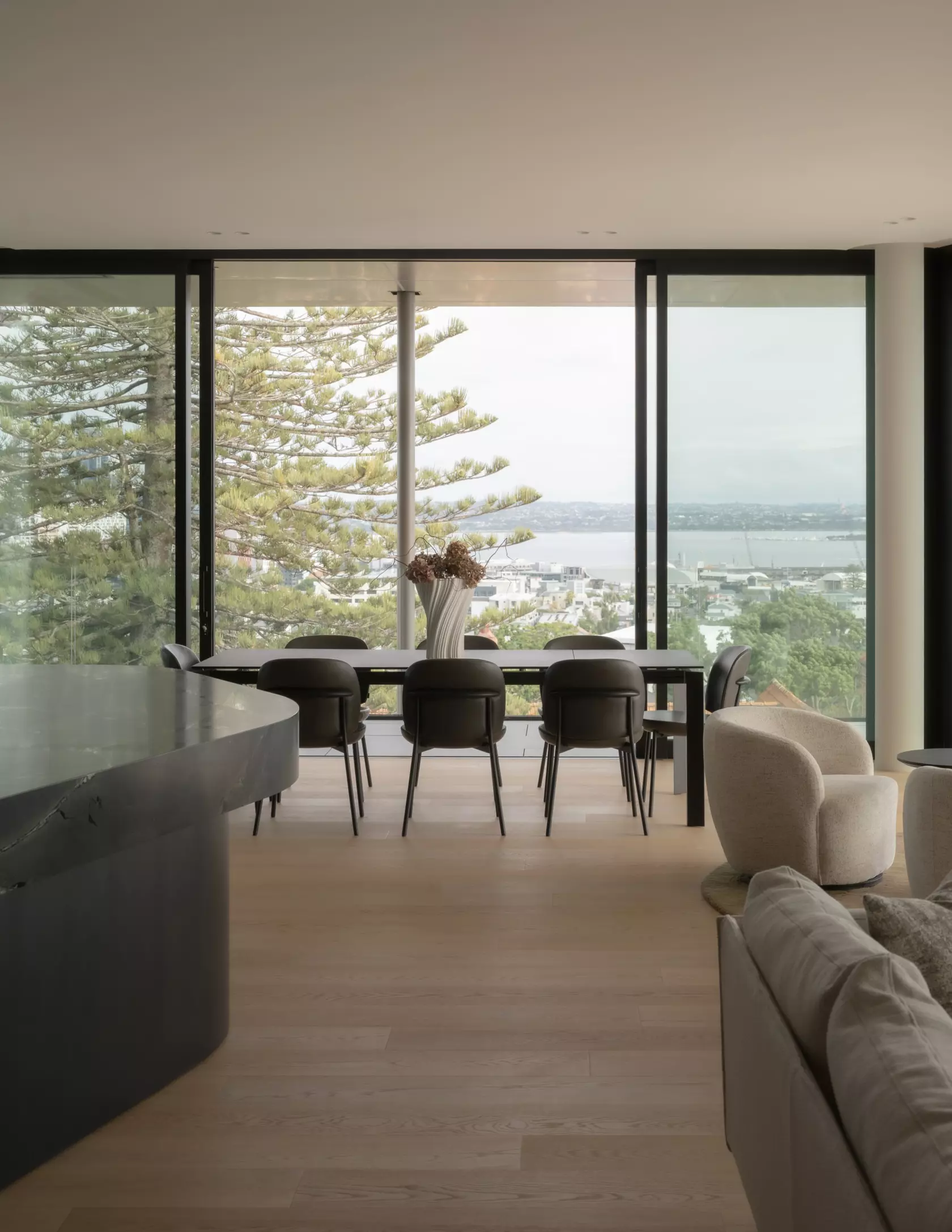
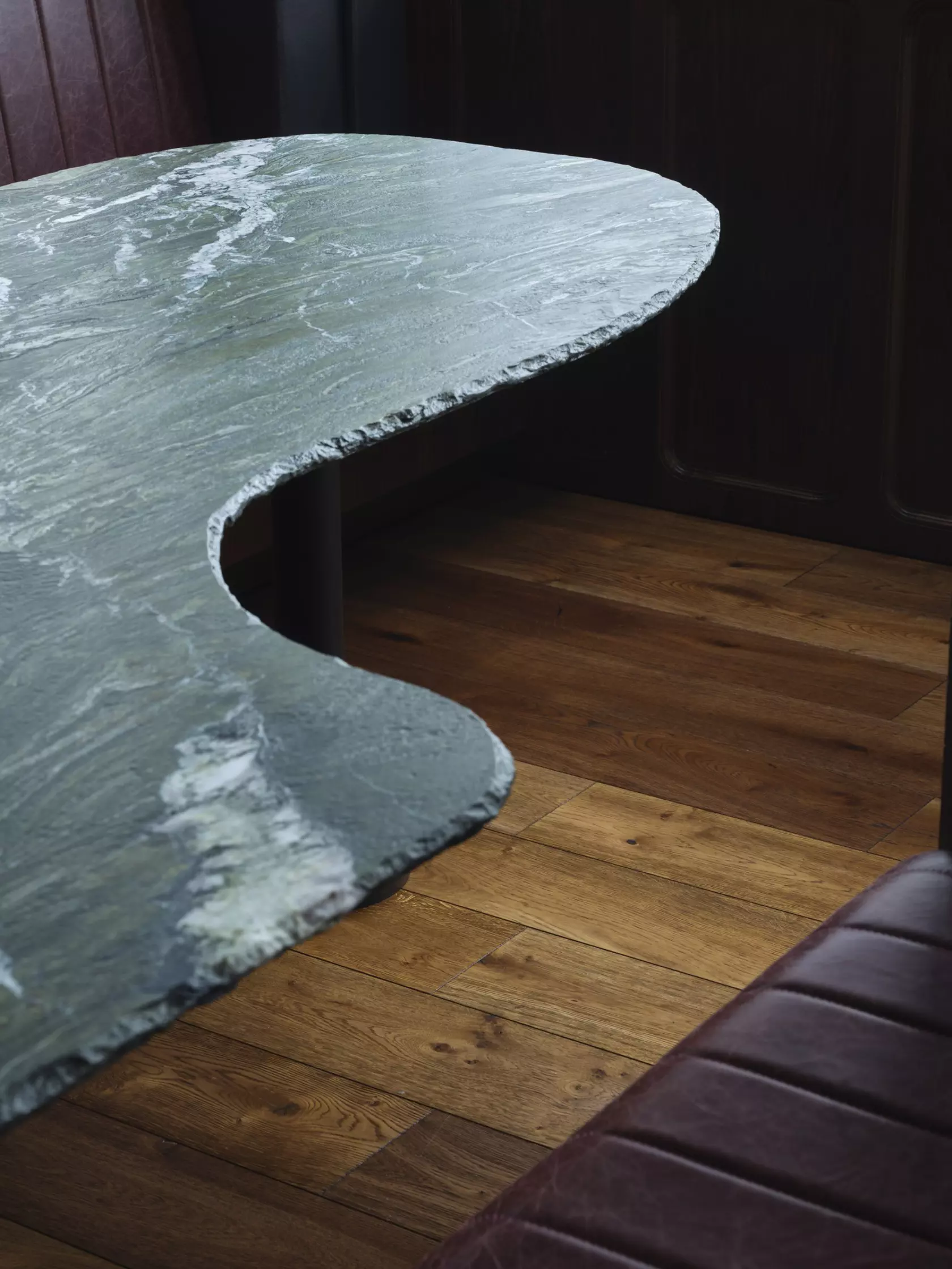
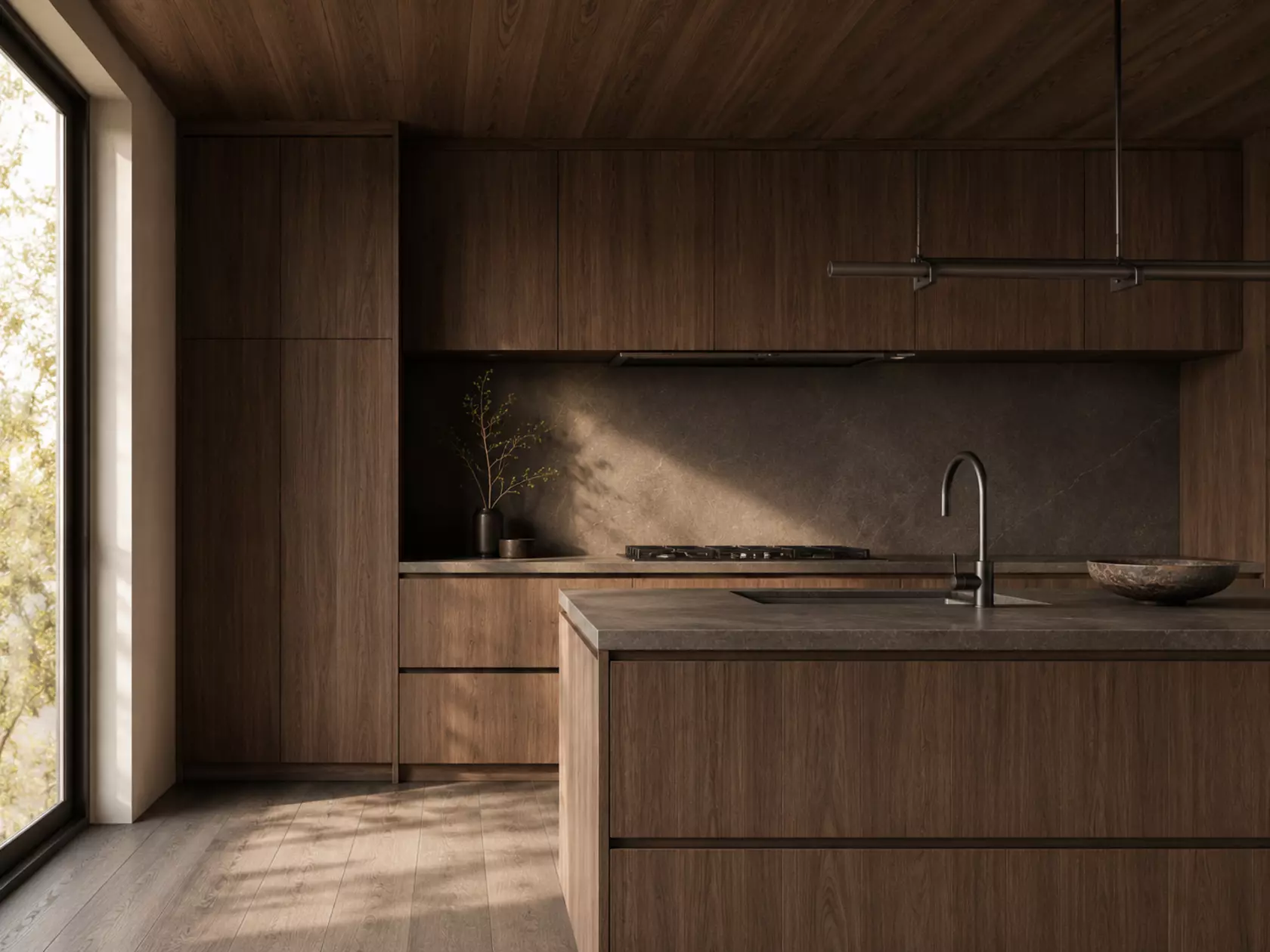
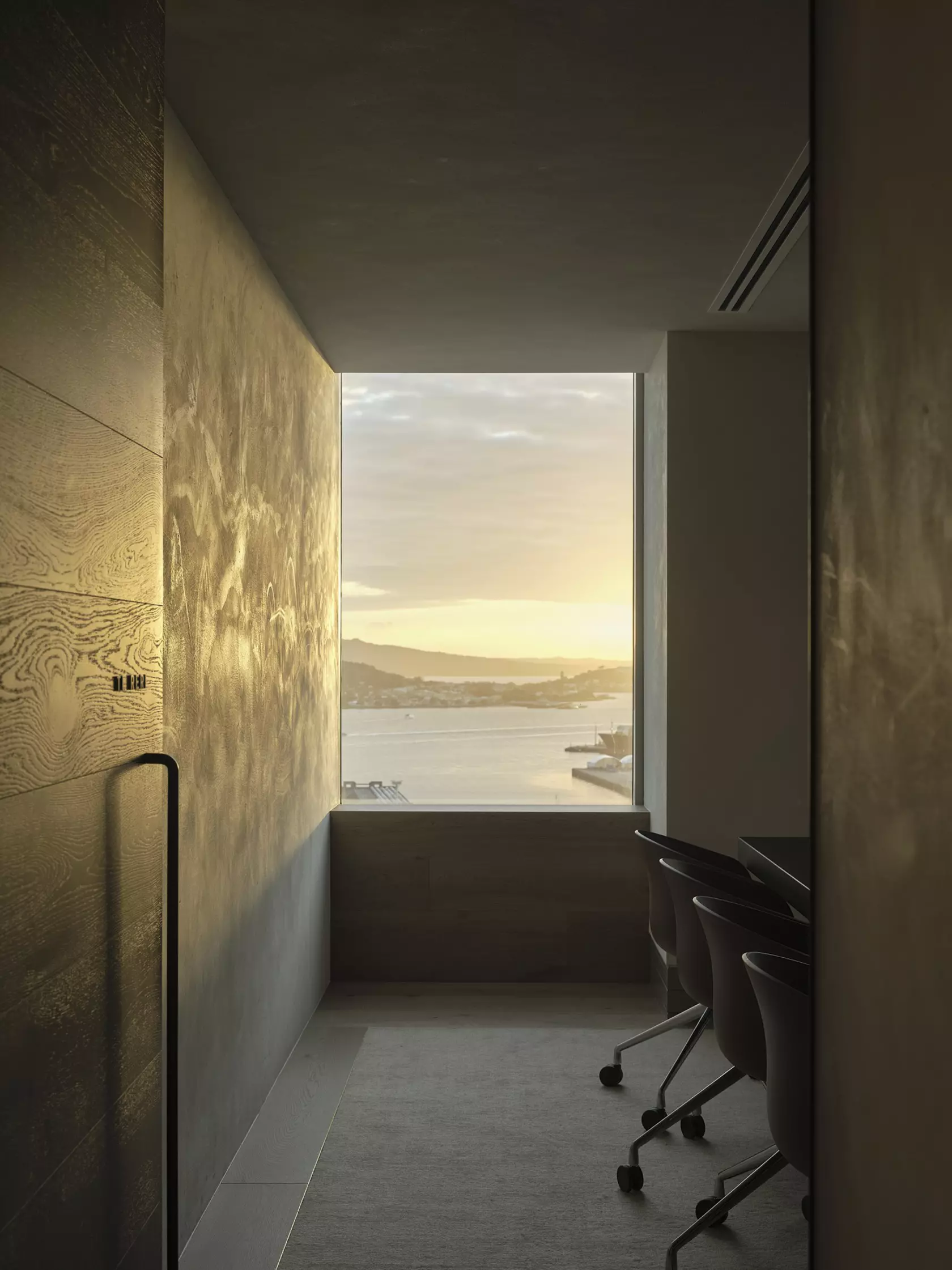
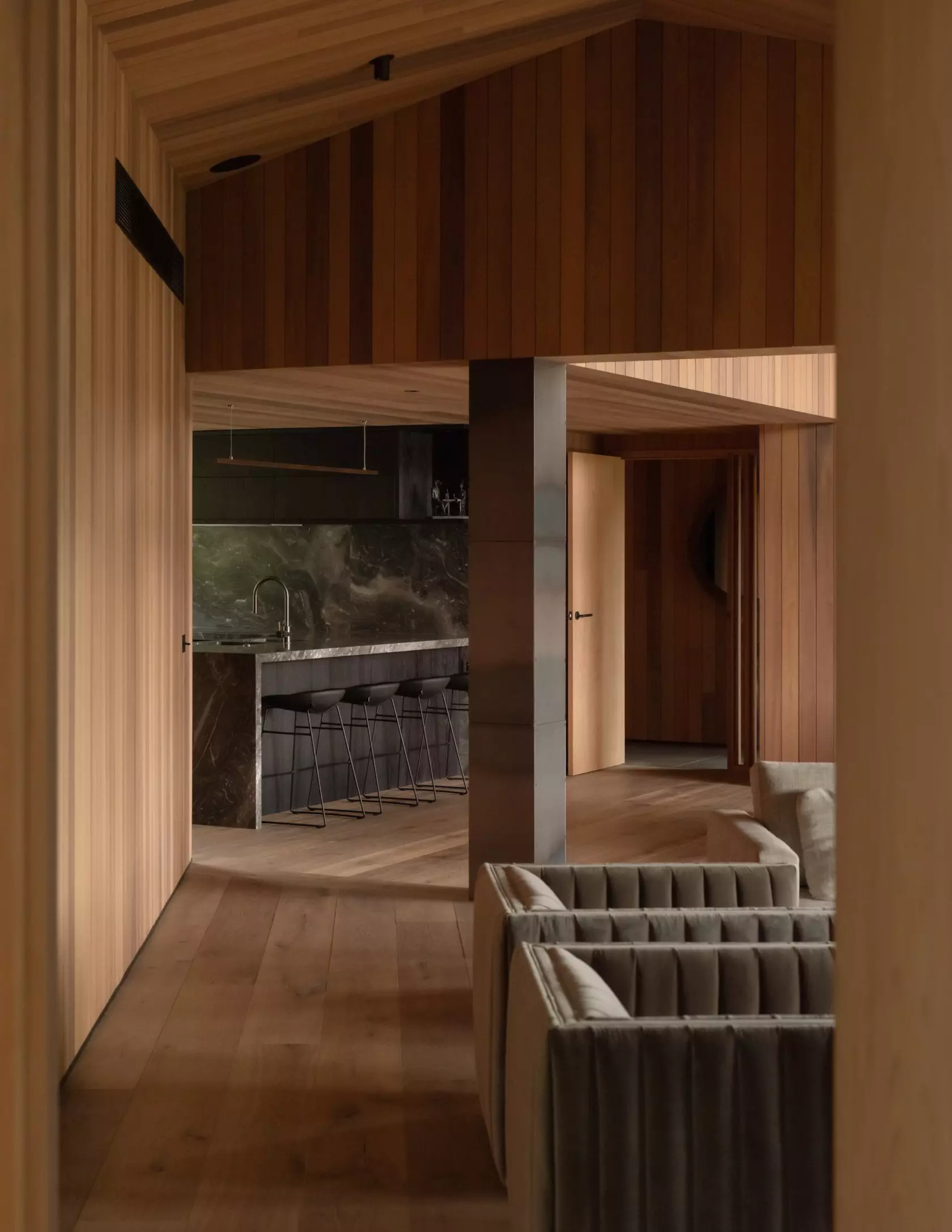
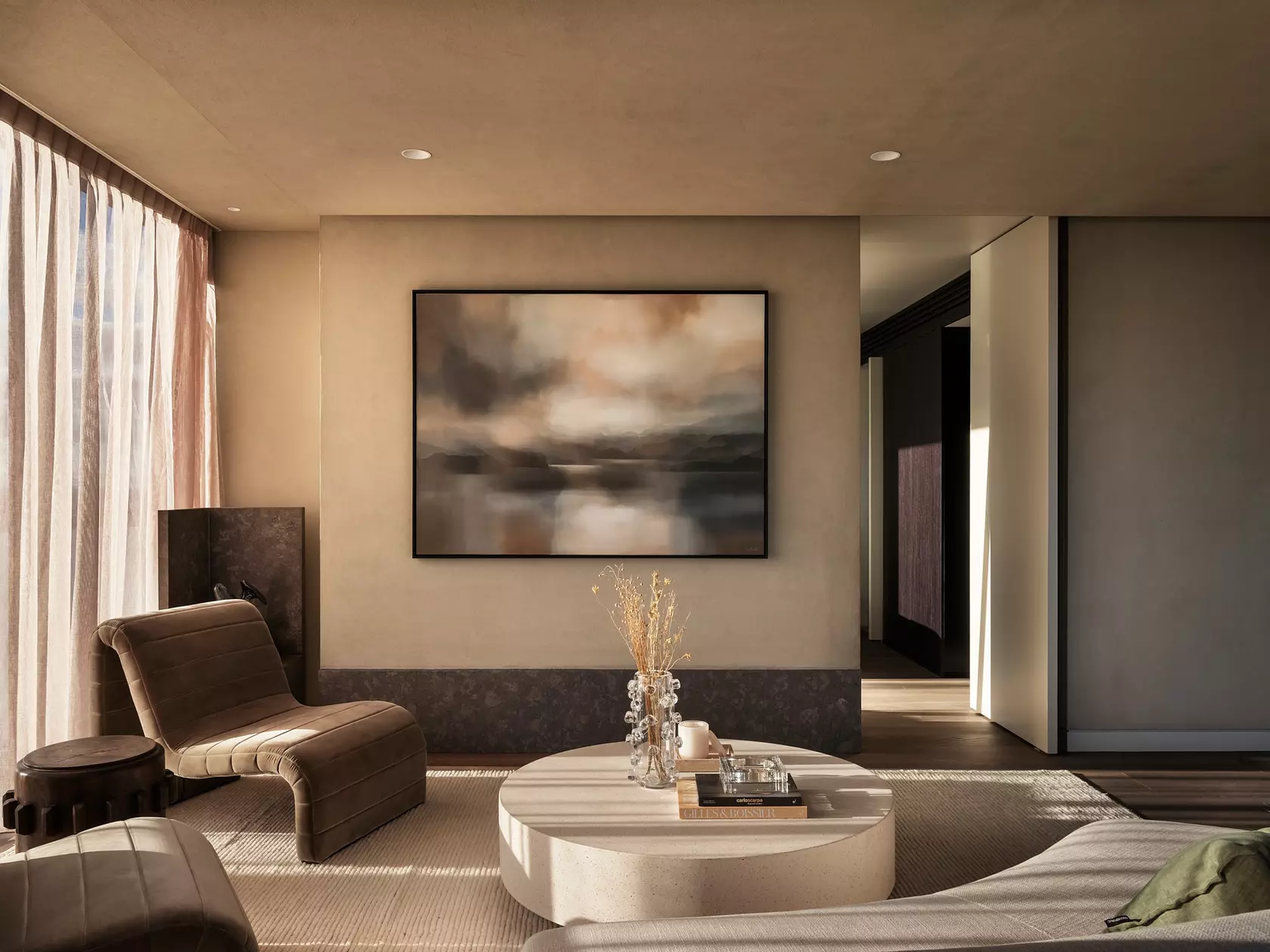
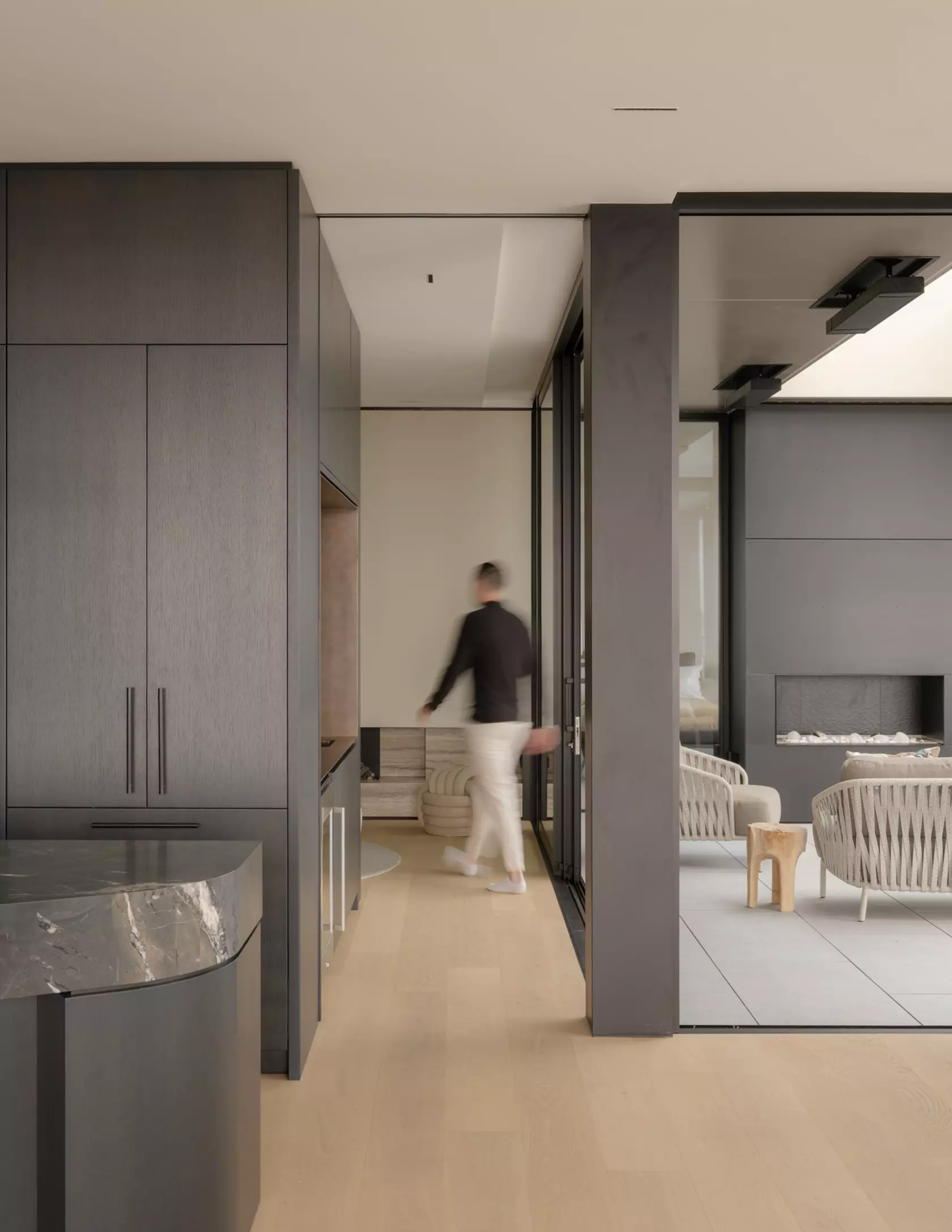
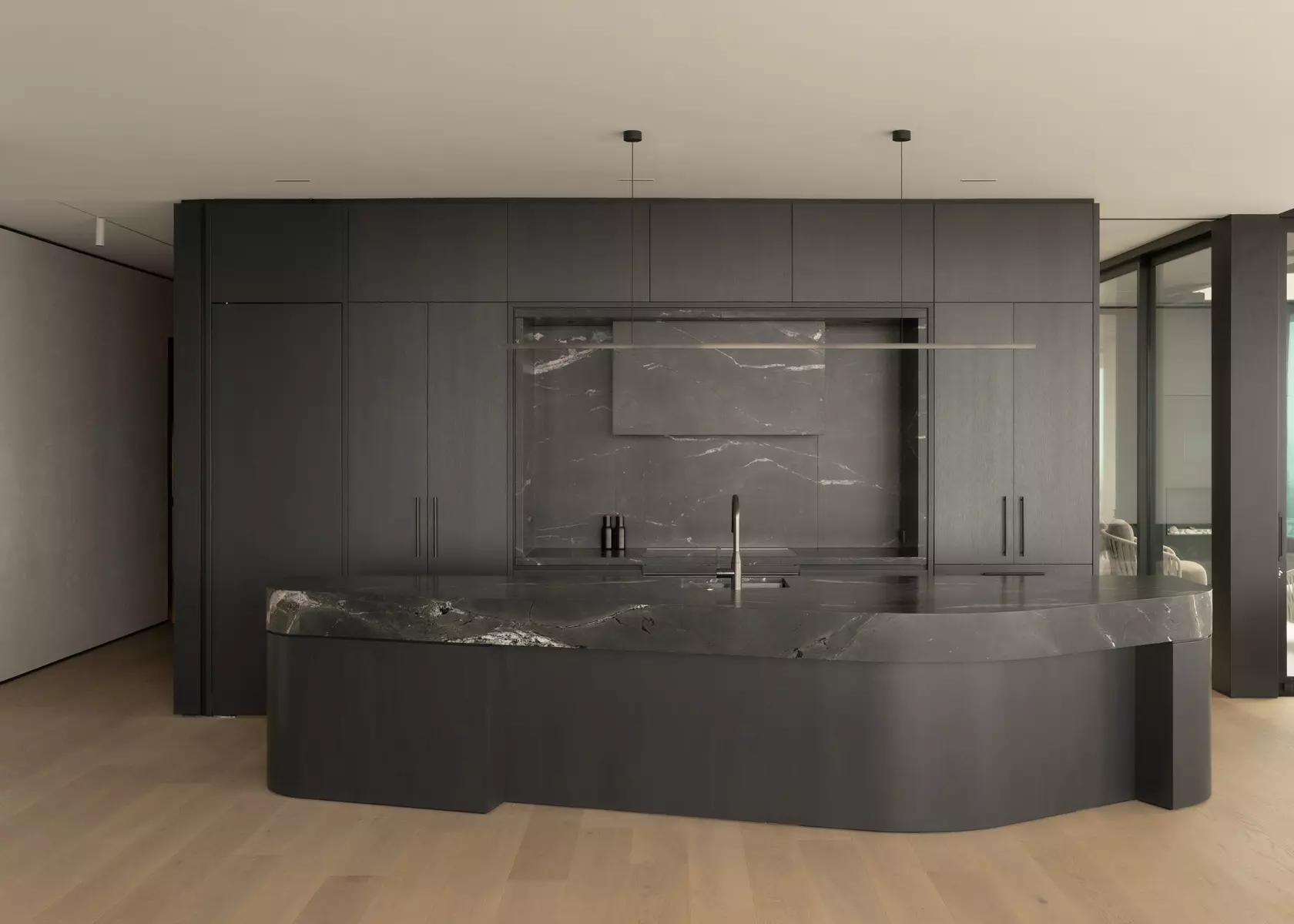
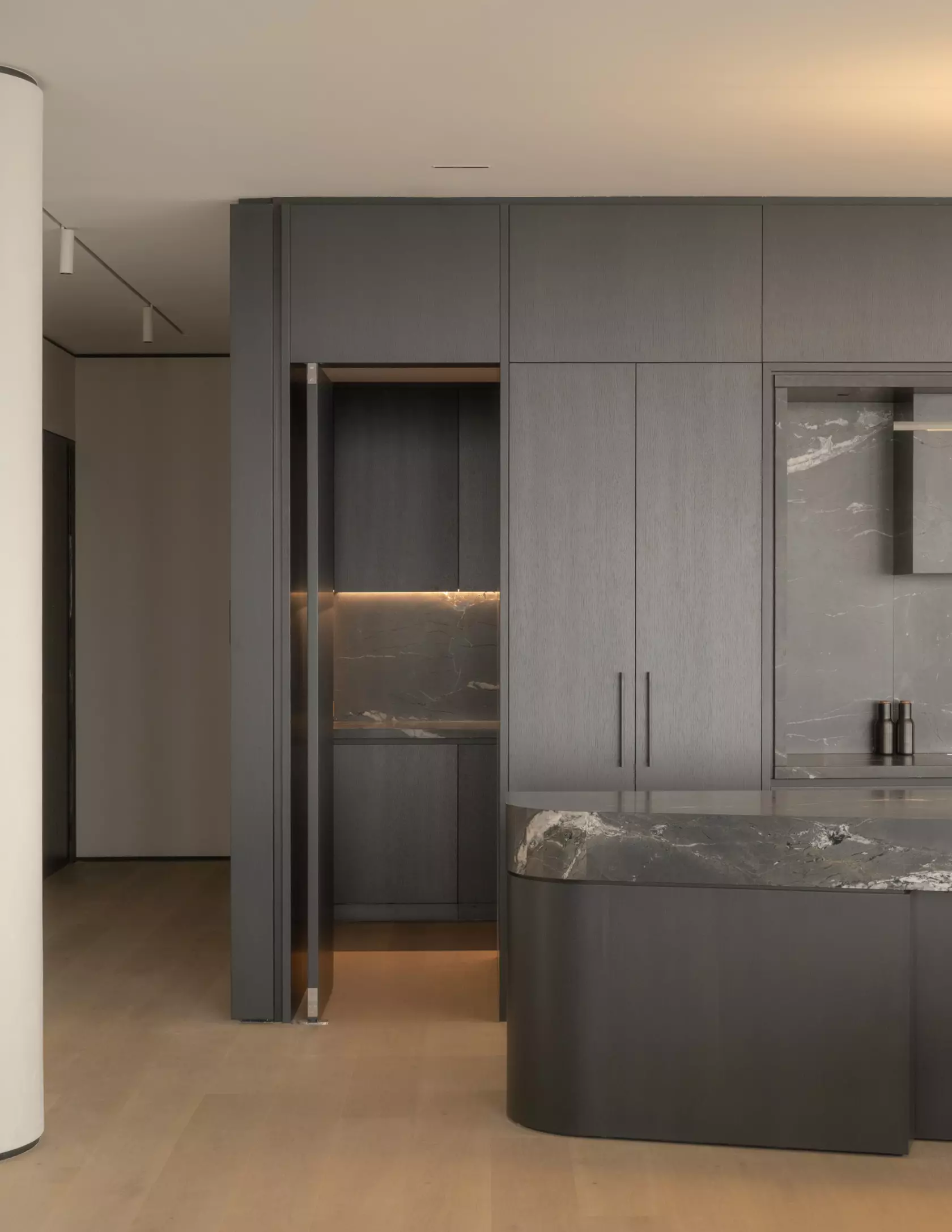
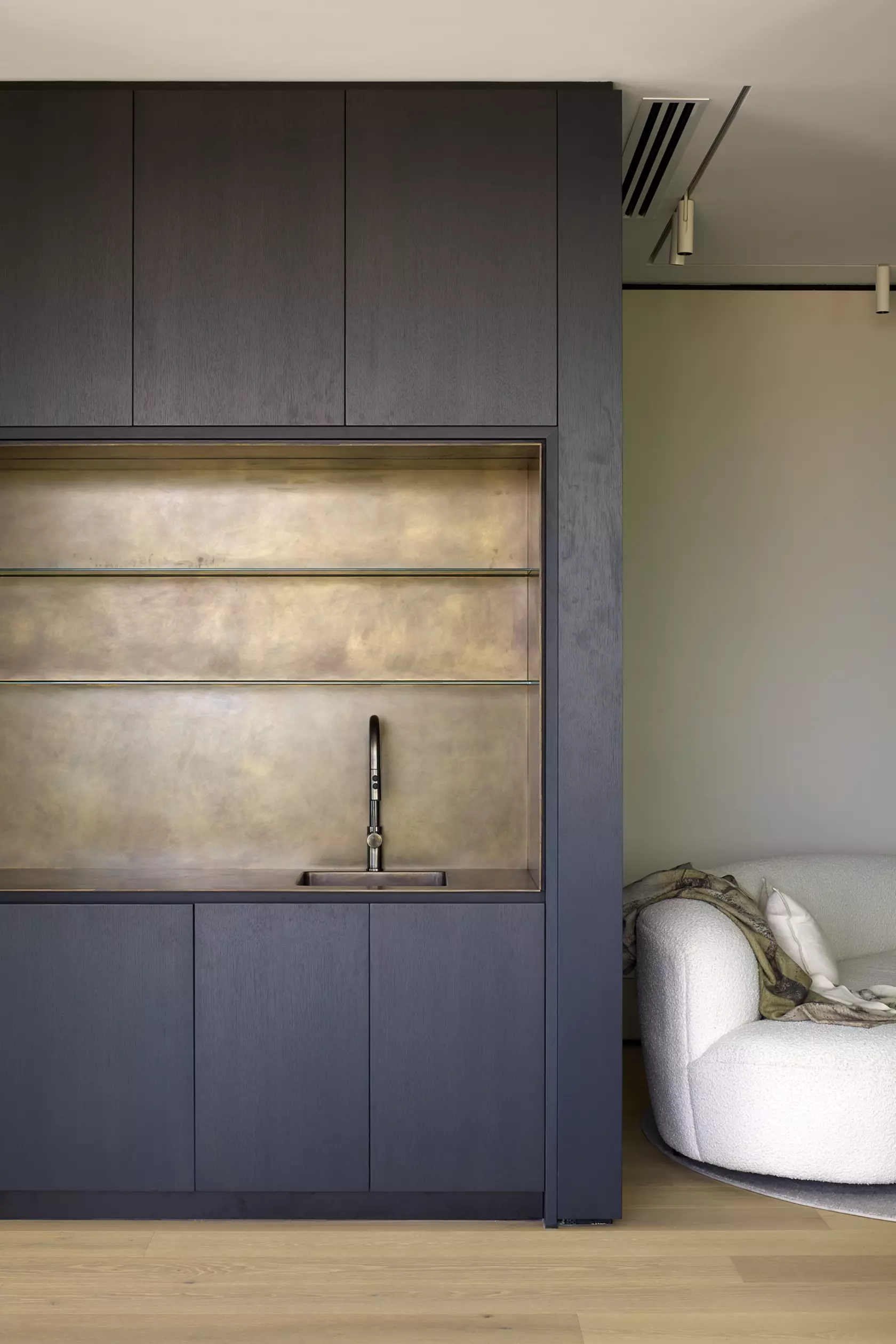
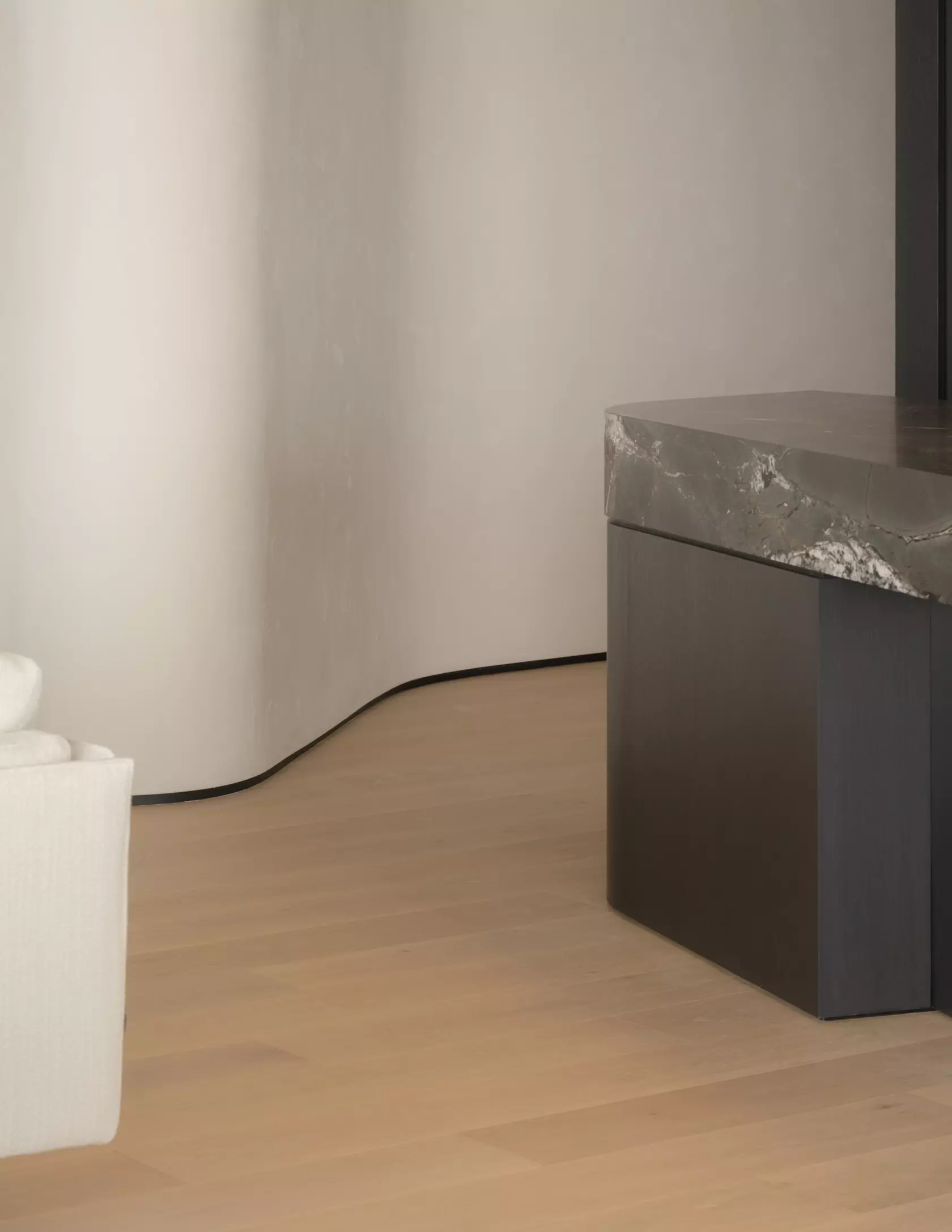
Inside, the strategy shifts to a smooth, eye-guiding flow. "We wanted the space to read very horizontally so that these expansive views would be enjoyed from every room," says Elvidge. "So the joinery elements were objects within that horizontal field." Kitchens and feature walls employ organic geometries – curves and softened edges that let space feel fluid rather than segmented.
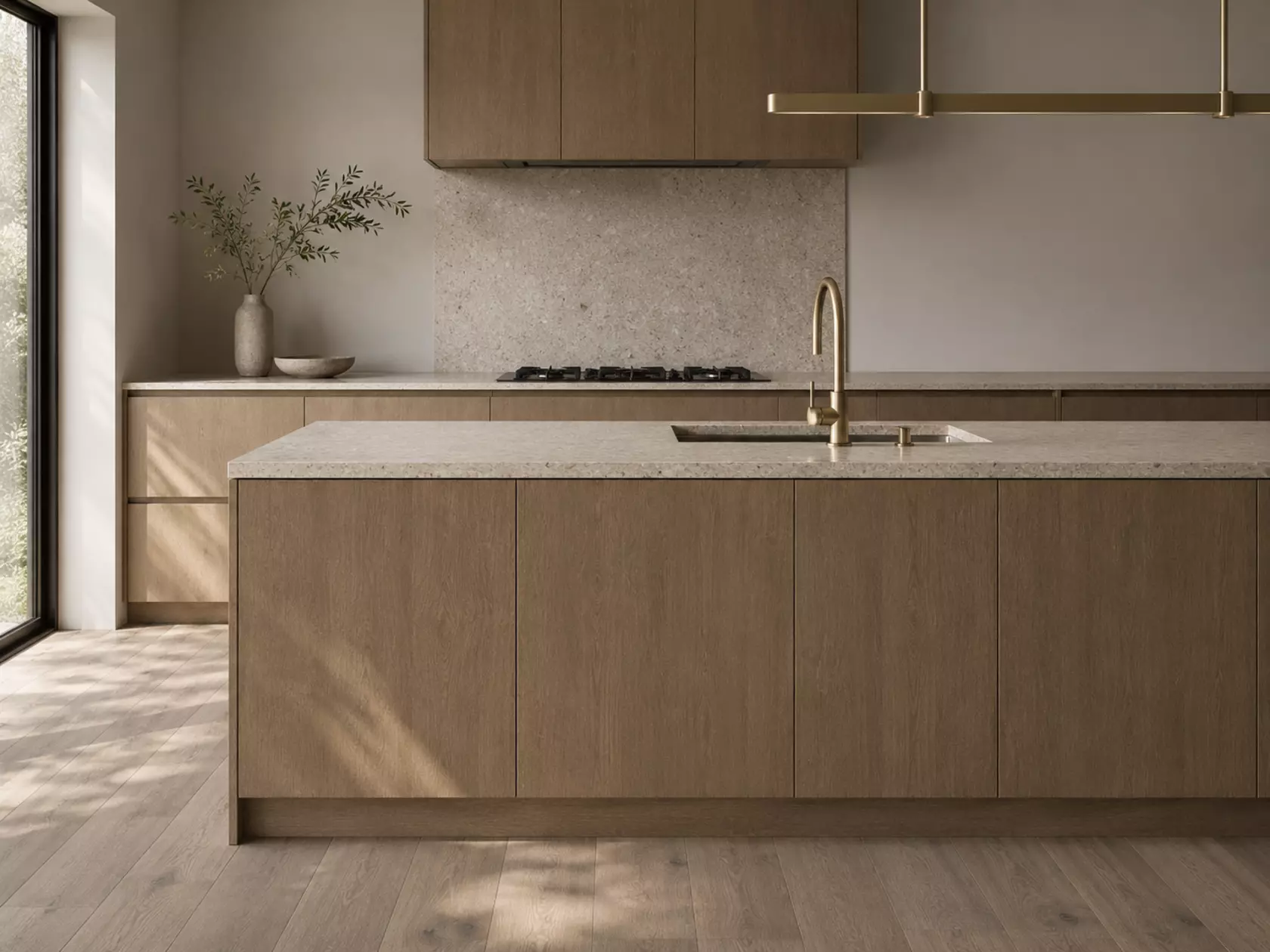
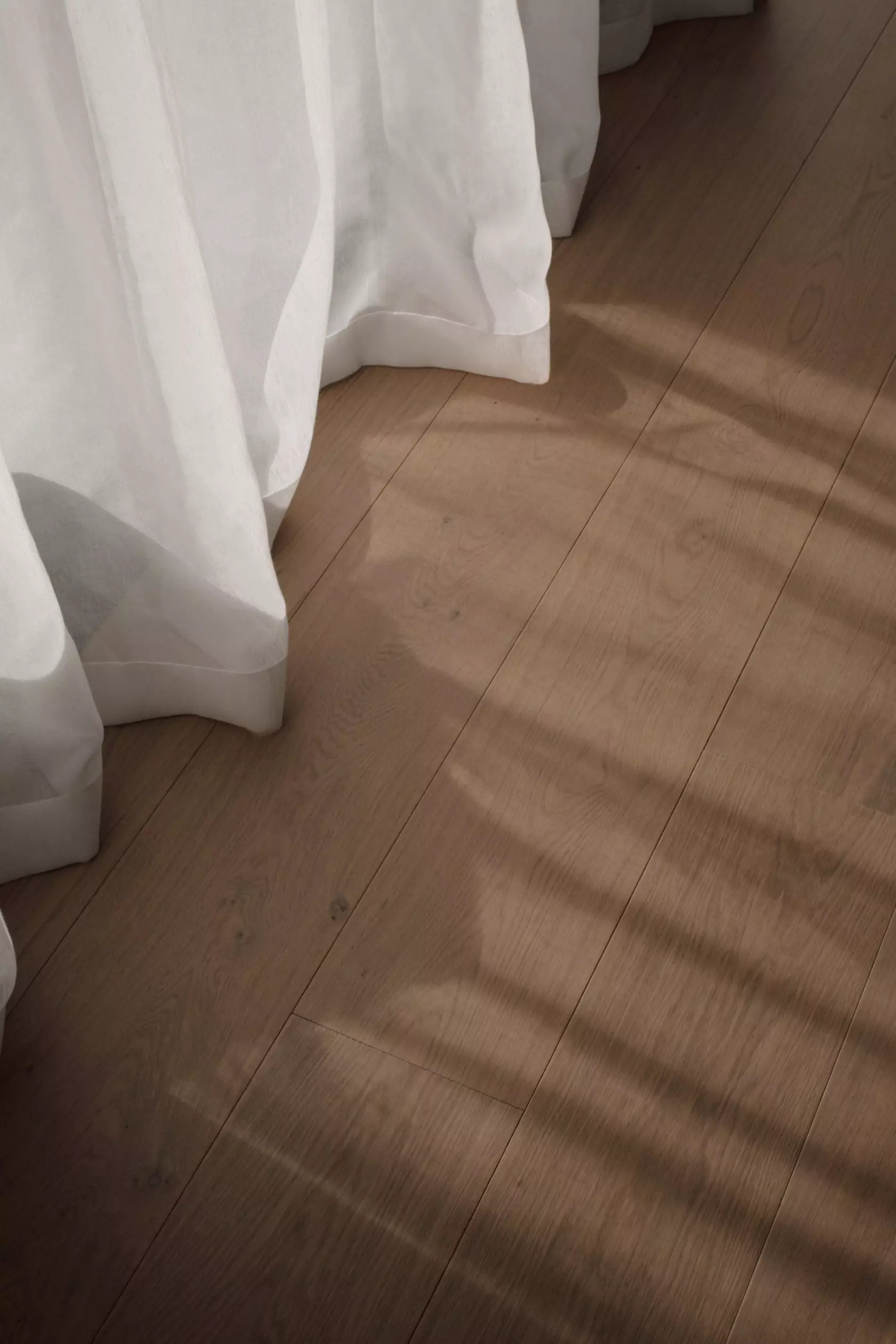
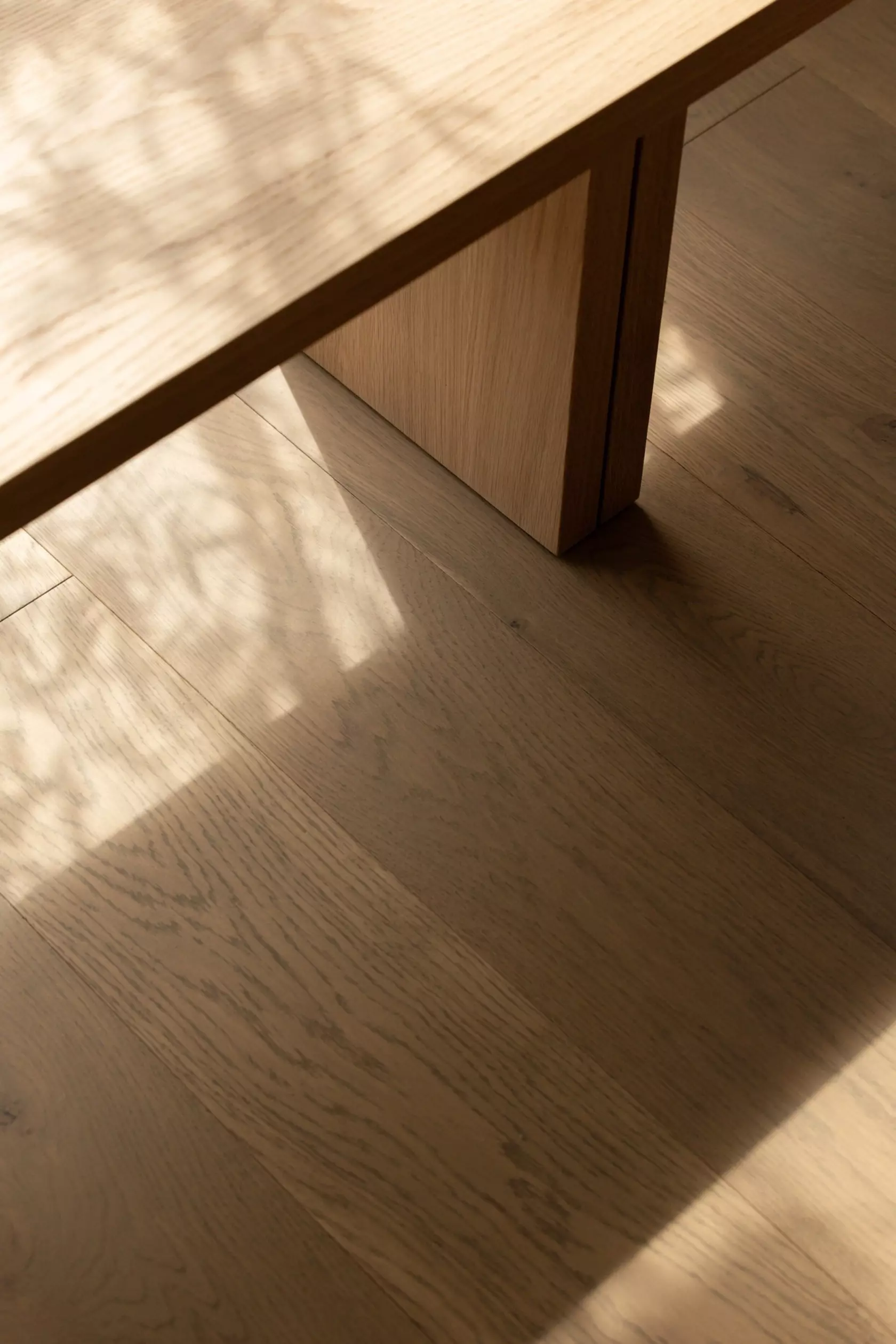
Forté flooring sets a tone of serenity and unfussy sophistication in every apartment, starting with the choice of Moda Capri for the penthouses: "We were seeking a beautiful, calm, light flooring to set off the richer tones of the timber veneer," Elvidge notes. "The wide plank and the consistency in the grain and the colour, it's formed a beautiful backdrop to these living environments."
In the remaining residences, Haven Copenhagen (a soft blond tone) and Urban Barcelona (a warm grey beige) were chosen for their subtle texture and hard-wearing, low maintenance finish.
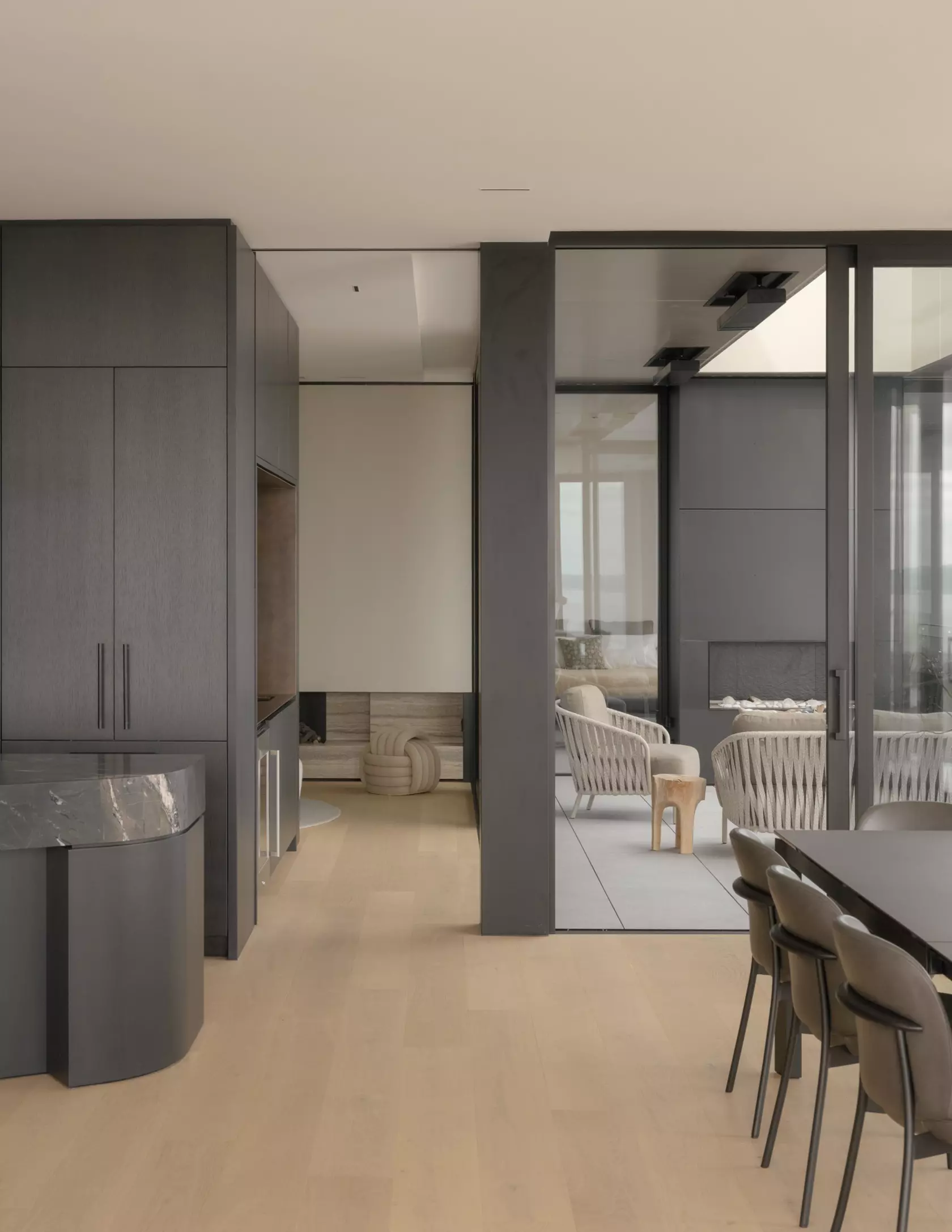

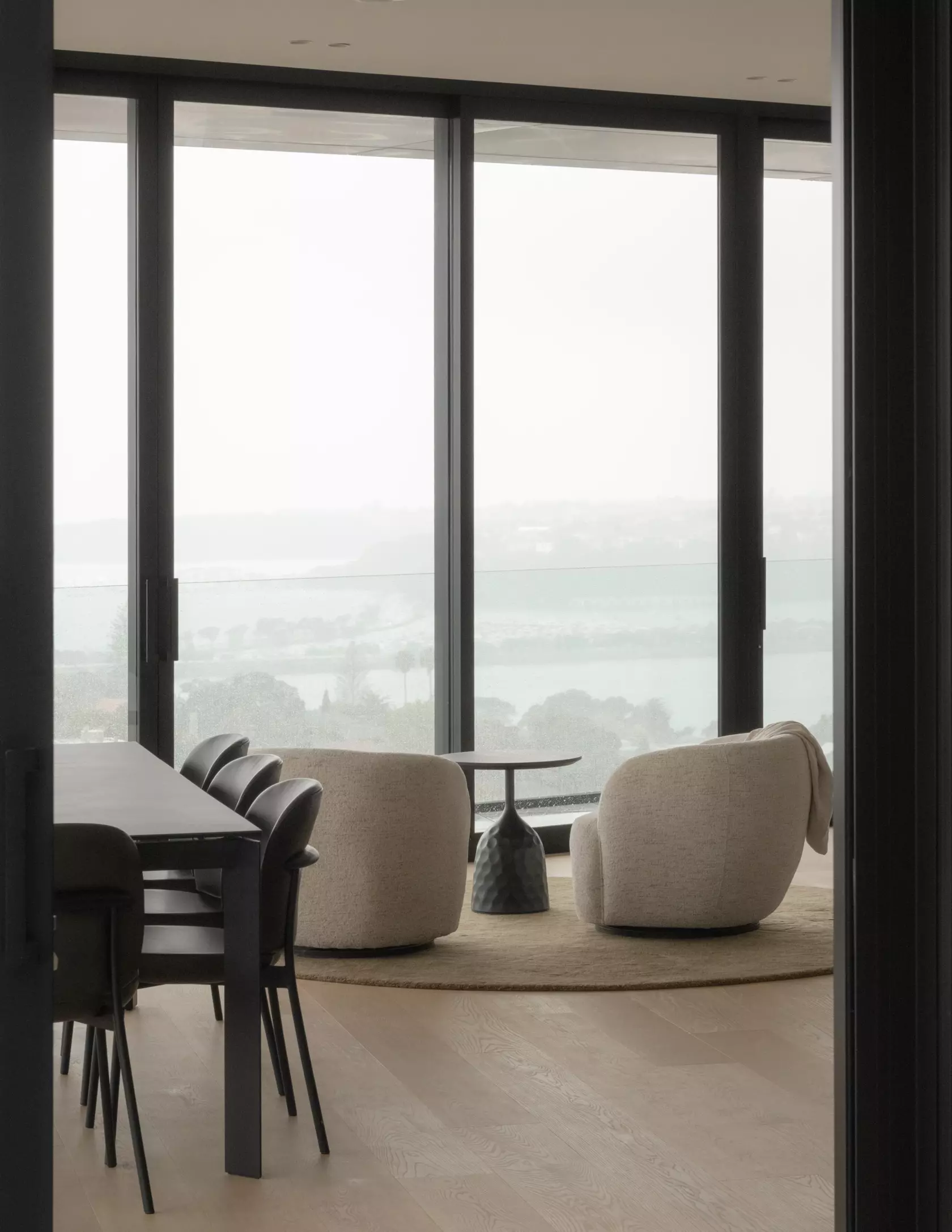
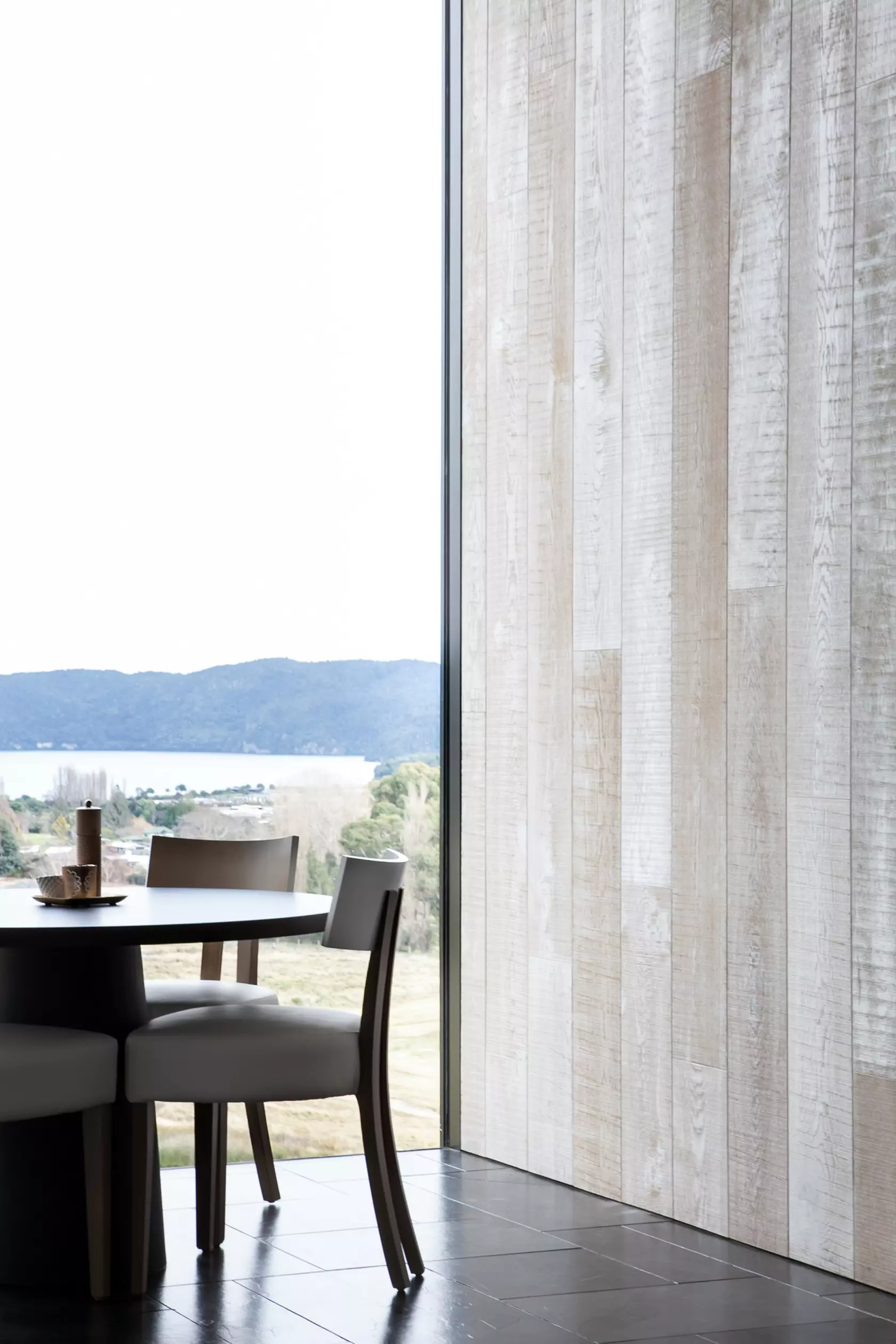
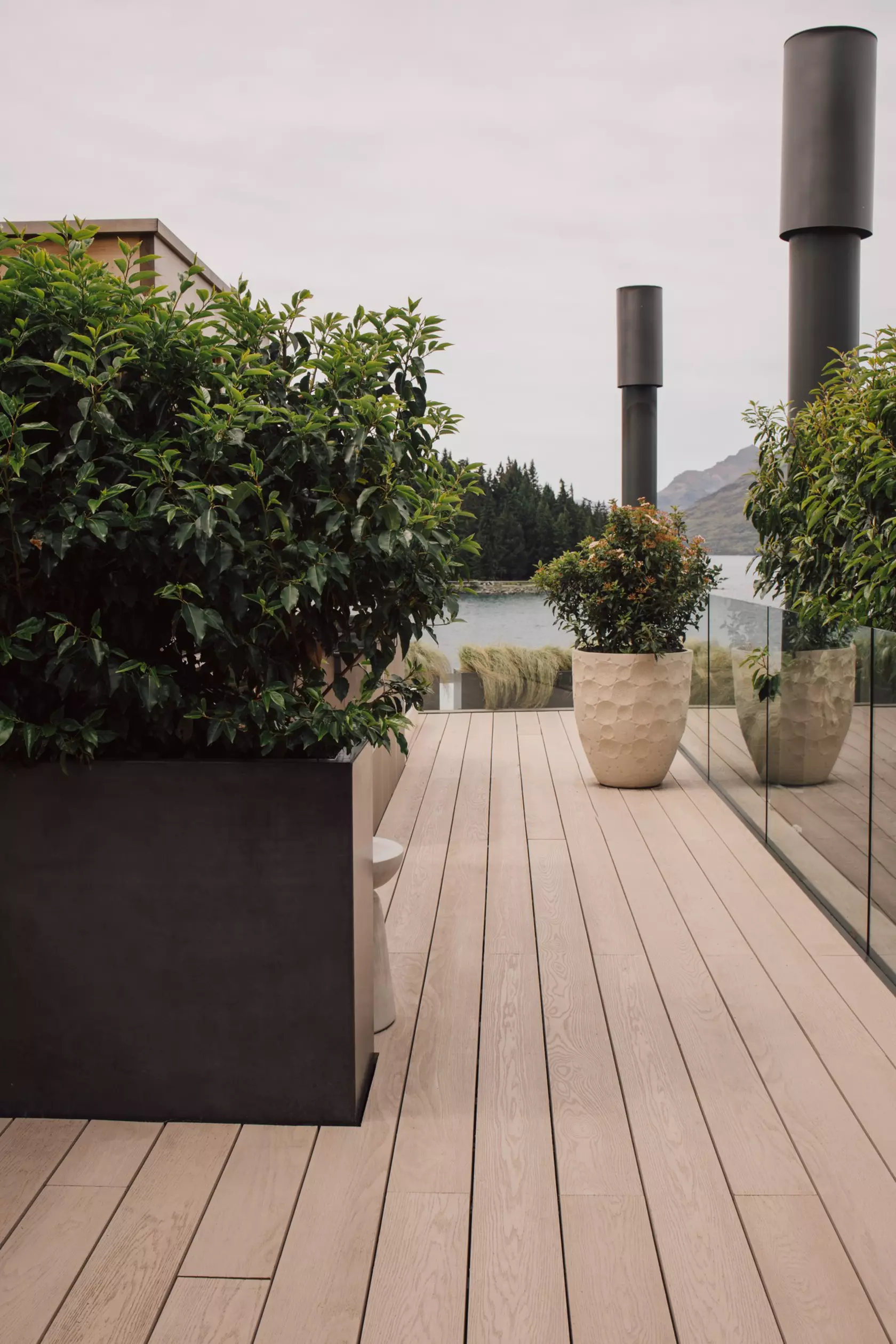
A bay window feature became the project's defining gesture. High studs and floor-to-ceiling glass amplify the sense of volume while letting residents walk right to the building's edge to take in the panoramic views. Generous balconies further connect to the outdoors while still offering retreat from the elements, with integrated planter boxes allowing residents to cultivate their own gardens within these sheltered outdoor rooms.
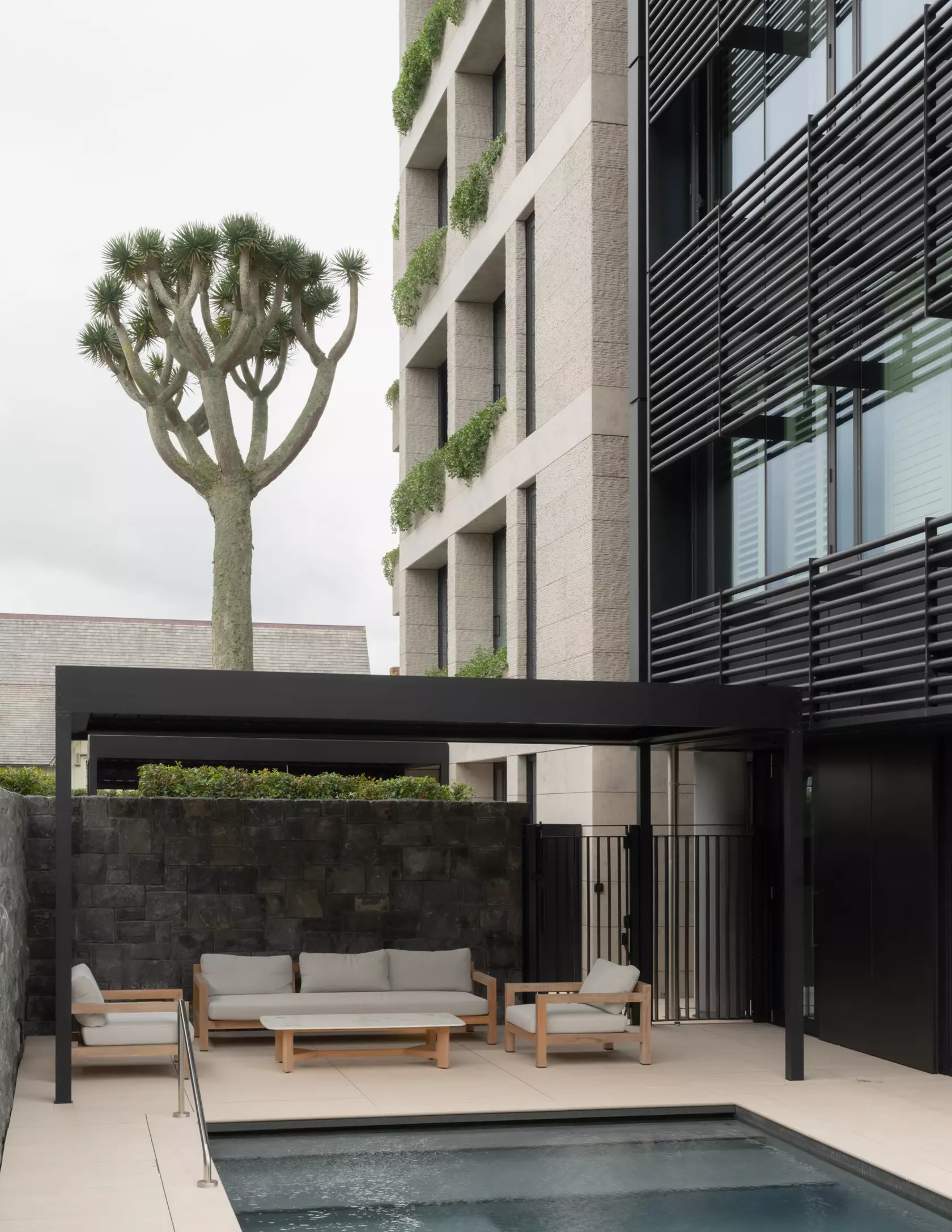
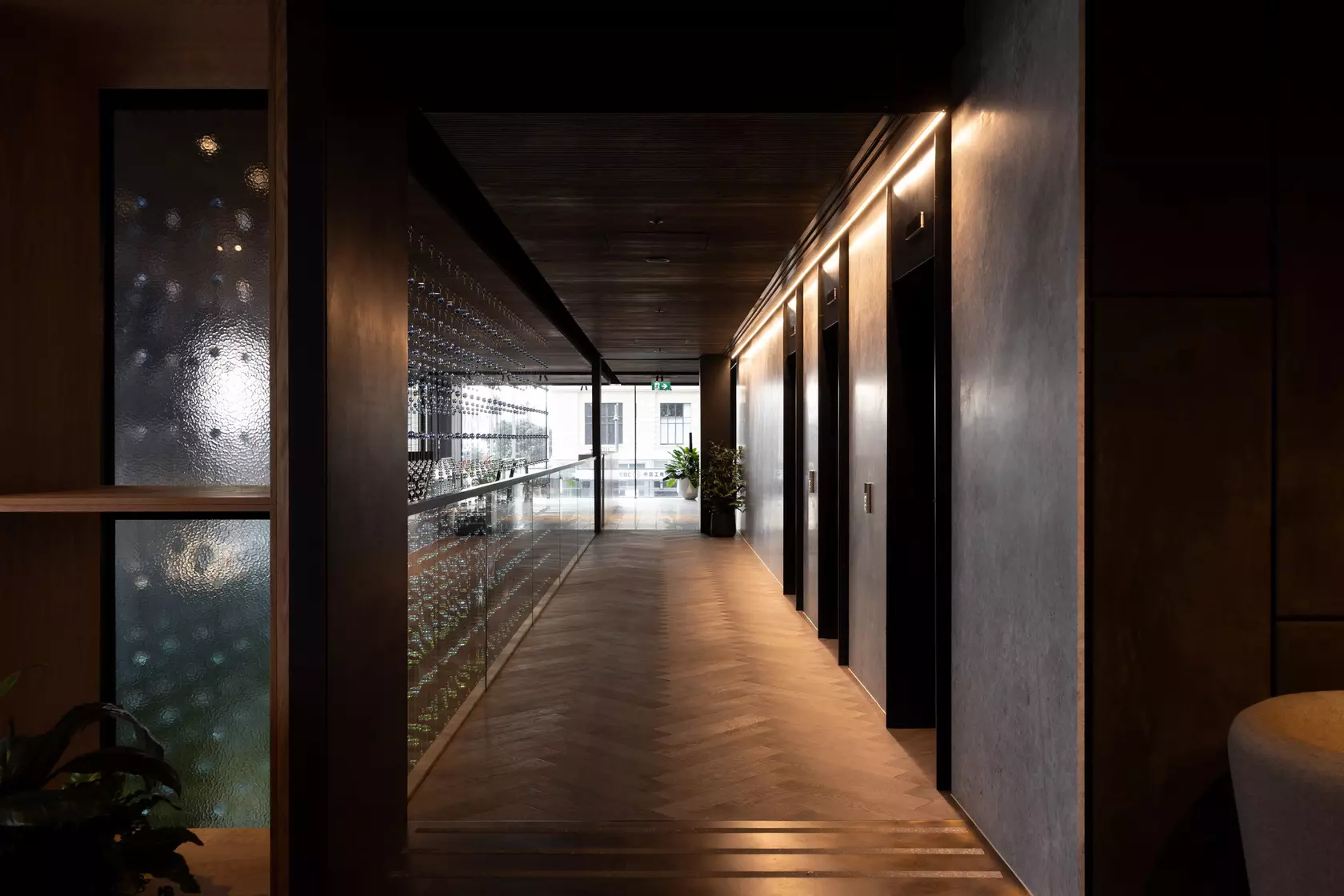
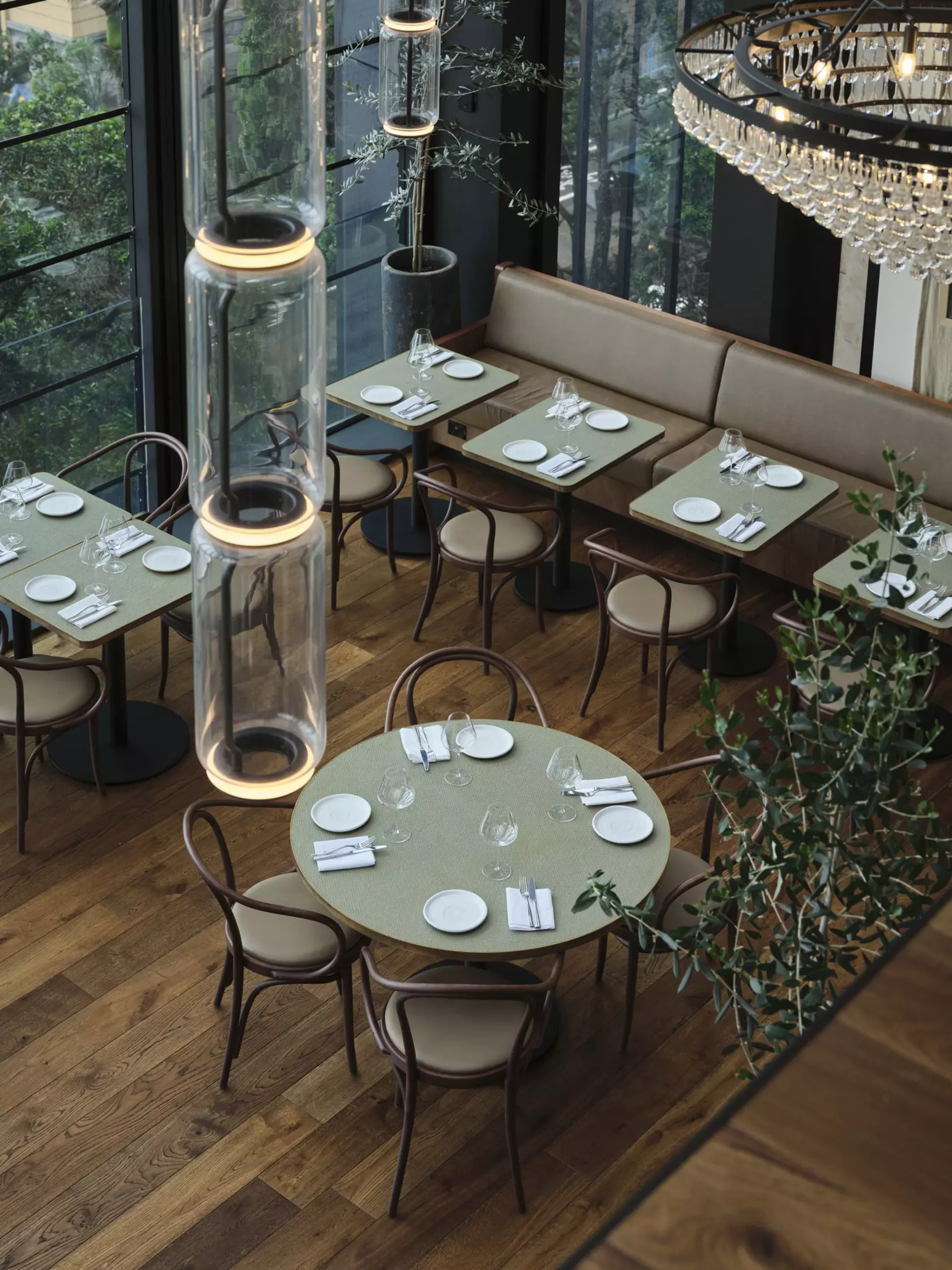
Communal spaces can make or break apartment living – here they anchor the building, with the entire ground floor dedicated to delivering the luxury amenity downsizers expect (without the weekend-zapping maintenance). A private dining area with a concealed caterer's kitchen sits adjacent to a speakeasy-style bar, while the wellness area – sauna, steam room, soak bin – flows outside to a shared pool and BBQ area. Two levels of basement parking sit below, their roof repurposed as shared outdoor space for all residents.
When it came to the construction of One Saint Stephens, the approach balanced efficiency with ambition: combi wall pile retaining for the basement, steel frame for upper levels, insitu concrete cores for shear strength. Materials were chosen for durability and environmental impact, supported by life cycle cost analysis. An ESD report prioritised low-maintenance selections to minimise energy consumption. EV charging for all car parks, cycle parking, centralised water heating, and sorted waste streams are standard. Building systems are designed to adapt as technologies evolve, future-proofing the building for decades of changing resident needs and environmental standards.
"We're incredibly proud of what we've achieved as a team," Elvidge reflects. "Projects like this are about building community and I think we've really done that beautifully here."
One Saint Stephens is designed to endure with beauty and integrity, providing positive impact on residents' lives and the wider environment, and confidently taking its place amongst Parnell's layered architectural heritage.