






The Whole Room in Timber: How to Match Flooring, Panelling and Cabinetry Without the Guesswork
Using timber across multiple surfaces in one room — floor, wall, ceiling, and cabinetry — creates some of the most resolved and beautiful interiors in residential design. It also creates one of the most common frustrations: getting the grain, tone, and finish to feel coherent when materials come from different sources. Alor by Forté is a timber panelling and veneer system designed specifically to solve that problem, offering wall panels, ceiling panels, and cabinetry veneer panels engineered to work together, and to pair seamlessly with adjacent timber flooring. This article explains how to approach a whole-room timber scheme, where it goes wrong, and what it looks like when it goes right.
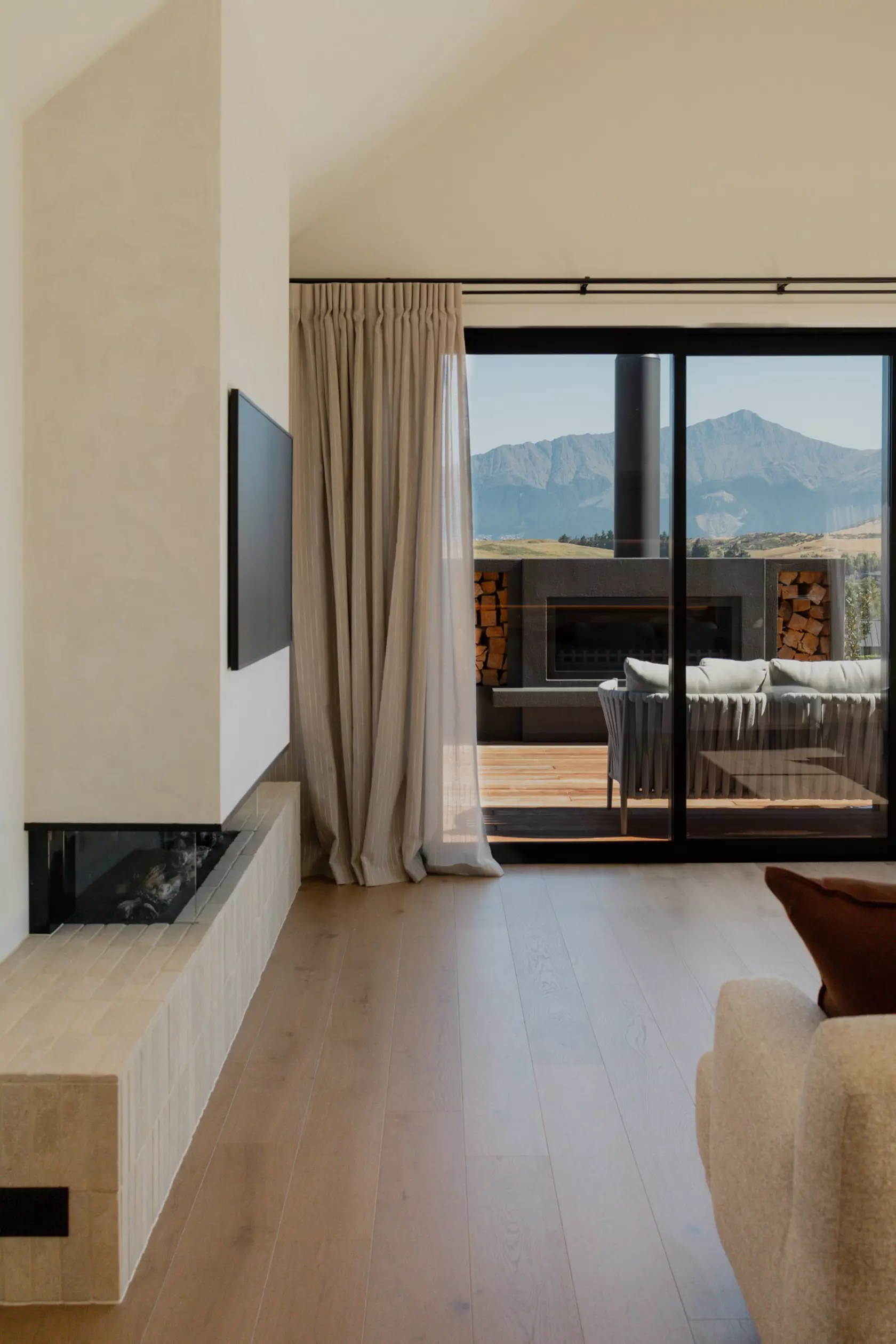
Why Is It So Hard to Get Timber to Match Across a Room?
Anyone who has tried to coordinate timber finishes across a kitchen renovation or new build will recognise the problem. You select a flooring species. Then you try to find cabinetry that works with it. Then wall panelling. Then ceiling detail. Each comes from a different manufacturer, a different species, a different finishing process — and what looked cohesive on individual samples in isolation starts to fight itself once it's all installed together.
The reasons are more technical than most people realise:
Species variation. Even within a single timber species, colour and grain can vary significantly from board to board and batch to batch. What reads as European oak from one supplier can look meaningfully different from European oak from another.
Finish interaction. Oils, lacquers, and hardwax finishes all affect the apparent warmth and tone of timber differently. The same raw species, finished two ways, can look like two different materials under the same light.
Scale and context. A sample card in a showroom is not a kitchen. The way timber reads across a 4-metre island bench, a full-height pantry door, and a ceiling panel overhead is completely different from how it reads on a 10cm square. Tone shifts. Grain reads differently at scale. What seemed like a safe match on the card becomes a visible mismatch on the wall.
The result, in homes where these decisions are made independently, is a space that feels busy rather than resolved — where the eye keeps catching the differences between surfaces rather than reading them as a whole.
What Does a Well-Resolved Timber Interior Actually Look Like?
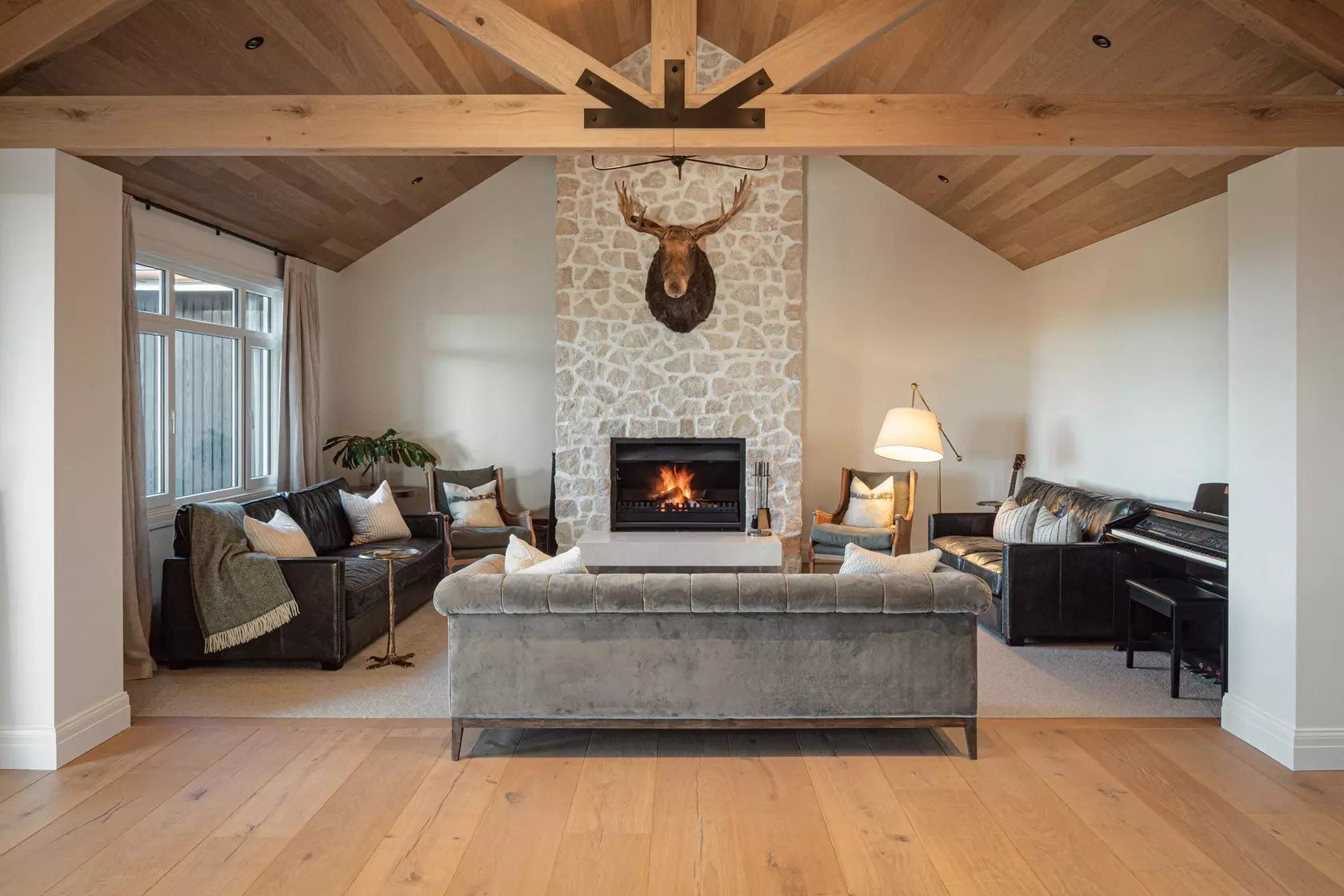
The interiors that feel genuinely cohesive in timber share one quality: every surface seems to have been considered in relation to every other. The floor doesn't just coexist with the cabinetry — it belongs with it. The ceiling panels don't merely complement the wall panelling — they continue it. The joinery doesn't introduce a new material language — it completes the one already established.
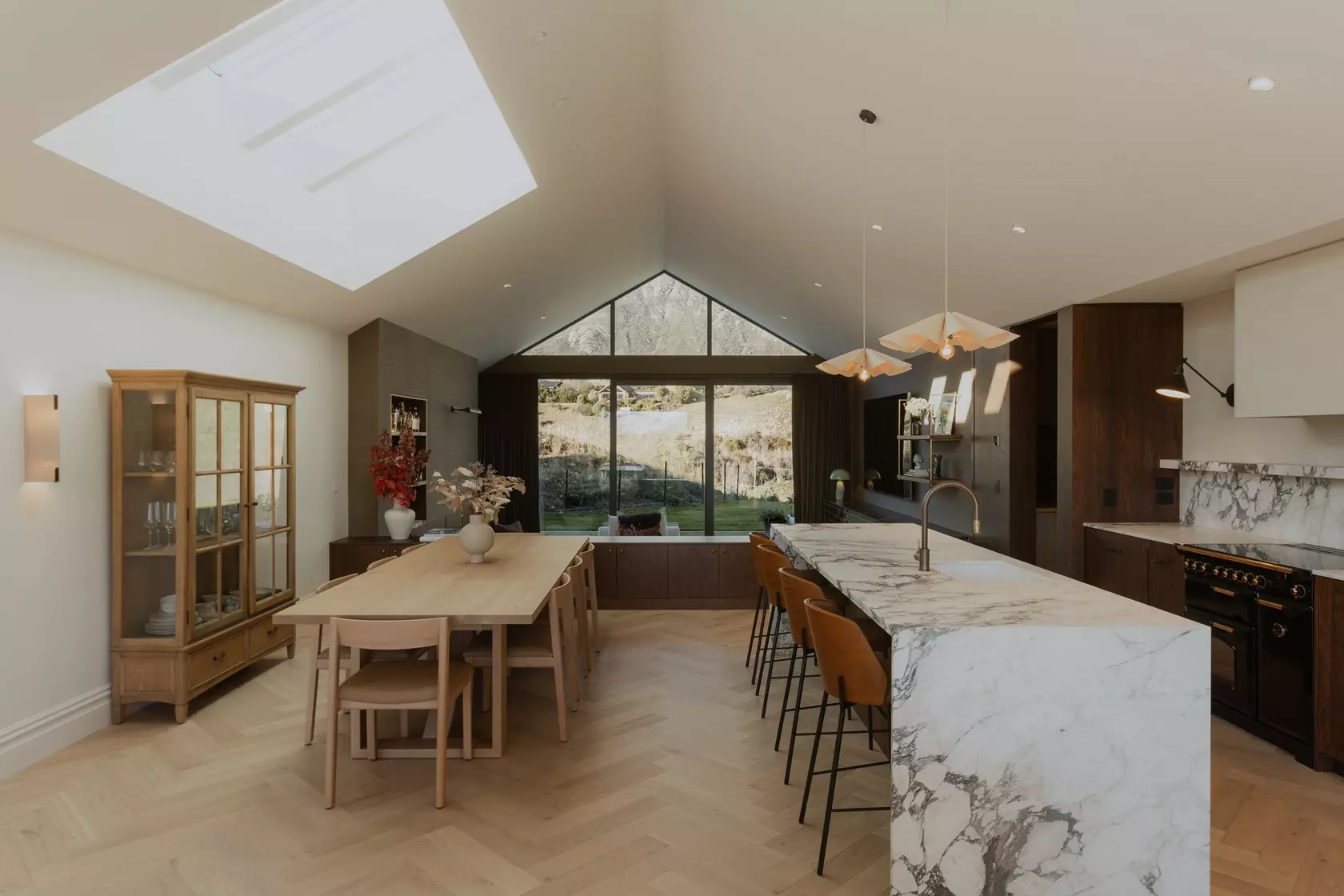
This isn't about everything being identical. In fact, some of the most sophisticated timber interiors work with tonal contrast — a darker cabinetry against a lighter floor, or a more heavily grained wall panel beside a finer-grained ceiling. What holds them together is a shared design logic: the same species family, the same finish temperature, the same quality of surface.
Getting that right across independently sourced products is difficult. Getting it right when the products are engineered to work together is significantly easier.

Alor is our timber panel system for walls, ceilings, and cabinetry. What distinguishes it from sourcing each element separately is the consistency built into the range from the outset.
Each Alor veneer colourway uses a carefully selected timber species chosen specifically for its ability to deliver consistent colour, grain, and finish across every panel — whether that panel ends up as a wall surface, a ceiling feature, or a cabinet door. The lacquer finishes and edgebanding used on the cabinetry panels are engineered for durability in the specific demands of joinery use, without departing from the visual character of the panelling used elsewhere in the same space.
The practical result is that a kitchen designed with Alor cabinetry veneer panels can use the same colourway on an adjacent entry recess, a coat bay surround, or a ceiling detail — and the surfaces will read as one considered material decision, not a series of near-misses.
That consistency also extends outward to flooring. Alor colourways are developed with our timber flooring ranges in mind, so the transition from floor to wall to ceiling to joinery can be resolved within a single design language rather than requiring extensive cross-referencing between suppliers.
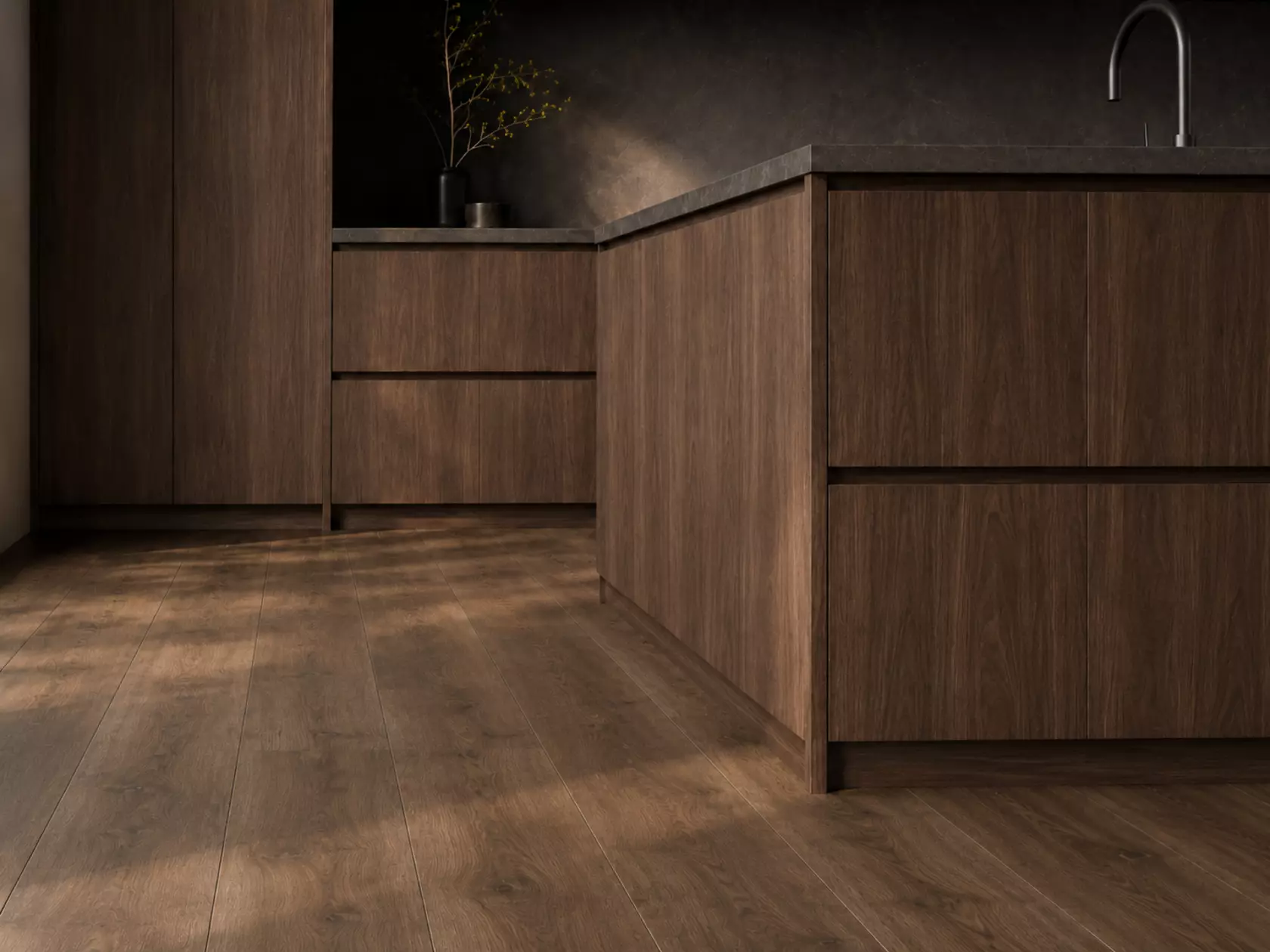
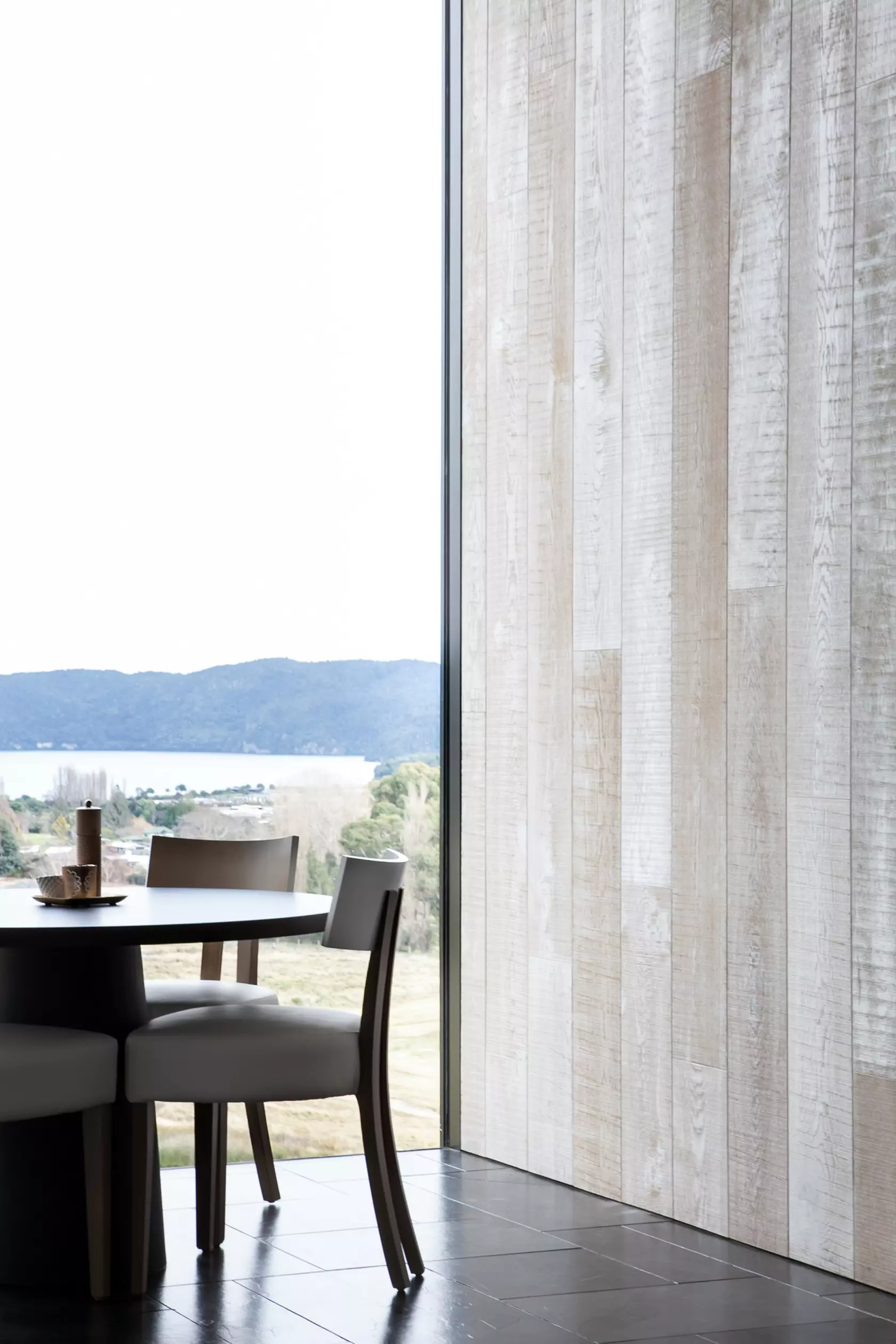
The most common application for timber panelling is the feature wall — a single surface used as an accent in a living room or bedroom. Alor works well in that context, but the range is engineered for something more ambitious: whole-room coherence across every timber surface simultaneously.
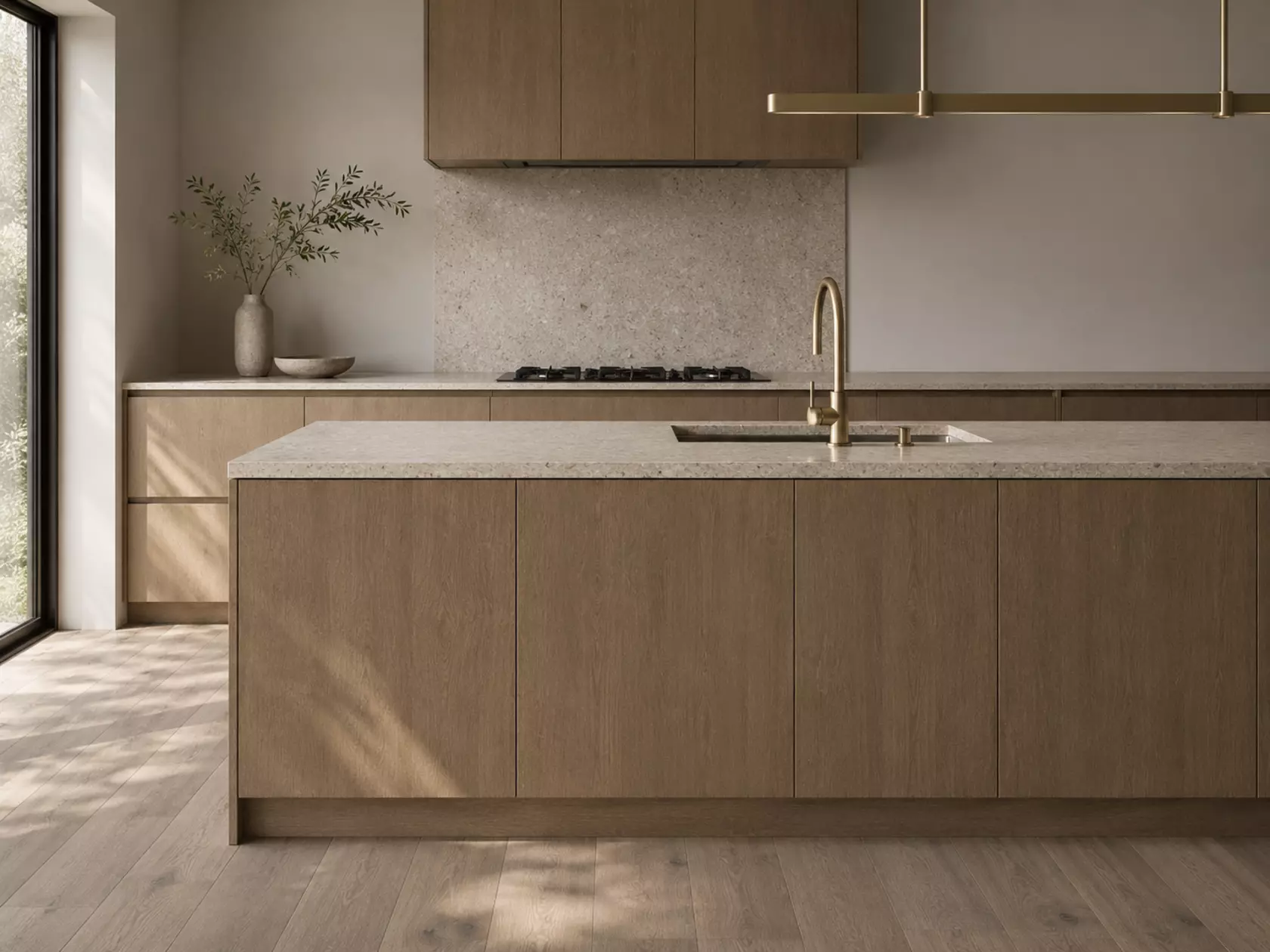
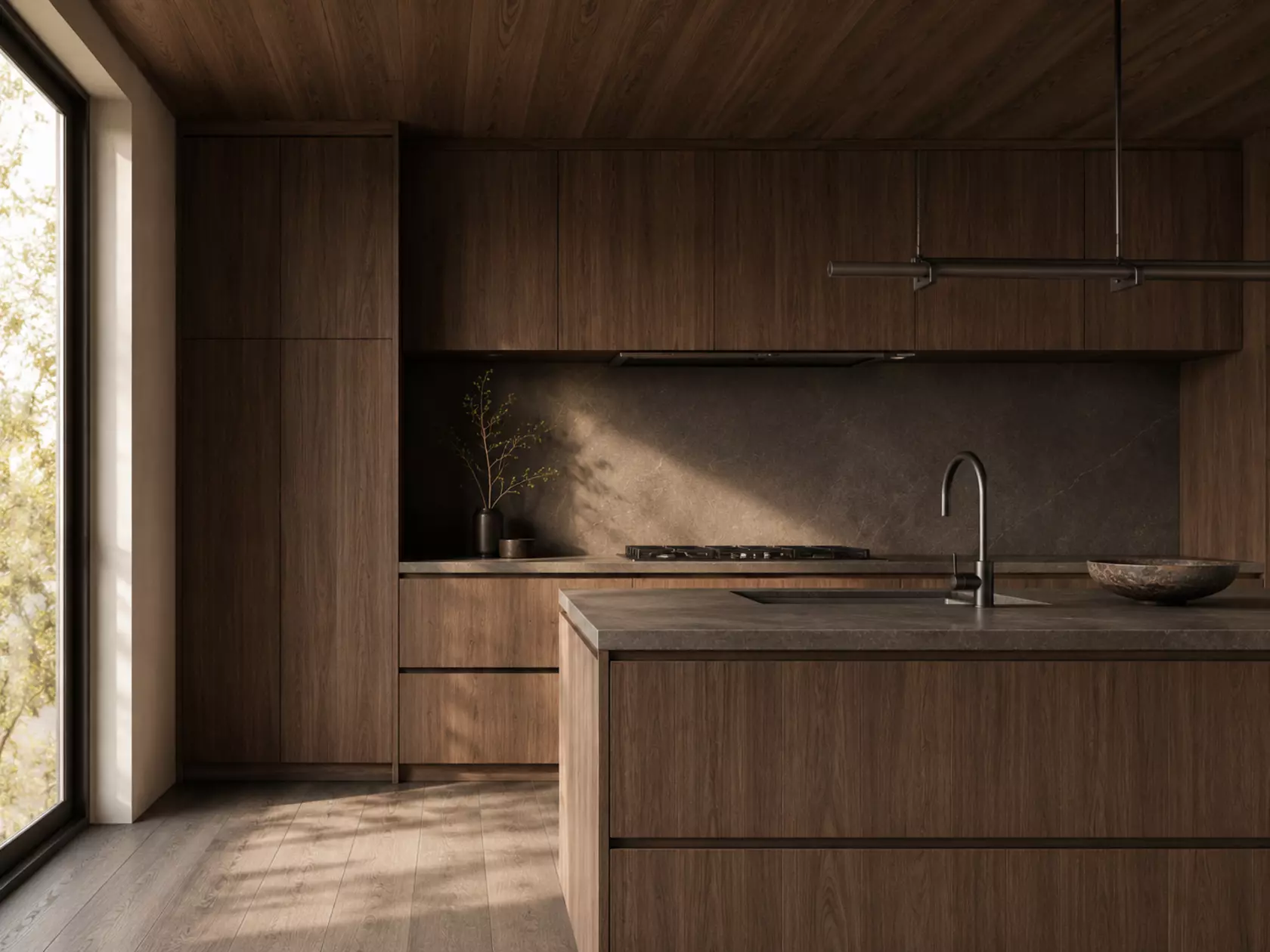
Kitchen cabinetry. Alor veneer panels bring the warmth and grain depth of real timber to kitchen joinery without the inconsistency of solid timber or the flatness of painted MDF. Because the veneer colourways are designed to sit alongside Alor wall and ceiling panels, a kitchen can use the same material language on its cabinetry, its splashback recess, and its ceiling — resolved from the outset rather than approximated after the fact.
Entry recesses and coat bays. The entry of a home sets the tone for everything that follows. An entry recess or built-in coat bay finished in Alor panelling creates an immediate sense of material quality and warmth — and because Alor runs consistently across surfaces, that same colourway can carry through to adjacent rooms without a visible join in the design logic.
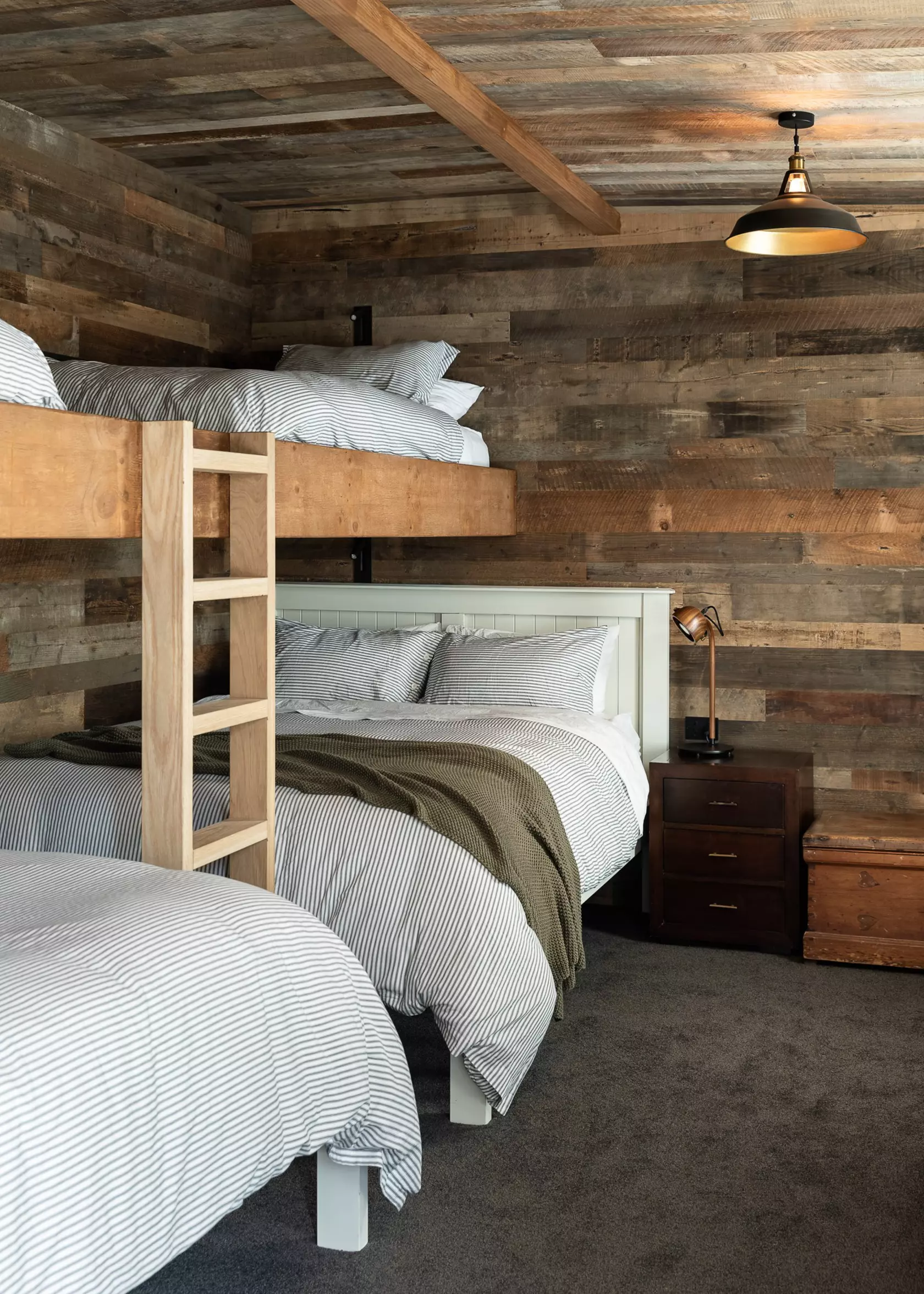
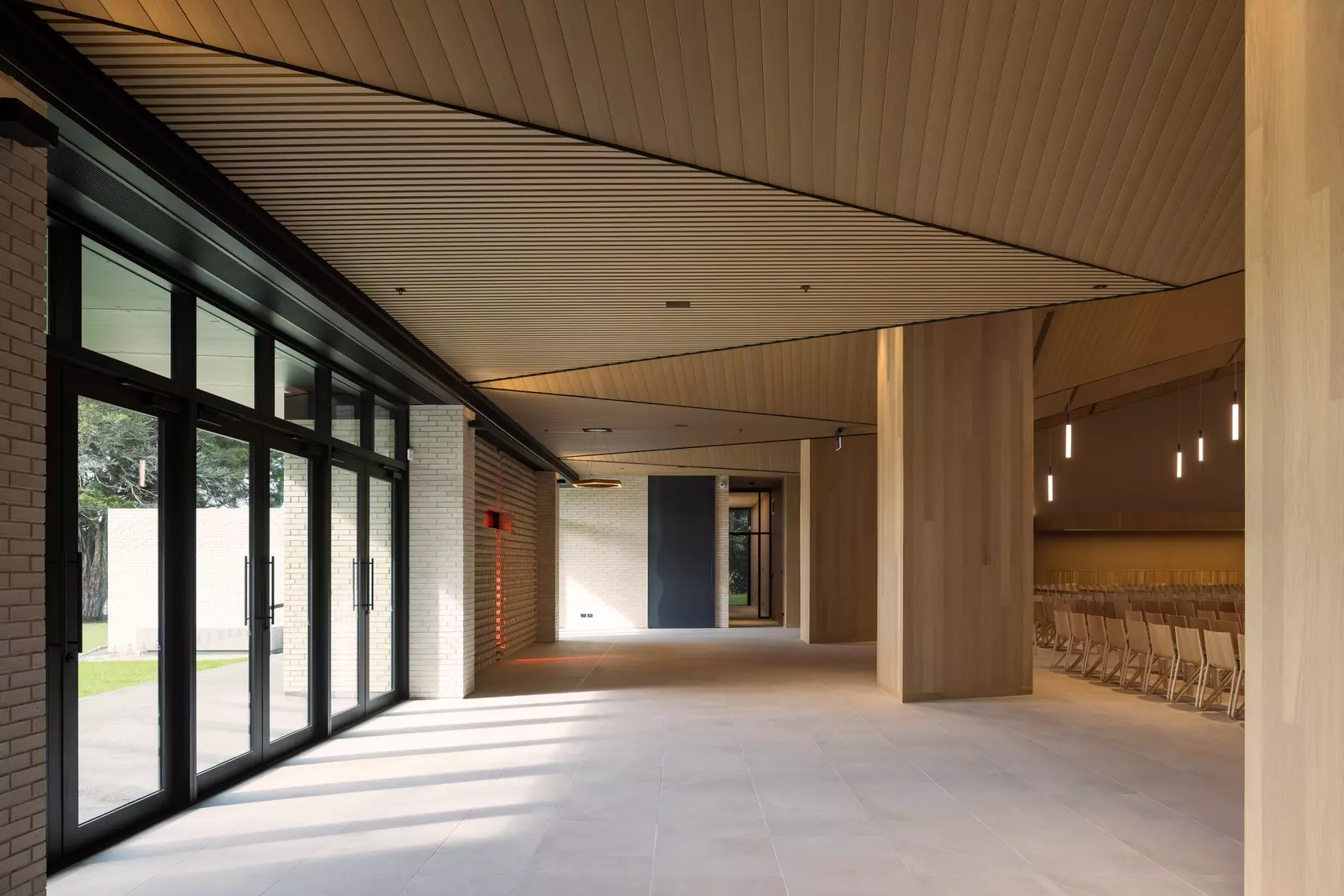
Ceiling panels and box beams. Alor ceiling applications — whether flat panels, batten systems, or custom box beams as used at the Kern Road Residence — bring the same veneer consistency overhead, completing the room rather than leaving the ceiling as an afterthought.
Wardrobes and bespoke joinery. Anywhere that cabinetry or joinery is visible as part of the room's design rather than hidden within it, Alor veneer panels offer a surface that holds up to scrutiny — consistent grain, durable finish, true-to-sample colour.
A Project in Practice: Kitchen and Entry in Alor Nox
Sellars Residence demonstrates what the whole-room approach looks like built.
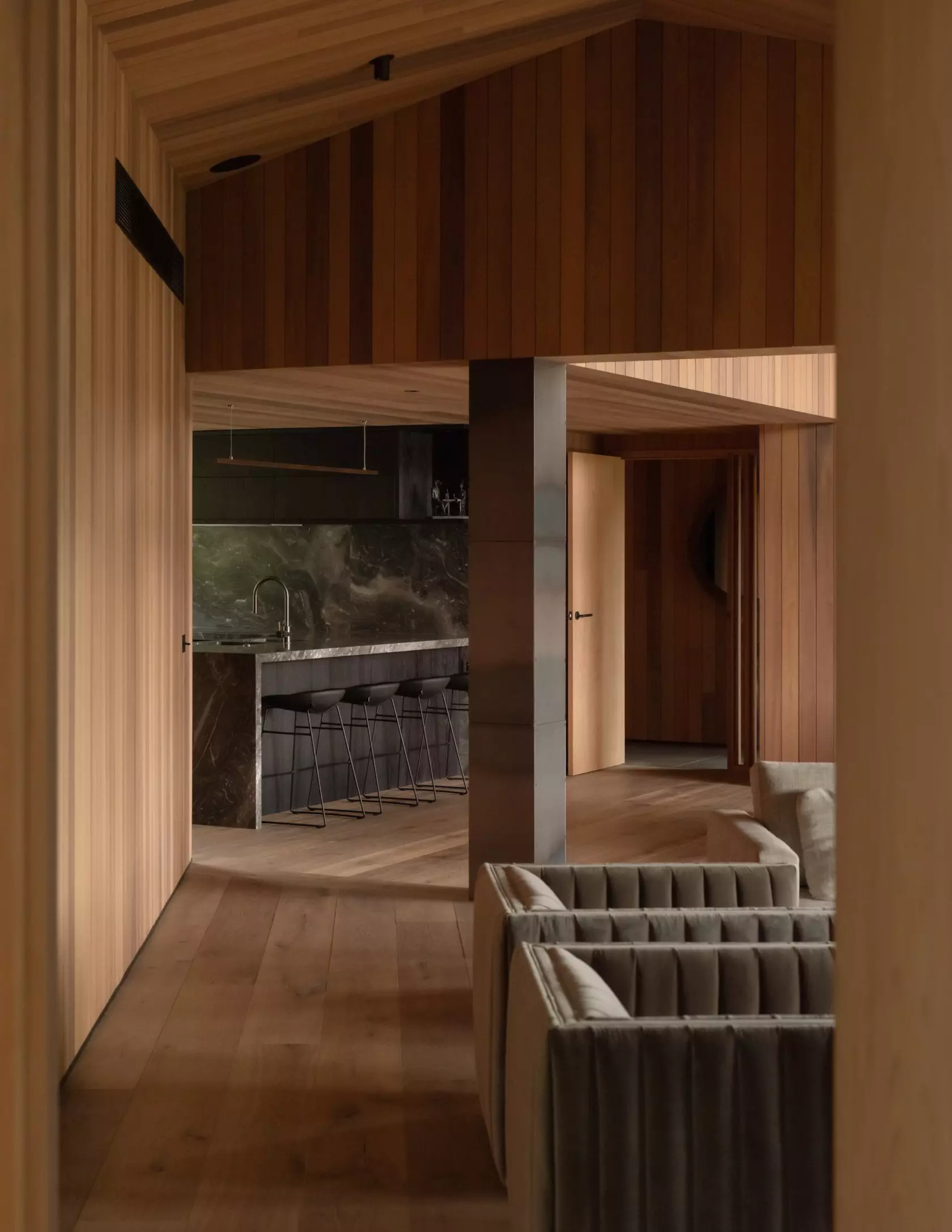
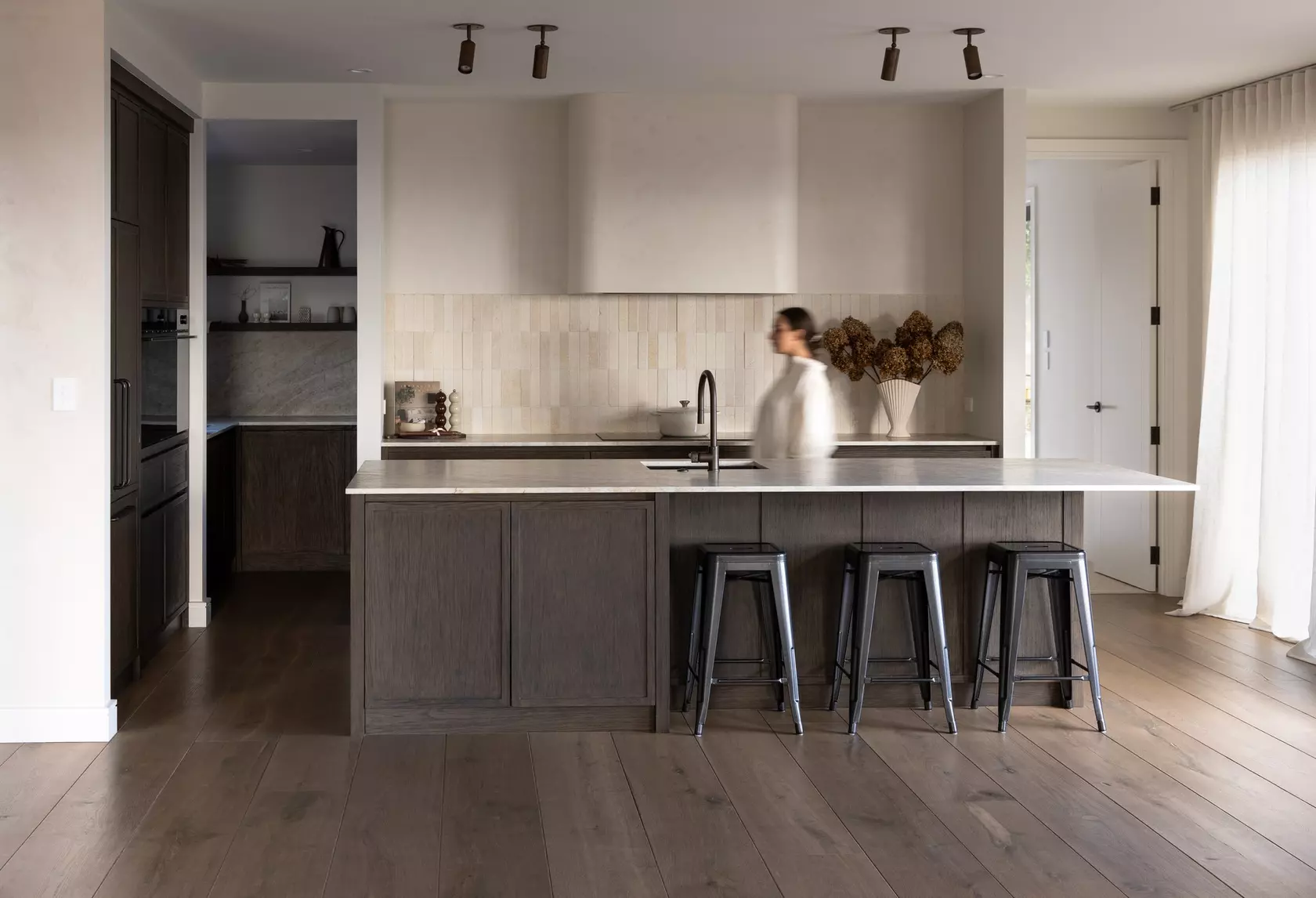
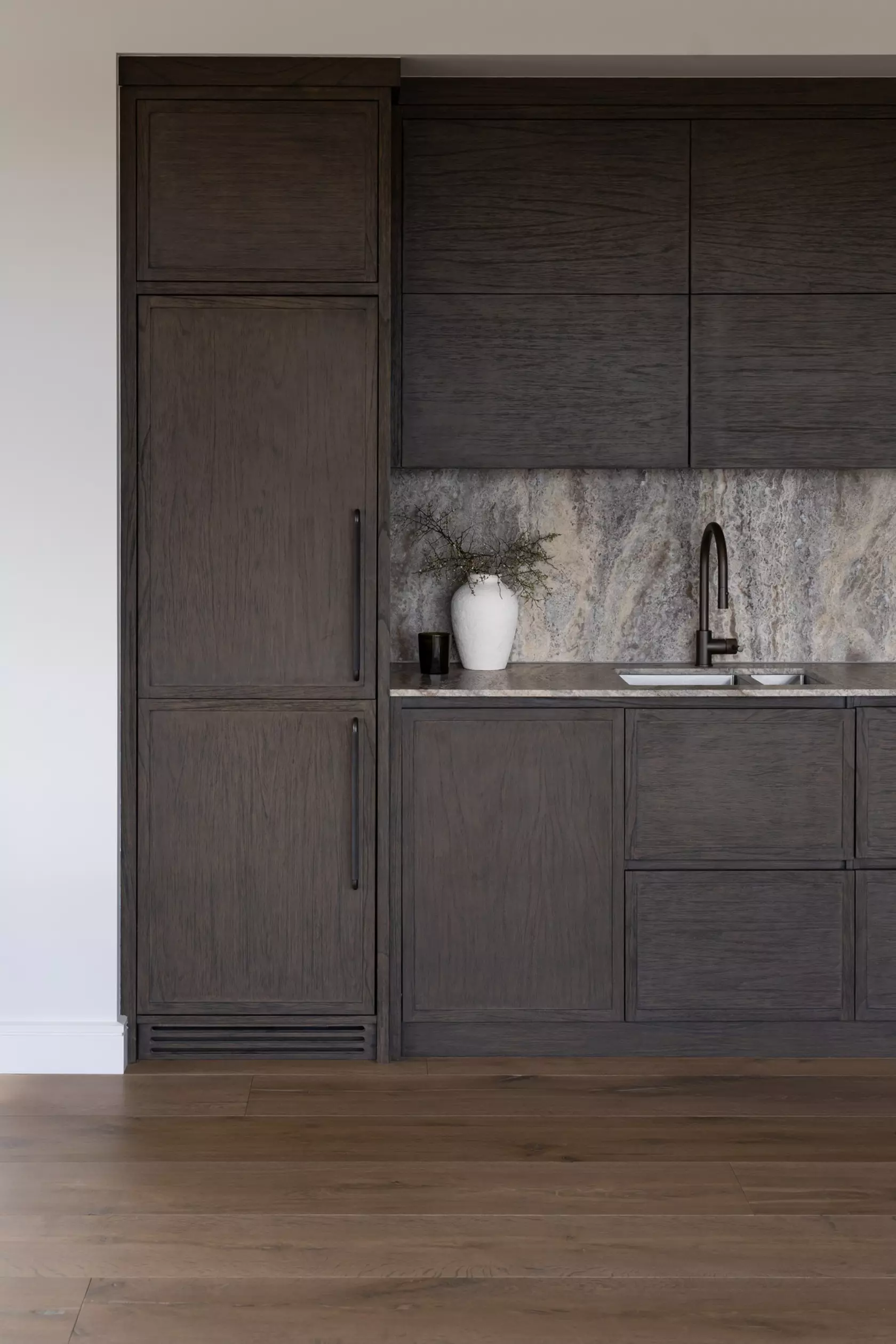
The brief called for a kitchen and entry zone that felt resolved and warm without being heavy — a home where timber was present throughout without dominating any single surface. The design team specified Alor Nox across the kitchen cabinetry, the entry recess panelling, and the coat bay surround, creating a continuous material thread from the moment of arrival through to the heart of the home.
The cabinetry veneer panels deliver the grain depth and warmth of real timber with the consistency that a kitchen environment demands — uniform colour across every door and drawer front, durable lacquer finish, and edge banding that holds up to daily use without compromising the surface quality. Adjacent to the kitchen, the entry recess uses the same Alor colourway on the wall panels, so the visual relationship between the two spaces is immediate and deliberate rather than coincidental.
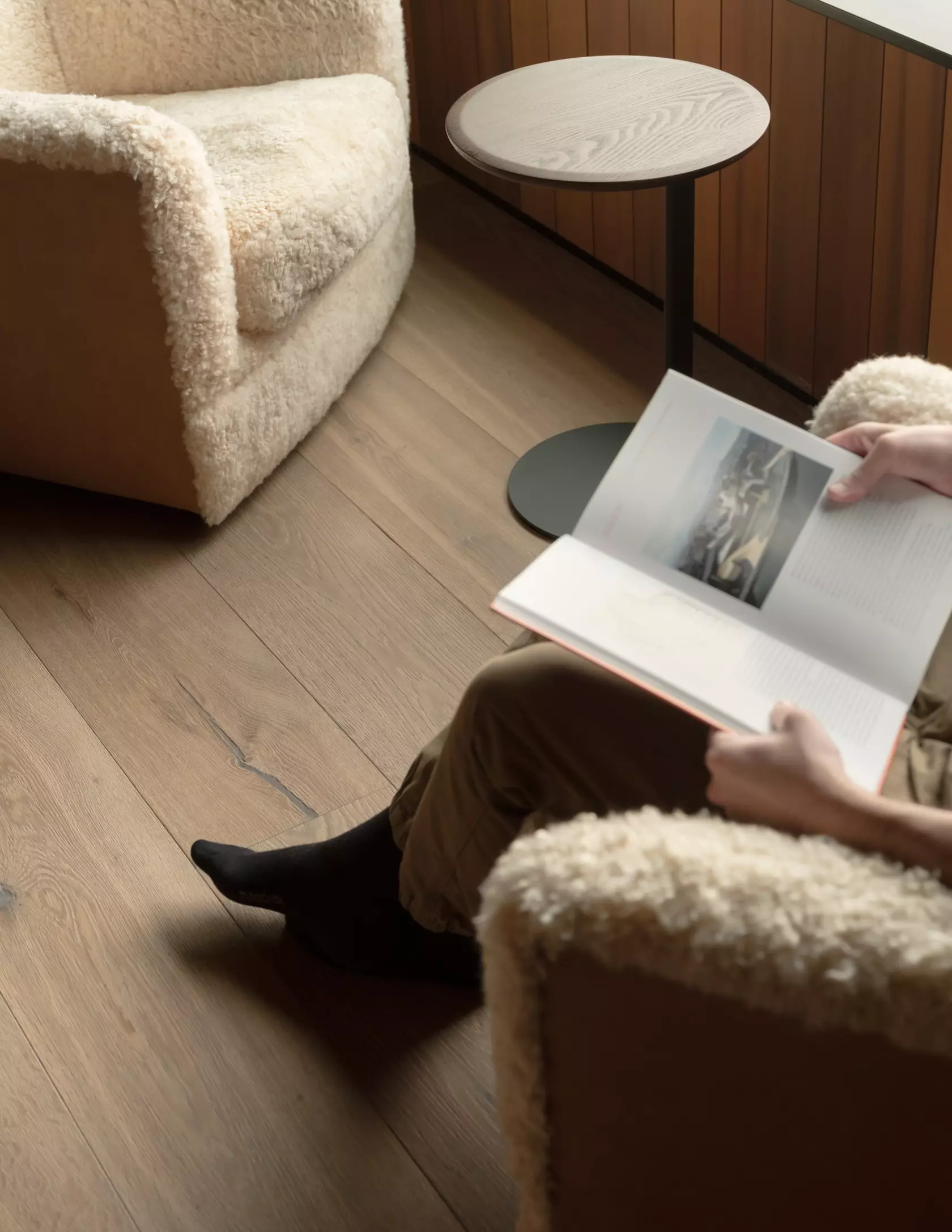
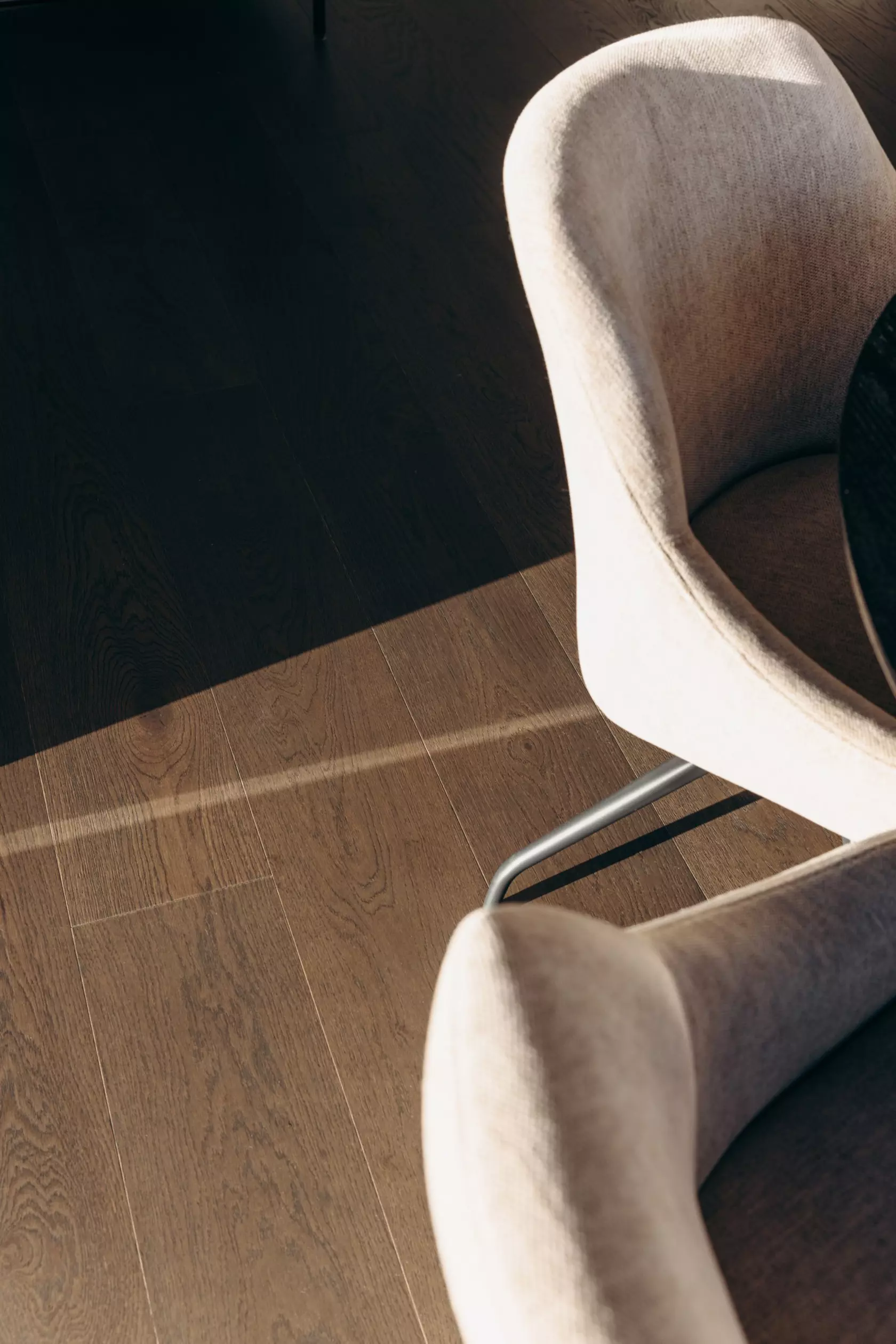
The custom flooring was selected to sit within the same tonal family, completing a scheme where every timber surface works in relation to every other.
Practical Guidance: Planning a Whole-Room Timber Scheme
Start with the largest surface. In most rooms, the floor is the dominant timber surface by area. Establish its tone and species first, then work upward — wall panelling, cabinetry, ceiling detail. Each decision should respond to the one below it.
Treat finish temperature as seriously as colour. A warm-toned oil finish and a cool-toned lacquer on the same species will produce visibly different results. When specifying across multiple surfaces, confirm that the finish approach is consistent — or deliberately contrasted — across all of them.
Think in terms of tonal zones, not identical matches. The most resolved timber interiors aren't monochromatic. A slightly darker cabinetry against a mid-tone floor and a lighter ceiling panel creates hierarchy and depth. What holds it together is that all three occupy the same tonal world — warm, natural, considered.
Sample at scale before committing. A single panel sample in a showroom is useful. A metre-square sample installed on your actual wall, under your actual lighting, is essential. Timber reads differently at scale and in situ — always confirm before specifying across multiple surfaces.
Consider the grain direction. Vertical grain on cabinetry doors reads differently from horizontal grain on wall panels. Both can work in the same space, but the relationship between them needs to be intentional. Alor's consistent veneer selection means the grain character is predictable across surfaces — which makes that decision easier to manage.
Comparison: Sourcing Timber Surfaces Independently vs Using an Integrated System
Colour consistency — Variable by species and batch when sourced independently. Engineered per colourway with Alor.
Grain consistency — Variable across suppliers when sourced independently. Consistent within the Alor range.
Finish compatibility — Requires cross-referencing across suppliers. Developed as a system with Alor.
Cabinetry durability — Depends on manufacturer spec. Enhanced lacquer and edgebanding with Alor.
Design resolution — Achievable with significant effort when sourced independently. Built into the Alor product.
True-to-sample result — Approximate when sourced independently. Dependable with Alor.
Can Alor cabinetry panels be used by any kitchen manufacturer?
Alor veneer panels are supplied as a panel product for use by cabinetry makers and joiners. For specification and supply, contact us directly — our team can advise on formats, colourways, and the right panel type for your project. Enquire | Forté
Does Alor work with existing timber floors that weren't supplied by Forté?
Yes. While Alor colourways are developed with Forté's flooring ranges in mind, the principles of tonal matching apply regardless of floor origin. Our specification team can advise on which Alor colourway sits best alongside your existing floor — bring along a sample or photograph.
Is timber veneer cabinetry as durable as painted cabinetry?
In kitchens, durability depends largely on the quality of the finish and edgebanding rather than the face material itself. Alor cabinetry veneer panels use enhanced lacquer finishes and precision edgebanding engineered for daily kitchen use. Properly specified and installed, timber veneer cabinetry performs comparably to high-quality painted alternatives — with the added quality of a natural material surface.
Can the same Alor colourway be used on walls, ceilings, and cabinetry simultaneously?
Yes — that is precisely what the system is designed for. The consistency built into each Alor colourway means the same surface reads coherently whether it appears as a wall panel, a ceiling feature, or a cabinet door front. The Sellars kitchen and entry project is a direct example of this approach in practice.
How many colourways does Alor offer?
Alor is currently availalbe in 8 colours, from creamy blonde oak to deepest black-brown. See the range here: Alor | Forté
Forté is a New Zealand-based specialist in refined timber surfaces for interior and exterior applications, with over 35 years of experience in the industry. Alor is Forté's timber panel system for walls, ceilings, and cabinetry, developed to bring consistent colour, grain, and finish to whole-room timber schemes. For further reading on specifying timber in interior environments, see New Zealand Institute of Architects guidance on interior specification and BRANZ's interior materials performance resources.